
Taper-lock bush series from 1008 to 5050 follow ISO bore steps with keyways machined to UNI 6604 / DIN 6885, while several sizes in the 2517 to 6050 range require the shallow DIN 6885/3 keyway, and bushings cannot be re-bored past the largest listed bore per factory guidance [S3][S4].
The practical consequence: a 1210 bush in a 14 mm bore with a 5 mm key looks identical to a 1610 bush in a 14 mm bore with a 5 mm key, yet the two will not seat in the same hub because flange diameter, length, and bolt circle differ. A duplicate or cross-series swap must match the hub's stamped series number, not just the shaft diameter.
Standard series, bores, and keyway sizes
Taper-lock series run 1008, 1108, 1210, 1215, 1610, 1615, 2012, 2517, 3020, 3030, 3525, 3535, 4030, 4040, 4535, 4545, 5040, 5050 at the metric end, with outer diameters from 35.0 mm on the 1008 to 177.6 mm on the 5040 / 5050 [S3]. DIN 6885 keyway width is a function of bore, not series: 4 mm key for bores over 10 to 12 mm, 5 mm for 12 to 17 mm, 6 mm for 17 to 22 mm, 8 mm for 22 to 30 mm, 10 mm for 30 to 38 mm, 12 mm for 38 to 44 mm, and 14 mm for 44 to 50 mm [S3].
Standard bore tolerance is ISO E8, equivalent to roughly +0.025 to +0.071 mm depending on size, and the matching shaft tolerance is ISO h6 for best fit, with h9 acceptable on shafts up to 100 mm [S3]. Holding both sides inside tolerance is what keeps a key-loaded drive from rocking under reversing torque.
A 2517 bush in cast iron EN-GJL-250 weighs 1.06 kg and is tightened to 48 Nm with 1/2" x 1" screws, while a 3020 doubles that to 90 Nm with 5/8" x 1-1/4" screws at 2.50 kg; the 5050 reaches 271 Nm on 7/8" x 2-1/4" screws at 15.17 kg [S3]. For the taper bush family, those screw torques are the most commonly missed item during field replacement and the most common cause of slip on start-up.
When DIN 6885/3 shallow keyway is mandatory
SKF / PHF catalogue data marks series 2517, 3525, 3535, 4030, and 4040 with footnote 1) or 3) requiring a shallow key per DIN 6885/3, because the standard deep keyway would bottom out in the bush flange before the shaft keyseat closes [S4]. The shallow-key depth table for metric bores specifies 1.4 mm for 9 to 10 mm bores, 1.8 mm for 11 to 12 mm, 2.3 mm for 13 to 17 mm, 2.8 mm for 18 to 22 mm, and 3.3 mm for 23 to 38 mm, growing with diameter [S4].
Specifying a deep key on these bores either bottoms the key against the hub face (loss of clamp force) or leaves the key proud of the shaft, both of which the standard shallow-key geometry is designed to prevent. A 2517 in a 60 mm shaft bore is the boundary case where this matters most: a deep 18 mm key is impossible, and a shallow 18 x 4.4 mm key is mandatory.
Proprietary bores and inch-only options

Several sizes in the SKF taper-bush table are non-metric or proprietary: the 3525 lists 1-1/4" as minimum bore, 3535 takes 1-1/2" minimum, 4030 takes 1-3/4" minimum, and 6050 takes 3-7/8" minimum, with no equivalent metric bore printed in the same row [S4]. These sizes accept the same hub as their metric counterparts, but the bore and key are inch-formatted to ASME / ANSI B17.1.
Coarse-thread UNC versions exist for 2517, 3525, 3535, 4030, and 4040, designated with a U suffix in the part number (for example PHF TBU3525X70MM), while the metric line uses ISO threads as standard [S4]. Ordering a UNC bush into a metric-thread hub will bind before clamp force is reached, and ordering a metric bush into a UNC hub will strip threads on first re-torque.
Beyond the catalogue sizes, bushes "cannot be bored larger than largest bore listed" for any series, and re-boring past the table maximum is explicitly excluded by the factory, which means a 125 mm shaft on a 5050 (max 100 mm) is not a workshop fix but a re-spec [S4][S6].
QD vs Taper Lock: not interchangeable hubs
QD and Taper Lock hubs are not interchangeable: a QD hub has a smooth tapered bore with cap-screw holes, while a Taper Lock hub has a visible axial split, and the two have different taper angles, bolt patterns, and flange geometries [S5]. A QD bushing dropped into a Taper Lock hub will not seat because the split absorbs the radial compression, and the reverse leaves the flange face proud of the hub.
QD systems size by letter (SH, SDS, SD, SK, SF, E, F, J, M, N, with P / W / S covering bores above 12"), while Taper Lock sizes by four-digit series (1008 through 5050, with 6050 / 7060 / 8065 / 10085 / 120100 for the largest bores) [S5][S4]. QD reaches larger bores: P, W, and S all top out above 12", while Taper Lock reaches 7-7/8" (200 mm) on the 120100 [S4][S5].
The other functional difference is how the bush tightens: a QD uses cap screws into a flange on the bushing, while a Taper Lock draws the split hub onto a tapered bush using screws that pull axially [S8]. On reversing drives, the Taper Lock split geometry gives a more uniform contact pressure along the bore, which is why most European conveyor and pump couplings standardise on it rather than QD [S8].
Comparison: metric DIN 6885 keyway vs shallow DIN 6885/3 vs inch proprietary bore
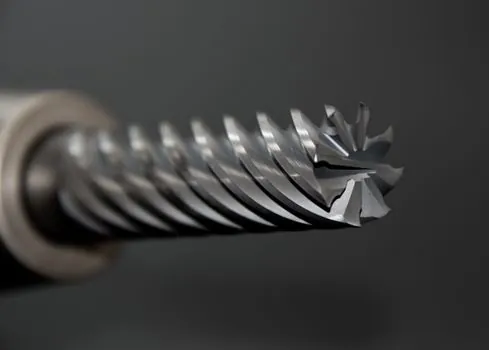
Three bore / keyway variants are commonly mixed up in the field, and the decision is dictated by series number rather than application: metric bores 9 to 110 mm with standard DIN 6885 keyways are the default for series 1008 to 5050, with bore tolerance ISO E8 and recommended shaft tolerance ISO h6 [S3]. Shallow DIN 6885/3 keyways are mandatory on the larger-diameter bores of 2517, 3525, 3535, 4030, and 4040, where a deep key would bottom before clamp load is reached [S4]. Inch proprietary bores (3525 at 1-1/4", 6050 at 3-7/8", and so on) share the same hub and taper as their metric siblings but carry ASME / ANSI B17.1 keyways and are only stocked by distributors who hold the inch line [S4].
A 2517 in 60 mm with a shallow 18 x 4.4 mm key, ordered against a 2517 hub on a fan or coupling, is the most common shallow-key application; the inch equivalent is a 2517 with 2-1/2" bore and a shallow key per ASME B17.1, used when the plant is on inch shafts [S3][S4].
For locked-bushing selection on adjacent couplings, the related reference on taper bushing hubs for jaw couplings walks through the same series-to-hub matching logic, and the note on taper bush jacking versus tightening holes covers the field-test side of installation that catalogue tables leave out.
Hub identification and what to check before ordering
The single most reliable identification step is the four-digit series stamped on the hub flange, usually in the form 2517-40 or 1610-30, where the suffix is the metric or inch bore. Match that against the bush catalogue, not against the shaft diameter, because two hubs with the same 60 mm shaft can take different series depending on the driven component [S1][S4].
Three checks before sign-off: (1) bore and keyway width from the catalogue, with DIN 6885 width matched to bore step; (2) shallow-key requirement per the footnote column in the table; (3) thread standard, metric ISO or UNC, on the tightening screws. A photo of the flange stamping and a calliper reading across the keyway are the fastest route to a clean cross-check, and a 5.6 Nm to 271 Nm screw-torque table from the same catalogue sets the re-torque interval [S1][S3].
For component families that use the same taper geometry for a different purpose, the lock nut reference covers the thread-locking side of the same shaft assembly, and the industrial valve entry covers where taper bushes meet actuator mounting in process plants.
Limits, failure modes, and what to verify in the field
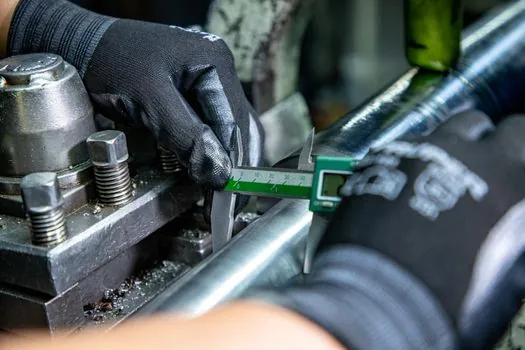
Three failure modes dominate field reports: (1) a deep key specified on a shallow-key bore, which bottoms the key and the bush slips under shock load; (2) metric-thread screws mixed with UNC hubs, which strip on the first re-torque; (3) re-boring past the catalogue maximum, which removes material from the taper and ruins the fit, an out-of-spec repair the factory explicitly disallows [S4][S6].
On reversing drives or any application with cyclic torque reversal, the standard recommendation is to drop one series size below the catalogue torque limit and verify clamp force with a torque-wrench re-check after the first 24 hours of operation, because the split-hub geometry of a Taper Lock continues to settle under load [S3][S8]. For conveyor and bucket-elevator duty, the related comparison on round-link, bush, and plate chain elevators covers the chain side, while the taper bush itself remains the weakest link if the bore-to-keyway check is skipped.
Two trackable signals for the next 6 months: distributors moving inch-bore stock (3525, 3535, 6050) toward metric-only as EU plants standardise on DIN 6885, and the addition of 10085 and 120100 series in stainless or hardened variants for washdown and marine duty, both of which would shift the bore-versus-keyway decision toward metric shallow-key bores on new spec.