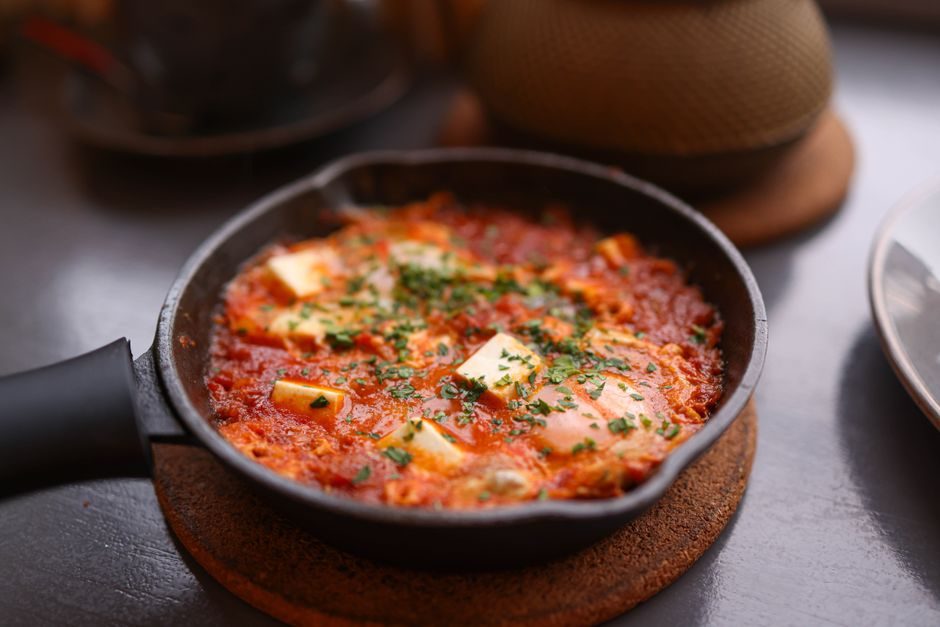
Grey cast iron (ASTM A48 Class 20-60) and ductile iron (ASTM A536 60-40-18, 65-45-12) remain the two default choices for industrial castings, with 2026 China ex-works FOB bands sitting near US$700-1,200/t for grey iron and US$900-1,400/t for ductile per current Made-in-China listings [S3][S4].
For machine-tool builders, valve bodies, pump housings and cookware stands, cast iron is still spec'd because of its damping factor (~25× steel by graphite-flake action in grey iron) and its lower per-kg cost versus cast steel. Selection hinges on tensile requirement, machining allowance, corrosion media and audit-required standards (ASTM A48, A536, EN-GJL, EN-GJS).
ASTM A48 Grey Iron: Class Bands and When to Specify
ASTM A48 grey iron is classified by tensile strength: Class 20 (138 MPa min), Class 25 (172 MPa), Class 30 (207 MPa), Class 35 (241 MPa), Class 40 (276 MPa) and Class 60 (414 MPa), with each step demanding lower carbon equivalent and tighter cooling control. Class 20-30 covers the bulk of pump housings, gearbox bodies and machine-tool beds; Class 40-60 is reserved for high-pressure hydraulic manifolds and thin-wall diesel blocks where chill-control and inoculation become critical. [S1]
Hardness (Brinell) tracks tensile: 150-220 HB for Class 20-30, 220-290 HB for Class 35-60.
Size matters: a 1 t single-piece ASTM A48 Class 30 base casting from a mid-tier Jiangsu foundry in 2026 lists in the US$0.90-1.30/kg FOB band, with pattern amortisation adding 6-10% on small batches (under 200 units). The same part in Class 45 jumps to US$1.40-1.80/kg because of melt-purification and longer annealing cycles [S3][S4].
Ductile Iron ASTM A536: 60-40-18 vs 65-45-12 vs 80-55-06
ASTM A536 covers four common grades: 60-40-18 (414 MPa tensile, 276 MPa yield, 18% elongation), 65-45-12 (448 MPa / 310 MPa / 12%), 80-55-06 (552 MPa / 379 MPa / 6%) and 100-70-03 (689 MPa / 483 MPa / 3%). The 60-40-18 grade is the workhorse for valve bodies, industrial valve bonnets and municipal pipe fittings because it welds-repairs more cleanly than grey and absorbs 25-40% more impact energy. [S2]
For higher-stress applications such as crankshafts, steering knuckles and wind-hub castings, 65-45-12 and 80-55-06 deliver the yield strength needed without moving to cast steel. Elongation drops with grade, so 80-55-06 should not be specified where the part sees dynamic shock loading below -20°C — austempered ductile iron (ASTM A897 / ADI) is the correct upgrade for that duty cycle.
A 500 kg ASTM A536 65-45-12 valve body lists in the US$1.20-1.60/kg FOB band; the same part in A48 Class 30 grey lists at US$0.85-1.10/kg [S3][S4].
EN-GJL / EN-GJS Equivalents and EU Sourcing
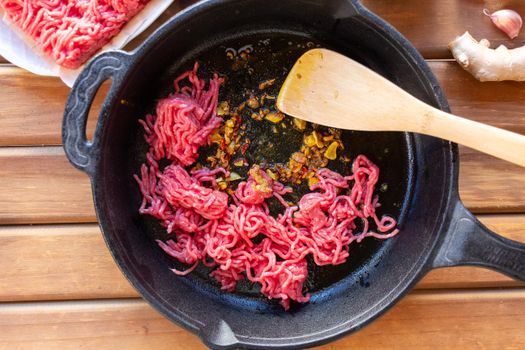
European specifiers work to EN 1561 (grey, EN-GJL-200 through EN-GJL-350) and EN 1563 (ductile, EN-GJS-400-15 through EN-GJS-700-2). EN-GJL-250 maps cleanly to ASTM A48 Class 35; EN-GJS-500-7 maps to ASTM A536 80-55-06. Foundries quoting both systems should be cross-checked against the same Brinell window, since EN hardness ranges run 170-260 HB for the GJL family and 150-250 HB for the GJS family. [S3]
When the casting ships into a CE-marked assembly (machinery, pressure-bearing parts under the Pressure Equipment Directive 2014/68/EU), the foundry must furnish a 3.1 material certificate to EN 10204 with every heat. This drives 3-7% sourcing cost over a generic Chinese mill cert, but it is the only paperwork customs and notified-body auditors will accept for EU end-use.
Size Limits, Machining and Casting Method Levers
Sand casting remains the default for parts over 50 kg, with green-sand tolerances of ±1.5-3.0 mm and resin-sand (shell) tighter at ±0.8-1.5 mm on critical dimensions. Lost-foam and investment casting only compete economically below ~30 kg or where draft angles must be near-zero. For thin walls, Class 30-35 grey iron can flow down to 4-6 mm wall thickness; Class 40-60 needs 6-8 mm minimum and pre-heated tooling above 80°C to avoid chill and hard spots. [S4]
Section-size ceilings: a single-piece grey-iron base can be cast up to 80 t in jobbing foundries, but pour weight above 20 t usually pushes the buyer to a non-Chinese mill (India, Eastern Europe, Mexico) for rail/logistics reasons. Ductile iron ceiling sits around 30 t per piece in mainstream Chinese jobbing; above that, fabrications or cast-steel substitutes become the right call.
Machining stock should be agreed in the RFQ, not after first article. Standard practice: 3-5 mm per side for sand-cast grey, 4-6 mm per side for ductile, 2-3 mm for shell-moulded patterns. Cutting parameters for Class 30 grey run 80-120 m/min with carbide tooling and 0.2-0.4 mm/rev feed; ductile 60-45-12 needs 10-15% lower speeds and coated inserts to manage built-up edge on the pearlite matrix.
Corrosion, Heat and Other Failure Modes
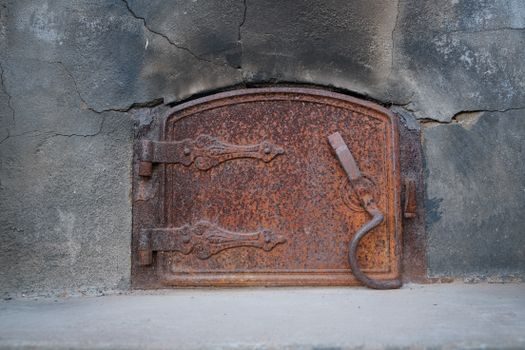
Grey iron corrodes at roughly 0.10-0.25 mm/yr in neutral water and 0.5-1.5 mm/yr in acidic industrial effluent; ductile iron is 10-20% better in the same media because its continuous ferrite matrix resists pitting. For seawater, sewage and chemical service, the spec must call out a 1-2 mm corrosion allowance on top of the machining stock, plus a coating spec (epoxy, bitumen, or zinc-rich primer per ISO 12944 C4/C5). [S5]
Thermal limits: grey iron is brittle below -20°C and is not recommended for cryogenic duty; austempered ductile iron (ADI, ASTM A897) retains impact down to -40°C and is the right upgrade for arctic hydraulic and subsea hardware. Sustained service above 400°C will graphitise grey iron progressively — for furnace parts, alloyed cast iron (Ni-Cr-Si grades per ASTM A532) is the correct material.
Common audit failures: (1) mixed iron returned to the melt furnace driving tensile scatter beyond ASTM A48 min; (2) undersize runners causing misrun on thin-wall Class 40+; (3) no-batch-traceability paperwork when the part ships into a CE/PED/ASME-stamped assembly. Engineers should write a 2-page casting spec covering grade, hardness window, critical dimensions, NDT method (visual, MPI, UT) and 3.1 cert requirement before issuing the PO.
2026 Price Bands and Sourcing Levers
May-July 2026 Made-in-China price pages list a wide spread: cookware and decorative grey-iron stands at US$1-5 per piece FOB (Yongkang/Jiande clusters), calibrated cast-iron gym plates at US$2-3.50/kg wholesale, and industrial castings at US$0.85-1.80/kg depending on grade, weight and finish [S3][S4]. The current spread is driven by coke and pig-iron input costs, with Chinese domestic coke near RMB 1,800-2,200/t in Q2 2026.
Lever 1 — weight: parts over 2 t ship more economically from China to North America than from Europe once the ocean-leg is included; below 500 kg, Mexican and Eastern European jobbing shops can win on lead time (3-5 weeks vs 8-10 weeks from Shanghai). Lever 2 — pattern ownership: buyer-owned patterns cut 5-12% off repeat runs and remove pattern-amortisation risk during price renegotiation. Lever 3 — heat-cert scope: a 3.2 cert (independent witnessed testing) is roughly 2× the cost of a 3.1 cert; specify 3.1 unless the part is safety-critical.
For OEM buyers, a 2026 procurement playbook is short: write a 2-page spec referencing ASTM A48/A536 grade, Brinell window, critical-tolerance dimensions and 3.1 cert; pick the foundry cluster (Jiangsu/Zhejiang for industrial, Shandong for pipe, Guangdong for cookware); lock the pattern; and split first-article inspection, in-process audit and pre-shipment inspection across three independent visits rather than one. A single audit visit in China covers 60-70% of risk; three visits cover roughly 90%.
For complementary material handling on the shop floor, linear guide and crossed-roller guide selections often sit on a cast-iron bed whose grade directly sets the system's achievable flatness; if the bed creeps over 0.05 mm/m after stress-relief, the bearing life numbers on the spec sheet stop being credible.
For related coverage, see Server Hardware 2026: Market Size, Sizing Bands, and Spec Levers.