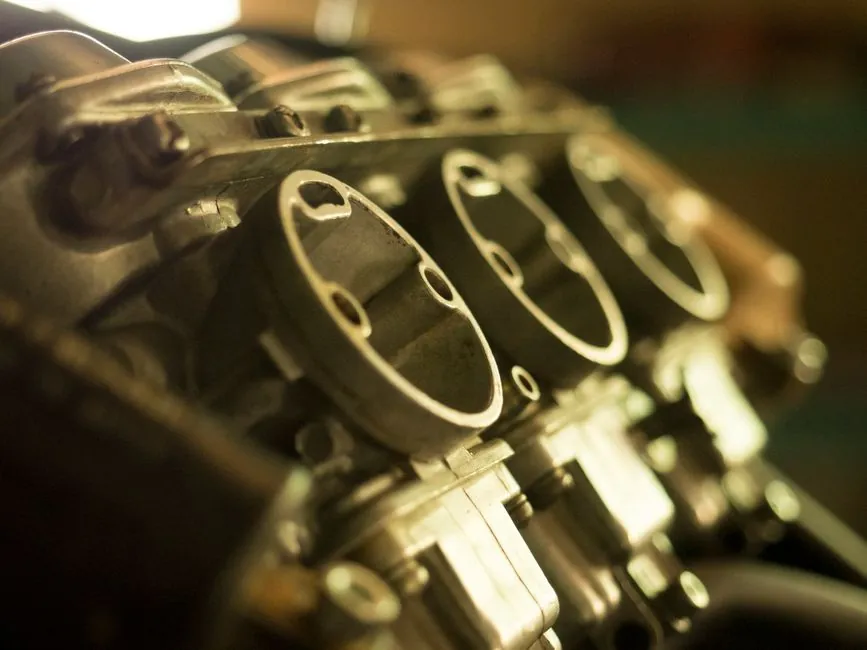
Hardware plants specifying a casting mold in 2026 must resolve four coupled decisions in a single pass: process family (sand, die casting, investment, centrifugal, plaster/RPM, or shell), SPI production-volume class (Class 1 over 1,000,000 shots through Class 5 prototype under 500 shots), alloy, and the resulting surface/tolerance window [S5].
Die casting is sized for non-ferrous high-volume runs: hot-chamber cells cycle zinc below roughly 420 °C, cold-chamber cells cycle aluminum above its roughly 660 °C melt point, and the global die casting market is projected to reach about $18 billion by 2027 [S4][S5]. Sand casting remains the dominant route for ferrous and large-format hardware because the sand casting mold accepts virtually any alloy and any size at the lowest tooling cost [S5].
Process-Family Comparison: Sand, Die, Investment, Centrifugal, Plaster
Sand casting wins on tooling cost (pattern-only, no hardened die) and alloy flexibility but loses on surface finish (typically 6.3-25 μm Ra) and tolerance (typically ±0.5-2.0 mm) [S5]. Die casting tightens that window and pushes cycle times down, which is why hot-chamber zinc and cold-chamber aluminum dominate plumbing fittings, lock bodies, and small hardware brackets [S4][S5].
Investment casting wins on tolerance (±0.1-0.3 mm) and material range (superalloys, titanium) but loses on size (typically under roughly 50 kg) and per-piece cost [S5]. Centrifugal casting splits into true, semi-, and vertical variants, with true centrifugal producing hollow cylinders and no sprue, suiting pipe sleeves and bushing hardware [S5]. Plaster mold and rubber-plaster-mold (RPM) routes lock fine detail for aluminum and zinc decorative hardware at the cost of slower cycles [S5].
SPI Class 1-5: Volume Tier Drives Steel, Cooling, and Hard Components
SPI Class 1 specifies extremely high-volume injection molds for lifetime cycles exceeding 1,000,000 shots, Class 2 caps at 1,000,000 cycles, Class 3 at 500,000, Class 4 at 100,000, and Class 5 (prototype only) at 500 cycles [S5]. The SPI matrix ties hard-component requirements to these lifetime tiers: runnerless molding, stainless or electroless-nickel-plated mold bases, and stainless water plates are mandatory only in Class 1, while automatic side actions are required in Classes 1, 2, and 3 [S5].
Heat-treated cavity and core inserts, parting-line interlocks, full detailed mold design, guided ejection, slide wear plates, and cycle counters all enter the spec progressively from Class 3 upward [S5]. A Class 1 die-cast die typically uses H13 tool steel hardened to 46-50 HRC, vacuum-heat-treated cavities, and beryllium-copper or steel conformal cooling, while a Class 5 prototype die can run in pre-hardened P20 at 30-32 HRC or even aluminum for sub-1,000-shot runs [S5]. For a deeper agricultural-machinery drilldown, the die casting mold selection for agricultural machinery spec map walks the same Class 1-5 logic against tractor and implement housings.
Alloy and Mold Material Pairing
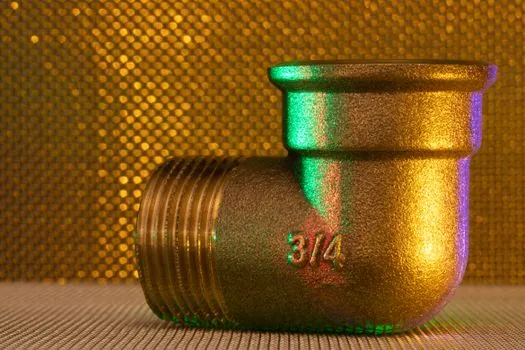
Iron-foundry hardware splits across gray, ductile, white, and malleable alloys, each demanding a different mold strategy: gray iron is the most castable and is paired with green sand or dry sand molds, ductile iron needs feeders and risers sized to its higher contraction, white iron favors rapid-chill permanent molds for wear parts, and malleable iron is typically poured into green sand and then heat-treated [S2][S3]. A general rule: a 2021 industry report cited by tooling vendors attributes more than 70% of casting defects to material incompatibility, so alloy/mold pairing should be locked before mold steel is quoted [S4].
For non-ferrous hardware, zinc, aluminum, and magnesium each map to distinct tool steels and process routes. Hot-work tool steel is mandatory for the cavity blocks that touch liquid metal, while the mold base and structural components can use lower-cost structural steel because they only absorb clamping force, not melt contact [S9]. H13, H11, and H21 remain the workhorse grades for die casting cavities; SKD61 is the common Japanese equivalent, and DIN 1.2344 is the European reference [S5][S9].
Defect Codes, Draft, and Tolerance Targets
International defect classification runs through standard codes for porosity, misrun, cold shut, and shrinkage, and the same codes apply whether the source is sand, die, or investment [S5]. Sand-mold hardware should expect surface roughness in the 6.3-25 μm Ra band, while die-cast hardware typically lands in the 0.8-3.2 μm Ra band before any secondary finishing [S5].
Draft angles are non-optional: even small angles on vertical mold surfaces are required for clean ejection without surface tearing, and they scale with process family (investment needs the least, green sand the most) [S3]. Roughly 45% of die casting defects trace back to poor mold design rather than machine or alloy issues, so cooling-line layout, gate placement, and overflow wells deserve as much engineering time as the cavity itself [S4]. Buyers who skip a casting mold drawing review against the SPI Class 3 hard-component checklist pay for it in slide wear and parting-line flash within the first 50,000 shots [S5].
Where Additive Manufacturing Fits the Selection
3D-printed pattern tooling and laser powder bed fusion conformal-cooling inserts have moved from R&D to production in the past two years, and they are most useful in two spots: complex sand patterns that would be impossible to machine, and die-cast conformal-cooling channels that cut cycle time 15-30% on aluminum hardware [S1]. Knowledge graph-driven design tools are now offered by Chinese and European mold makers to catch layout mistakes before steel is cut, which compresses lead time on Class 3-4 hardware dies [S1].
For buyers sourcing additive manufacturing material for sand patterns or metal inserts, the same alloy chemistry used in the final casting does not always translate to the printed tool, and the mold shop should be told whether the printed part is a one-shot pattern, a conformal insert, or a sacrificial core [S1][S9]. When a buyer needs an exotic die grade for corrosive hardware lines, the zirconia ceramic selection for mold and die making grade map covers where zirconia grades beat tool steel on wear and thermal-shock behavior.
Limits, Failure Modes, and Misuse Cases
Sand casting is wrong for hardware that needs ±0.1 mm tolerances, threaded features, or cosmetic Class A surfaces without machining; die casting is wrong for ferrous alloys, for parts over roughly 50 kg, and for runs below a few thousand pieces where die steel cost is not amortized [S5]. Investment casting is wrong for anything over roughly 50 kg and for any application that cannot absorb the per-piece cost premium [S5]. Permanent metal molds are not suitable for casting metals with extremely high melting points, and they are uneconomic for low-volume or one-off hardware runs [S3].
Buyers who mix process families (for example, specify investment tolerances on a sand-cast drawing, or sand-cast tolerances on an investment RFQ) generate rework loops that consume 20-30% of engineering hours on a typical hardware program [S3][S5]. The single most expensive mistake is selecting a Class 1 die for a Class 4 volume program, which inflates tooling cost roughly 5-8x for no cycle-time gain; the mirror mistake, a Class 4 die on a Class 1 program, burns through slides and water lines before the 100,000th shot [S5].
Sourcing Standards and Spec Discipline
Hardware buyers should pin the spec to the process family, the SPI class, the alloy, and the defect code list in writing, and require the mold shop to quote steel grade (H13, SKD61, 1.2344), hardness range (e.g. 46-50 HRC for Class 1 cavities, 30-32 HRC for Class 5 prototypes), cooling layout, and expected cycle count before tooling is released [S5][S9]. Tolerance callouts should reference the process family's achievable band: ±0.5-2.0 mm for sand, ±0.05-0.15 mm for die casting on critical dimensions, and ±0.1-0.3 mm for investment, all in the as-cast state [S5].
For architectural and building hardware, the architectural hardware and building pipe hardware material envelopes set the corrosion and finish floor, and the mold selection should be tuned to hit those end-use specs without over-specifying the as-cast surface. Track these signals in the next sourcing cycle: H13 versus SKD61 price spread, conformal-cooling insert lead time from Chinese and European shops, and SPI Class 3 hard-component pricing in Q4 2026.