
A catalytic bead sensor is the default low-cost workhorse for 0-100% LEL flammable-gas detection, with current fixed-point models covering -40 to +80°C, 10-95% RH, IP65 housings and 4-20 mA or mV bridge outputs at SIL 1-3 functional safety levels per IEC 61508 [S1][S3].
The trade-off is mechanical and chemical: catalytic sensors consume oxygen, drift in low-O2 or hypoxic atmospheres, and can be permanently damaged by silicone vapours, H2S, lead compounds and halogenated solvents, so the application envelope must be verified before the detector is bolted to a wall [S1][S3].
How a Catalytic Bead Sensor Works — and Why Output Looks the Way It Does
Catalytic detection relies on a matched pair of "pellistor" elements — one active, one poison-resistant reference — mounted in a Wheatstone bridge; flammable gas oxidises catalytically on the active bead, raising its temperature and unbalancing the bridge so the output is proportional to gas concentration in 0-100% LEL [S3].
Typical operating envelope: -40 to +70°C, 5-95% RH non-condensing, 10-28 VDC input, max 4 W, T90 response under 15 seconds, with a 60-second warm-up [S3]. Crowcon's Xsafe gives a wider temperature window for the mV output (-40 to +80°C) than for the mA output (-40 to +55°C), reflecting bridge excitation dissipation in the head [S1].
Catalytic vs Infrared vs Electrochemical — When Each Wins
For flammable LEL gas at a single point, catalytic is the cheapest path; for duct monitoring, turbine enclosures, or oxygen-free environments, NDIR (non-dispersive infrared) is the better answer because it measures C-H bond absorption rather than burning the gas — the Teledyne GD10PE IR is specified for gas turbines, HVAC ducts and inert atmospheres, with zero poisoning, zero saturation, and a silicon/H2S-resistant optical bench [S2].
The decision matrix below lines the three common technologies against the criteria that actually drive purchase orders:
<strong>Selection matrix (flammable-gas point detection)</strong>
- <strong>Catalytic bead:</strong> lowest unit cost (typical fixed detector under USD 500 in OEM catalogues), wide LEL coverage including hydrogen, requires O2 ≥ ~10% vol, vulnerable to silicone/H2S/lead poisoning, output mV bridge or 4-20 mA, SIL-capable per IEC 61508 [S1][S3].
- <strong>NDIR (infrared):</strong> 2-5x the unit cost of catalytic, immune to poisoning, fails-safe in oxygen-free and inert atmospheres, requires a C-H or CO2 IR-active molecule, longer calibration interval, suitable for turbine and offshore duct use [S2].
- <strong>Electrochemical:</strong> used for toxic gases (CO, H2S, NH3, Cl2) and O2 deficiency, not for bulk flammable LEL, lower power, narrower selectivity, 1-3 year cell life [S5].
For mixed atmospheres (LEL methane plus H2S plus CO), the standard pattern is a multi-sensor head: a pellistor for LEL plus electrochem cells for toxics — Crowcon's Triple Plus+ portable has shipped over 90,000 units using exactly that LEL+IR+electrochem stack into oil and gas, chemical, utility and manufacturing sites [S5].
Spec Sheet Translation: The Six Numbers That Decide the Build
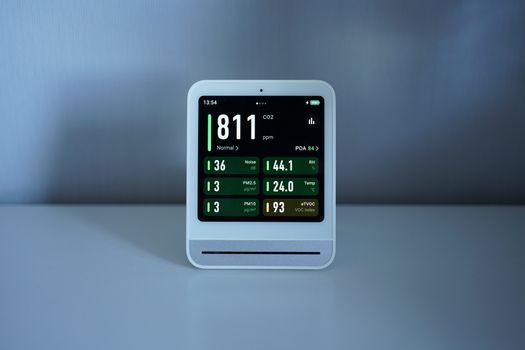
Six values on the datasheet drive 80% of the specifier's risk: (1) sensor type — catalytic bead vs NDIR vs MOS, (2) output — mV bridge, 4-20 mA, HART, Foundation Fieldbus or PROFIBUS PA, (3) operating temperature window, (4) humidity range non-condensing, (5) IP/NEMA rating, and (6) hazardous-area certification marking (ATEX, IECEx, UL/CSA Class I Div 1) [S1][S3][S8].
Prosense PE Series ships with ATEX II 2G Ex db IIC T4-T5 Gb for Zone 1/Zone 2, an epoxy-painted die-cast aluminium junction box, nickel-plated brass sensor head, IP65, 1/2" NPT cable entry, and a 4-20 mA analogue output plus optional 2-relay module (Alarm1-Fault or Alarm1-Alarm2) for fire-panel integration [S3]. Crowcon Xsafe offers three enclosure materials — glass-reinforced nylon, polyester-coated aluminium, or 316 stainless steel — the stainless option being the default for offshore and wash-down sites, with M20, 1/2" NPT or 3/4" NPT cable entries to suit any site standard [S1]. Both products list functional safety validation to IEC 61508 (SIL 1 to SIL 3 on the Xsafe) [S1]. For confined-space work in China, the GBZ/T 222-2009 selection guideline covers direct-reading gas detector choice for enclosed spaces and is the dominant reference for that use case [S6].
Failure Modes You Will Hit in the Field
The three most common catalytic-sensor failures are: (a) silicone poisoning from pump room sealants and conformal coatings, (b) loss of sensitivity in low-oxygen environments such as purged cabinets, nitrogen-blanketed tanks, or post-flame extinction, and (c) drift from condensing humidity, often shipped as a slow upward baseline that finally trips at 0% gas [S1][S3].
Mitigation is mechanical: sintered flame arrestors stop water film formation; remote gassing accessories (standard on the Xsafe line) let the operator inject test gas into the sensor head without entering the space; plug-in spare sensors cut mean-time-to-repair on a 1 kg fixed-point head to minutes, with three junction-box options designed to make sinter and sensor replacement possible with a single wrench [S1]. Spans, zero and bump-test cadences should be tied to the plant's safety-integrity-level calculation rather than to the manufacturer's nominal 12-month calibration interval, because catalytic beads in hydrocarbon-rich environments drift 5-10% of signal per quarter in heavy service. The PE Series' <15 s T90 and 60 s warm-up support a daily bump-test regime driven from a 4-20 mA loop interrupt [S3].
Wiring, Output Protocol and Plant Integration
3-wire mV bridge and 3-wire 4-20 mA remain the dominant field wirings for fixed catalytic detectors; modern head adds HART 7, Foundation Fieldbus HSE or PROFIBUS PA on top, but the core signal is still a 4-20 mA current loop with gas concentration scaled 0-100% LEL across that span [S3].
For a typical build, the detector head feeds an analogue input card on a PLC or DCS, the relay outputs drive the fire and gas (F&G) panel, and a serial Modbus or HART link to the Prosense Gas Monitoring software lets engineers trend the head remotely [S3]. A related purchase decision is the open-path detector for perimeter monitoring; the selection logic differs in that open-path units use a transmitter-receiver pair over a 5-120 m beam rather than a single-point catalytic bead — see the open-path gas detector selection guide for the optics-side criteria. Where the application demands both LEL and the optical side of gas detection, the infrared gas detector selection guide walks through NDIR optics, lamp life and false-alarm rejection.
Standards, Calibration and Compliance Anchors
Catalytic flammable-gas detectors for fixed installation typically anchor on ATEX 2014/34/EU (EU equipment for explosive atmospheres) plus IECEx for IEC 60079-0/60079-1 zones, with functional safety claimed to IEC 61508 SIL 1, 2 or 3 depending on architecture [S1][S3].
In the United States, UL 913 and ISA 12.13.01 govern intrinsic safety and combustible-gas detector performance respectively, and CSA C22.2 No. 152 is the Canadian equivalent performance standard for combustible-gas monitors; in marine and offshore service, IEC 60092-506 and the SOLAS II-2 ventilation-fire-protection clauses layer on top [S1]. For confined-space work in Chinese plants, GBZ/T 222-2009 is the document most safety officers will cite when approving a portable LEL monitor; the standard's selection logic — sensor type, range, response time, alarm set-points, ingress protection and calibration cycle — maps directly onto the spec-sheet values reviewed above [S6]. A "fixed" detector does not automatically meet confined-space portable requirements, because the housing, cable length, battery runtime and personal alarm thresholds differ; buyers should not cross-substitute [S6]. Buyers comparing the broad supplier landscape can screen 26 catalytic-sensor products from 8 manufacturers catalogued in the 2026 industrial sensor index, including Figaro Engineering, Detector Electronics (Det-Tronics), Asco Instruments and Zhengzhou Winsen Electronics for the sensor element itself [S4].
Decision Shortlist by Use Case

For a low-cost LEL head on a budget, in a ventilated, dry, indoor plant handling methane/propane/butane, the catalytic bead is the right call: 4-20 mA, IP65, ATEX II 2G, -40 to +70°C, 0-100% LEL, SIL 1-3, sub-second response and a 1-2 year calibration cycle [S1][S3].
For duct monitoring, gas-turbine enclosures, or any oxygen-free or silicone-exposed process, switch to NDIR — the GD10PE IR is the canonical example, designed for HVAC and turbine ducts where the line-of-sight optical path beats a catalytic bead's poisoning profile [S2]. For confined-space entry or worker-worn protection, use a portable multi-gas detector with a pellistor LEL channel plus electrochemical O2/CO/H2S cells; the Honeywell BW GasAlert MicroClip XL, the Crowcon Triple Plus+ and the international MK8 fixed-line are the current reference units in this category [S5][S9][S10]. For hydrogen service specifically, catalytic bead remains the standard technology because H2 has no usable IR absorption band in the 3-5 µm window used by NDIR — verify the sensor datasheet's H2 LEL response before accepting an NDIR quotation. Order of magnitude: a four-sensor fixed detector head in aluminium with ATEX/IECEx certification sits in the USD 400-900 unit-price band as of mid-2026 OEM catalogues, before calibration accessories [S3][S7].
Common Selection Mistakes and How to Avoid Them
The four specifier errors that show up most often in retrofit orders are: (1) specifying a catalytic detector in a purged or inerted cabinet where the local O2 can drop below 10% vol, (2) accepting an NDIR quotation for hydrogen LEL service, (3) ignoring humidity non-condensing clauses so the sensor head fails within 6 months in a wet offshore process, and (4) ordering a "fixed" detector for confined-space portable work without checking the GBZ/T 222-2009 entry-procedure requirement [S1][S2][S3][S6].
A defensible procurement spec should pin six values: gas target and LEL fraction, sensor technology with ATEX/IECEx certificate numbers, output protocol (mV bridge vs 4-20 mA vs HART), operating temperature and humidity windows, IP/NEMA rating, and SIL target with documented proof test interval. Match the calibration interval to the operating environment, not the factory default, and treat silicone exposure, halogenated solvent wash and routine oxygen displacement as hard exclusions for pellistor selection [S1][S3]. For portfolio coverage of adjacent process-safety equipment, the flame arrester cost guide covers the upstream deflagration protection, while the aluminum die casting selection guide helps when the detector housing itself needs a custom enclosure.
For component-level specifications, see linear guide, crossed roller guide, and gas detector.