Open path gas detectors — line-of-sight infrared (IR) and tunable diode laser absorption spectroscopy (TDLAS) units used for perimeter and fenceline leak monitoring — cluster into three commercial bands in 2026: roughly US$2,500-5,500 for Chinese-made IR open-path pairs, US$6,000-12,000 for premium IR units from established Western brands, and US$10,000-18,000 for TDLAS laser systems like the NEO Monitors LaserGas III OP HF [S1][S2][S4][S6].
The price spread is driven less by gas type and more by sensing principle, hazardous-area certification, and path length: a 5-30 m IR pair costs a fraction of a 100 m Zone 1 TDLAS transmitter/receiver set, and the latter typically includes factory calibration, automatic health-check optics, and SIL2-capable electronics [S2][S3]. Procurement teams should budget 1.4-1.8x the detector list price for commissioning, alignment tools, mounting hardware, and the first-year calibration cycle.
Sensing Principle vs Price: IR vs TDLAS Open Path
IR open-path detectors use broadband or filtered infrared across a single transmitter/receiver pair and are the dominant low-cost architecture; TDLAS units like the LaserGas III OP HF use a narrow-line tunable diode laser to target one specific molecule — HF in the NEO product — at path lengths up to 100 m, with the spec sheet quoting a single-beam HF detection configuration, sub-15 W power draw, and Zone 1 Ex-d flameproof housing [S2]. The TDLAS premium (typically 1.8-3.0x the IR price for the same path length) buys selectivity: no cross-interference from other hydrocarbons, no zero drift, factory calibration, and suitability for SIL2 loops [S2].
Boreal Laser's GasFinder line follows the same TDLAS logic and is sold through regional technical sales organizations into 48 countries, with separate Open Path (OPX), Remote Point (RPX), Stack/Duct (SDX), Insertable (IPX), In-Line (ILX), and Extractive (EMX) measurement heads attaching to a common GasFinder3 analyzer platform [S3]. The OPX head, when paired with a GasFinder3, is the open-path SKU and inherits the same laser-based Enhanced Sensing Element used across the product line [S3]. This modular architecture pushes the analyzer cost onto a shared chassis and lets a site add extra measurement heads at a lower incremental cost than buying a second full detector pair.
What Drives the Bill of Materials
Four components dominate the open-path detector bill of materials and explain the 5-7x spread between entry-level and premium units: (1) optics — a long-life xenon flash lamp and dual-beam/dual-wavelength reference channel for IR units versus a temperature-stabilized laser diode and photodetector assembly for TDLAS, (2) hazardous-area enclosure — die-cast aluminum with IP66/67 gaskets and Ex-d flameproof certification for Zone 1, (3) signal processing — micro-processor with automatic health-check, dirty-optic compensation, and 4-20 mA + HART or Modbus output, and (4) alignment hardware — adjustable mounting brackets, laser-sighted alignment tools, and weather/heat shields [S1][S2][S3].
For an open-path IR hydrocarbon detector, the single-beam arrangement can be fooled by fog, snow, or partial beam blockage, and that is why premium models (General Monitors IR5500, Drager Polytron, MSA) use a reference channel to compensate for signal attenuation; a spec sheet will typically quote a detection range of 0-5 LEL·m and a path length of 5-30 m for short-range, 30-120 m for long-range IR units [S5]. TDLAS sidesteps the fog problem at HF/CO/CH4 wavelengths but inherits eye-safety classification (typically Class 1M or 3R) that adds documentation cost for sites exporting to the EU under EN 60825-1.
Three-Tier Price Map for Procurement (2026)

The open-path detector market tracked by DirectIndustry lists 11 manufacturers and 14 active products as of 2026-06-08, which is a small but stable segment compared to fixed point combustible gas detectors [S1]. Within that catalog, the 2026 price tiers line up as follows:
• Tier 1 (US$2,500-5,500 per pair): Chinese OEM IR open-path detectors sold via Made-in-China and local industrial portals, typically with 4-20 mA output, basic Ex d IIB T4 or no certification, and a 5-30 m path; the LS2000 OPEN-PATH GAS DETECTOR listing on jdzj.com sits in this band with a quoted entry price around ¥1.00 (placeholder/contact-for-quote) — actual orders run US$2,000-3,500 per pair with a 10-pair MOQ [S4][S6].
• Tier 2 (US$6,000-12,000 per pair): Mid-range IR units from Western brands, ATEX/IECEx Zone 1 certified, with HART, automatic beam-block compensation, dirty-window diagnostics, and 30-120 m path length. Comparable reference product: General Monitors IR5500, which established the dual-beam reference channel and "breakthrough" detection-range architecture when launched [S5].
• Tier 3 (US$10,000-18,000 per channel): TDLAS laser open-path systems, with the NEO Monitors LaserGas III OP HF (100 m range, HF-specific, Zone 1 Ex-d, <15 W, SIL2-capable) at US$12,000-18,000 per transmitter/receiver set, and Boreal Laser GasFinder3 + OPX head configurations landing near the top of the band when sold with a multi-gas analyzer chassis [S2][S3].
Reference link: a gas detector selection guide on optics and certification walks through the same hazardous-area and output-protocol trade-offs in more depth for fixed-point units, and most of those rules apply equally to the open-path segment.
Selection Criteria Beyond the List Price
For multi-gas sites, the modular TDLAS approach (one GasFinder3 analyzer with swappable OPX, RPX, SDX, IPX, ILX, and EMX measurement heads) is typically the lowest total installed cost once a site needs more than two open-path lines, because the analyzer is the expensive part and the heads are relatively cheap accessories [S3]. Single-gas short-range sites (one perimeter, methane only, 20 m path) should default to a Tier 2 IR unit and pocket the 50% saving.
Real-World Applications and Sourcing Channels
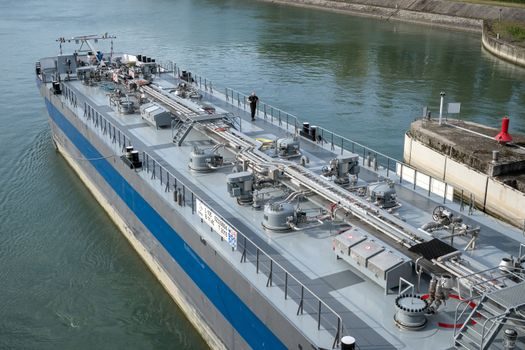
Open-path detectors are specified in four dominant scenarios: (1) LNG and LPG storage tank farm perimeters where a single line-of-sight covers a 60-100 m arc, (2) refinery and petrochemical plant fenceline monitoring under EPA Method 327 / equivalent EU regulations, (3) offshore platform and FPSO module-bay gas detection where point detectors would need dozens of heads to cover the same volume, and (4) chemical plant HF and ammonia handling areas where the selective laser measurement of NEO Monitors or Boreal Laser is the only credible option [S2][S3].
Sourcing channels split cleanly by tier: Chinese OEM IR units (LS2000 and equivalents) are quoted on Made-in-China, jdzj.com, and direct from Shenzhen/Xiamen manufacturers, with the lowest MOQ around 5-10 pairs and 30-45 day lead time; mid-range IR units (General Monitors IR5500, Honeywell, Drager, MSA) go through regional safety-instrumentation distributors with 6-10 week lead time and a 12-month warranty [S1][S4][S5]; TDLAS laser systems (NEO Monitors, Boreal Laser) are sold direct from the OEM or their regionally focused technical sales organizations, with factory calibration certificates, a typical 12-24 month warranty, and a 60-90 day commissioning cycle that includes path-alignment training [S2][S3].
For a related fixed-cost comparison on a different safety-instrumentation SKU, see the industrial buzzer price guide on piezo vs magnetic tiers, which uses the same MOQ and sourcing-cost framework.
Hidden Costs and Common Failure Modes
Three line items routinely blow the open-path detector budget if not priced at the RFQ stage: (1) alignment and commissioning labor — a 100 m TDLAS link takes 4-8 hours with two technicians using a laser alignment tool, billed at US$150-300/hour in Europe and US$200-400/hour in the Middle East, (2) beam-block and dirty-window events — IR units with no reference channel generate nuisance trips in fog or snow, and each shutdown costs a refinery 6-24 hours of lost throughput, and (3) calibration gas for closed-path verification — HF and NH3 span gases run US$300-800 per cylinder and have a 6-12 month shelf life, which adds a recurring line item the catalog price never mentions [S2][S3].
Common failure modes to spec against: complete beam blockage by a parked vehicle or snow drift (handled by automatic health-check and dirty-optic compensation on TDLAS units [S2]); laser diode end-of-life at 8-12 years (budget US$3,000-5,000 for a replacement laser module on a TDLAS unit); window contamination on IR units (typically requires quarterly cleaning in offshore/marine environments); and lightning-induced surge damage to outdoor transmitter/receiver electronics (specify a surge protection module, adds US$200-500 per unit).
Standards, Certification and Sourcing Discipline
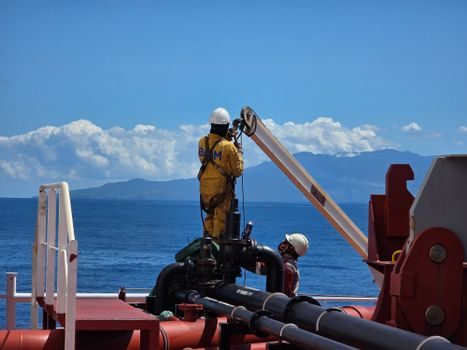
Open-path detectors for European oil and gas and petrochemical applications must carry ATEX certification for the relevant zone — Zone 1 Ex-d (flameproof) is the most common SKU in the NEO Monitors and General Monitors product lines, with Zone 2 also available for less critical perimeters [S1][S2]. For international projects, IECEx certification is the cross-jurisdiction equivalent and is the most portable credential for projects outside the EU and North America. Functional safety: SIL2 capability is now standard on premium TDLAS open-path units and is the typical floor for safety-instrumented function (SIF) loops in refinery and offshore service [S2].
For North American sites, look for FM Approved or CSA certification in addition to ATEX/IECEx, and verify the unit carries the right hazardous-location class (Class I, Division 1 or 2, Groups A-D). Eye-safety classification under EN 60825-1 / IEC 60825-1 applies to all TDLAS laser open-path units; the LaserGas III OP HF datasheet does not quote a specific laser class in the available text, so buyers should request the manufacturer's laser-class certificate before purchase [S2]. For procurement discipline, request a fixed-price quote that bundles: transmitter/receiver pair, alignment tools, mounting hardware, calibration certificate, ATEX/IECEx certificate copies, and 12-24 month warranty; expect a Tier 3 TDLAS order to carry a 60-90 day lead time versus 30-45 days for a Tier 1 Chinese IR pair.
Trackable signals through the rest of 2026: (1) any new TDLAS open-path SKUs entering DirectIndustry's 11-manufacturer catalog, which would shift the Tier 3 price band downward, and (2) a second Chinese OEM entering the ATEX-certified Zone 1 IR open-path segment, which would compress the Tier 2 mid-range from the US$6,000-12,000 band toward US$5,000-9,000.
For component-level specifications, see open channel flowmeter, linear guide, and crossed roller guide.