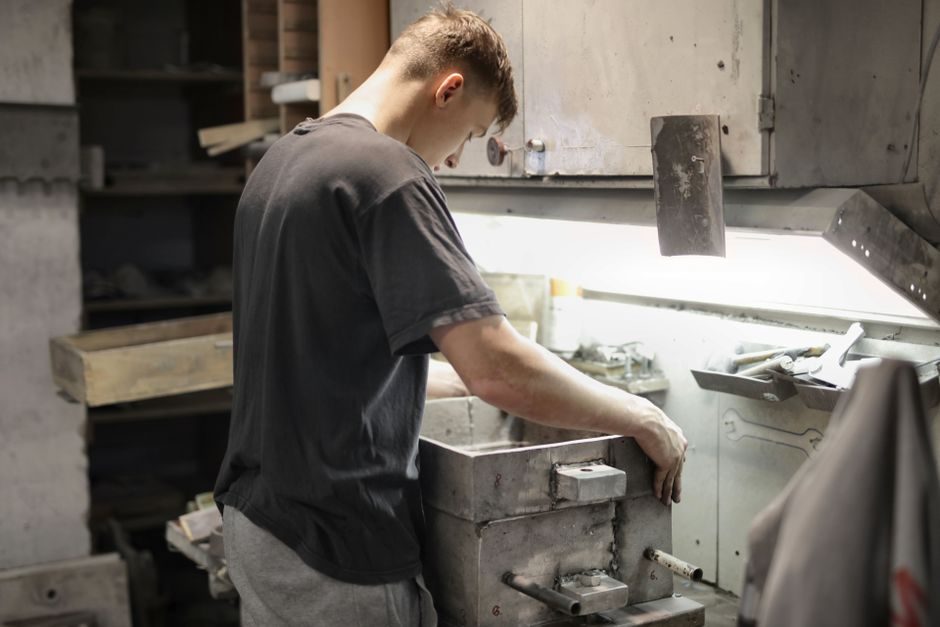
Aluminum die casting selection is driven by three coupled decisions: process (HPDC, LPDC, gravity or vacuum), alloy family (commonly A380, A383, A360, ADC12 or AlSi9Cu3), and clamping tonnage sized to projected area at roughly 4-8 tonnes per square inch of shot area [S2][S6]. NBI lists parallel aluminum and zinc die-casting lines with CNC machining, investment casting, forging, stamping and plastic injection under one roof, illustrating how a single supplier is typically scoped against several processes at once [S1].
Technical Die-Casting operates a die-cast floor of 11 machines from 400 to 850 ton with 100% real-time shot-scope data capture on every machine and AI visual inspection trained to flag good versus defective parts [S2]. That snapshot is the practical reference point: 400-850 ton is the mid-volume band where most industrial and commercial-aluminum programs land, and shot-by-shot data capture is now table stakes rather than an option.
Process Choice: HPDC, LPDC, Gravity and Vacuum
High-pressure die casting is the default for thin-wall, high-volume aluminum components: cycle times of seconds, wall thickness down to roughly 2-3 mm on production tooling, and as-cast surface suitable for limited finishing [S6]. Cold-chamber HPDC is used almost universally for aluminum because molten aluminum attacks the steel shot sleeve; hot-chamber variants are restricted to zinc and magnesium [S6].
Low-pressure die casting fills the die from a sealed furnace below the die at 0.3-1.0 bar, yielding denser castings with less trapped gas and slower cycles, typically used for larger structural wheels, suspension arms and housings where mechanical integrity outweighs cycle time. Vacuum-assisted HPDC drops the die-cavity pressure below roughly 100 mbar before injection, which raises weld-line strength and reduces porosity in heat-treated or welded structural components; the trade-off is longer cycle and tighter die-sealing discipline [S6]. For thin-wall structural aluminum parts, vacuum HPDC has become the workhorse process; for heavier-section components with subsequent heat treatment, LPDC still wins on soundness. For non-structural housings and covers where cost dominates, conventional cold-chamber HPDC remains the baseline.
Alloy Selection: A380, A383, A360, ADC12 and Equivalents
Aluminum die-casting alloys are essentially Al-Si-Cu systems with controlled Fe, Mn and Mg content. A380 (ANSI/AA) and its near-equivalent ADC12 (JIS) are the most widely used general-purpose alloys because they balance fluidity, hot-crack resistance and as-cast strength; A383 is a higher-Cu variant for slightly improved machinability and is often used when the A380 die is too hot or when tighter as-cast tolerances are wanted [S2][S6]. A360 offers higher ductility and better corrosion resistance, at the cost of higher Si-driven die wear and slightly shorter die life, so it is specified where the part is welded, anodised for appearance, or must pass a ductility test [S2].
Fe is held at 0.7-1.1% in A380 to prevent die soldering; raising Fe above this to chase ductility is a common path to die failure. Mn counterbalances Fe by forming Chinese-script sludge that refines the alpha-iron needles. For a part that will be powder-coated or e-coated after casting, alloy choice matters less than surface prep; for an anodised cosmetic part, A360 or A365 series is the safer pick. Technical Die-Casting's published scope explicitly calls out "Aluminum Die Casting with various alloys," confirming that mid-tier US job shops stock multiple alloy codes rather than running a single grade [S2].
Tonnage and Projected-Area Sizing
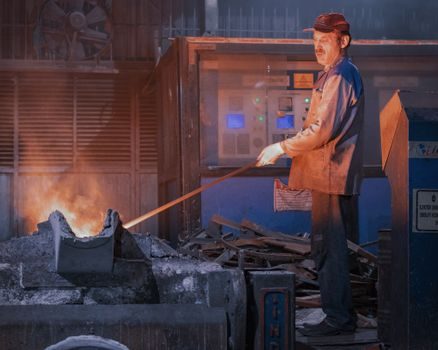
Clamping tonnage is sized to projected area, not part weight. The working rule is approximately 4-8 tons of clamp force per square inch of projected casting area (roughly 60-125 MPa projected pressure), with thinner walls, higher injection speeds, larger flow length, and tighter flash requirements pushing the value toward the upper end. Technical Die-Casting's fleet is described as ranging from 400 to 850 ton, which corresponds to projected areas of roughly 50-200 in² (about 320-1,300 cm²) on the low end, less on the high end [S2].
For a 400-ton machine, plan a safe design envelope near 80-120 in² projected area; for 850-ton, plan near 170-250 in². This envelope is also the right size for the die casting die — bigger projected area drives bigger die sets, larger shot sleeves, and higher steel mass, all of which raise tooling cost non-linearly. Use this tonnage range when comparing aluminum die casting machine quotes: a low price on a small machine is meaningless if your part's projected area requires 800 ton. Vacuum die casting adds roughly 15-25% to cycle time, so the required number of machines for a given annual volume rises accordingly [S6].
Quality Systems and Process Monitoring
ISO 9001:2015 certification is the floor for general industrial programs; automotive Tier-1 programs add IATF 16949, and structural or safety-relevant parts often require PPAP and APQP documentation packages [S2]. Real-time shot-scope monitoring — pressure, velocity, plunger position and die temperature on every shot — is the practical replacement for end-of-line inspection, because it catches a short shot or cold shut on shot 1 rather than after 10,000 parts [S2].
RCM Industries markets its practice explicitly as "following aluminum die casting best practices" and positions itself as a custom shop that engages from DFM through PPAP and on-time delivery — a workflow template most US custom shops now match [S4]. Blue Ridge Pressure Castings similarly leans on the "art and science" framing and emphasises engineered solutions, while ADC (in business since 1950) sells the concept of one-stop tooling, casting, machining and finishing under a single quality plan [S5][S7]. Mn-based global sourcing platforms list aluminium die-casting parts with no minimum order quantity in some cases, which suits prototype and low-volume programs but is rarely the right path for high-volume OEM builds [S3].
Post-Casting Operations and Value-Added Work

Most aluminum die castings leave the cell at 50-80% of finished tolerance and require CNC machining, tapping, drilling, or grinding to reach print. Technical Die-Casting runs a Hurco VMX50Di 5-axis CNC automated machining centre alongside its casting cells, plus robotic extractors on the die-cast machines, so the casting and machining cells share a single material flow [S2]. Selecting a supplier with in-house CNC removes one logistics step and one inspection interface; it also lets the supplier trim the as-cast datum for the machining setup, which is the cheapest way to hit a 0.1 mm positional tolerance.
For finish, anodising Type I (chromic), Type II (sulfuric) and Type III (hardcoat) all behave differently on die-cast surfaces; high-Si alloys like A380 develop a grey cast-anodised appearance that many automotive and industrial buyers now accept as standard, while cosmetic programs should select A360 or A365 and accept the higher die-wear cost. Powder-coat, e-coat, and wet paint tolerate any common Al-Si-Cu die-cast alloy as long as the surface is properly degassed and conversion-coated. See a broader die casting machine overview for how cell layout affects post-casting flow.
Cost Drivers and Supplier Comparison
Tooling cost is the dominant first-article cost and scales with part size, number of cavities, slide count, and the choice of die steel (H13 is the default, S7 is used for high-volume runs). At 50,000-100,000 parts/year on a single cavity, simple 4-slide die-cast tooling commonly lands in the USD 25,000-80,000 band; complex multi-slide structural parts routinely run 3-10x that. Piece-price is then dominated by alloy cost, cycle time, and machining content. China's MDGloble platform lists an inventory of 100,000 aluminum die-casting SKUs and explicitly offers OEM service to customer drawings, which signals that the Chinese job-shop market is sized for low-MOQ OEM runs, not just captive production [S3].
Blue Ridge, RCM, ADC and TD position themselves as engineered-solution US job shops with DFM input, while the Chinese platforms (NBI, MDGloble) compete on price and SKU breadth [S1][S3][S4][S5][S7]. For low-volume prototype and pilot runs a global platform can be the right call; for steady-state production, a regional supplier with IATF 16949 and in-house machining usually wins on logistics, IP protection, and PPAP responsiveness. For heavier or non-ferrous structural parts, a gravity die casting machine cell may be more cost-effective than HPDC. Buyers evaluating thin-wall structural aluminum should also weigh vacuum die casting machine options, since vacuum is what unlocks heat-treatable, weldable structural parts.
Selection Checklist and Common Failure Modes
Process: cold-chamber HPDC for thin-wall high-volume; LPDC for thicker structural sections; vacuum HPDC when the part is heat-treated, welded, or has cosmetic anodising requirements; magnesium die casting machine cells only when weight saving beats the higher reactivity risk. [S1]
Alloy: A380 / ADC12 for general industrial; A383 for slightly hotter dies and tighter as-cast tolerance; A360 / A365 for ductility, weldability, and cosmetic anodising. Tonnage: roughly 4-8 ton/in² of projected area. Monitoring: shot-scope data capture on every machine; AI vision at the cell exit; ISO 9001 minimum, IATF 16949 for automotive. Watch for die soldering on high-Fe alloys above ~1.1% Fe, porosity on parts that need pressure-tightness, and cold shuts on long flow lengths with thin walls. Confirm PPAP documentation and the supplier's track record on the specific alloy before signing a multi-year supply agreement. A useful side-by-side of low pressure die casting machine options helps when LPDC is on the shortlist, while buyers also balancing corrosion or cosmetic constraints can cross-check flame arrester selection criteria when the cast housing carries a hazardous-area certification.
Trackable signals over the next quarter: 2026 NADCA Congress technical papers on vacuum HPDC cycle optimisation, and the next IATF 16949 audit cycle for incumbent suppliers — both will reveal whether the 400-850 ton mid-band is shifting upward as more structural parts move from LPDC to vacuum HPDC.