
Across lithium-ion, aluminum-smelter, SOFC, and electrolytic-copper product lines, cathode material cost tracks the same five variables: active-material chemistry, thermal processing, atmosphere control, particle engineering, and compliance overhead.
Specifications, not just commodity pricing, are the dominant lever: 99.99% electrolytic copper cathodes require ≤65 ppm total impurities [S1]; NMC LiNiMnCoO₂ cathode powder sets Ni+Co+Mn ≥57.17% and Li 7.00–8.00% [S4]; SOFC-grade La₀.₆Sr₀.₄CoO₃ runs at 99.9% purity [S3]. Each tier is a different cost regime.
Cost Driver 1: Active-Material Chemistry and Purity Tier
Purity is the single largest cost differentiator between commodity and engineered cathodes. Paranapanema specifies 99.99% electrolytic copper with total impurities ≤65 ppm, typical ≤25 ppm, for downstream rod, bar, and alloy production [S1]. Higher-purity metal requires longer electrorefining cycles, which is why LME-grade copper cathode and 4N-grade cathode diverge in price by tens of percent.
For Li-ion NMC cathode, the metal ratio (Ni:Co:Mn 5:2:3 in Bat-Sol's spec) is the pricing pivot, because nickel dominates precursor cost and cobalt supply concentration drives volatility [S4]. A shift in Ni ratio from 5:2:3 toward 6:2:2 or 8:1:1 moves precursor bill-of-materials by double-digit percent for the same delivered powder. SOFC perovskite La₀.₆Sr₀.₄CoO₃ powder is a small-volume, high-purity ceramic where lanthanum and strontium carbonate feedstock set the floor; the 99.9% purity target requires calcination in controlled atmosphere, a process step absent in the Li-ion line [S3].
Cost Driver 2: Thermal Processing, Calcination, and Sintering
Calcined anthracite (CAC) for aluminum-smelter cathodes is graded by calcination temperature, and that single process parameter drives cost more than raw coal price. Electrically Calcined Anthracite (ECA) is preferred for cathode blocks and pastes; Gas Calcined Anthracite (GCA) is cheaper but used in less demanding positions, with ash ≤4–6%, sulfur ≤0.25–0.35%, and fixed carbon ≥90–95% [S2].
For Li-ion NMC, calcination temperature typically sits in the 700–950 °C window under oxygen to develop the layered oxide structure; moisture-sensitive handling adds a vacuum-oven bake at 120–150 °C before slurry mixing [S4]. SOFC perovskite powder needs a high-temperature sintering step that consumes more energy per kilogram than Li-ion precursor, which is one reason La₀.₆Sr₀.₄CoO₃ carries a premium even at small lot sizes [S3].
Cost Driver 3: Atmosphere, Moisture, and Dry-Room Overhead
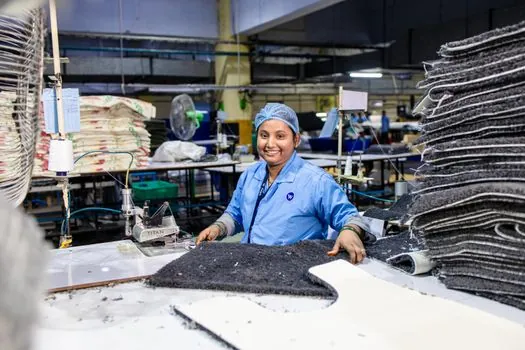
Moisture control is a non-negotiable cost line. NMC powder must be kept in vacuum boxes, and the dry-room dew point is typically below -40 °C; any breach triggers lithium residue reactions and gas generation in cells [S4][S5]. Dry-room capital, desiccant rotation, and dew-point monitoring are capital costs that get amortized into the per-kg price of finished cathode powder.
SOFC perovskite production adds a controlled-atmosphere calcination step to preserve oxygen stoichiometry [S3]. Aluminum-smelter CAC blocks demand consistent paste baking; CAC real density must be lot-to-lot consistent to avoid voltage drop variation and shortened cell life [S2]. Across all three lines, atmosphere and moisture control typically sit in the 10–20% range of conversion cost, varying with line automation and local energy tariffs.
Cost Driver 4: Particle Sizing, Surface Area, and Microstructure
Particle specification is a primary cost driver because milling and classification are energy-intensive and yield losses scale with how tight the cut is. Bat-Sol's NMC spec sets D10 ≥5.0 µm, D50 8.0–12.0 µm, D90 ≤25.0 µm, BET specific surface area 0.20–0.50 m²/g, and pressed density ≥2.30 g/cm² [S4]. Holding all four windows simultaneously requires multi-stage jet milling with classification, and scrap rates climb sharply if any one window is missed.
SOFC La₀.₆Sr₀.₄CoO₃ is supplied as a fine ceramic perovskite powder, not an alloy, with microstructural uniformity driving cell performance more than bulk chemistry [S3]. For aluminum-smelter CAC, the same logic applies in reverse: excess fines (under 1 mm) reduce cathode block quality, so the producer's screening step is a cost-bearing activity that protects the smelter's cell life [S2]. Cathode-layer coated electrodes in finished Li-ion cells run 50–200 µm thickness, 25–40% porosity, and 2-4 mAh/cm² areal capacity, so the upstream powder must deliver a coatable, calenderable morphology at the coater [S5].
Cost Driver 5: Certification, Compliance, and Documentation Overhead
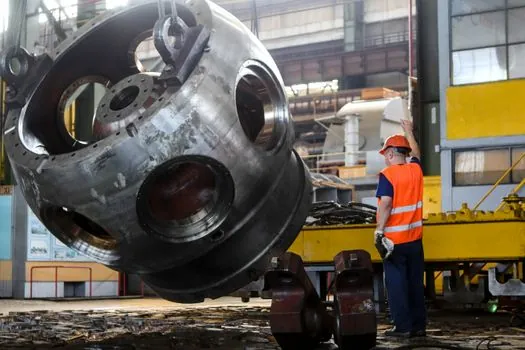
Compliance is a fixed-but-real cost layer. Electrolytic copper cathode carries ASTM B115 / LME Grade A documentation requirements that include assay traceability per heat [S1]. Li-ion cathode active material falls under ISO 12405-4, DIN EN 62660-1, IEC 62660-2, and UL 1642 for cell-level performance, abuse, and cycle testing [S5]. Aluminum-smelter CAC requires COA per lot covering ash, sulfur, fixed carbon, real density, and PSD before delivery [S2].
SOFC powders carry smaller-volume but higher-stringency documentation tied to the cell integrator's qualification cycle [S3]. For procurement, the rule of thumb: total cost of ownership is purchase price plus lot-level COA, audit cost, supplier qualification, and the cost of any incoming-inspection hold. Squeezed first-cost quotes tend to shift these costs upstream, not eliminate them.
Comparison: NMC vs SOFC Perovskite vs Aluminum-Smelter CAC vs Copper Cathode
Four cathode chemistries sit on different cost planes, and the decision criteria below are extracted from the cited spec data [S1][S2][S3][S4][S5].
Energy intensity per kg ranks: copper electrorefining (low, but capex-heavy) < CAC calcination (medium, gas or electric) < NMC calcination (medium-high, oxygen atmosphere) < SOFC perovskite sintering (high, controlled atmosphere, small batch). Purity target ranks: copper 99.99% / ≤65 ppm impurities < SOFC La₀.₆Sr₀.₄CoO₃ 99.9% < aluminum-grade CAC fixed carbon ≥90–95% < Li-ion NMC Ni+Co+Mn ≥57.17%. Moisture sensitivity ranks: copper (none) < CAC (low) < NMC (high, vacuum box, dry room) < SOFC (high, controlled atmosphere).
For procurement targeting, the cathode material and chemical material encyclopedia pages anchor the chemistry, and advanced material coverage links SOFC and NMC together. Copper-cathode economics sit on the copper material page.
Total Cost of Ownership: What the Purchase Price Leaves Out
Total cost of ownership on cathode material includes first-cost powder, incoming inspection, dry-room dwell time, scrap at coating, and field failure risk. For Li-ion, 1% NMC scrap at the coater is a much larger TCO penalty than the powder's purchase price differential, because it ties up coating line time, dry-room nitrogen, and solvent recovery [S4][S5].
For aluminum smelters, the analogous penalty is shorter cathode cell life: ash or sulfur above the CAC spec window shortens cell campaign and increases reline frequency [S2]. For SOFC stacks, powder morphology inconsistency translates to lower open-circuit voltage and earlier stack replacement [S3]. Spec discipline beats price negotiation, every time. A cathode material process control instrumentation map is the practical companion piece for any cost-reduction effort that does not cut specification.
Limitations and Failure Modes
Cathode cost reduction has hard floors. Pushing NMC Ni ratio higher raises energy density but also raises moisture sensitivity and thermal-runaway risk, both of which the cell standard ISO 12405-4 covers at the pack level [S4][S5]. CAC sulfur above 0.35% causes SO₂ emissions and metal contamination, and is a non-discretionary spec for most smelters [S2].
SOFC La₀.₆Sr₀.₄CoO₃ at lower than 99.9% purity introduces secondary phases that degrade ionic conductivity; pushing purity below spec saves precursor cost but loses cell efficiency [S3]. For copper cathode, anything above 65 ppm total impurities disqualifies the lot for high-purity rod and bar applications [S1]. Cost engineering on cathodes is a discipline of moving within spec, not moving past it.
Trackable signals for 2026 procurement cycles: lithium precursor price index movement, LME copper cathode premium, anthracite calcination coal index, and dry-room dew-point capex announcements from major Li-ion cell lines. Specs and process control, not headline price, are where the next 5–10% of cathode TCO will be found.