
Typical NCA and NMC cathode materials are produced through co-precipitation of transition-metal hydroxide precursors followed by calcination, a two-step route where the first reactor determines metal stoichiometry and the second kiln sets crystal structure [S1].
The North America cathode materials market was valued at USD 4,680.2 million in 2025 and is forecast to reach USD 7,162.7 million by 2030 at an 8.9% CAGR, with LFP identified as the fastest growing material segment over the same window [S5].
Co-precipitation reactor: pH, ORP, DO and feed ratios
In a continuously stirred tank reactor (CSTR) train for NMC precursor (pCAM), secondary particle morphology is set by pH, ammonia concentration, stirring RPM, residence time, and the Ni/Co/Mn feed ratio, and the dense spherical hydroxide that exits the train must stay within tight PSD and tap-density windows before it ever reaches calcination [S1]. Inline pH probes (typically glass-body, double-junction) and ORP sensors are the canonical process control loops on this reactor, with metal-salt and caustic dosing trimmed against pH setpoint deviations of 0.05 to 0.1 pH units on production lines [S1].
Process analytical technology (PAT) for pCAM also includes conductivity, temperature, and dissolved oxygen transmitters; conductivity rises sharply when ammonia overfeeds, which both wastes reagent and embeds nitrogen residuals in the hydroxide that later cause calciner off-gas spikes [S2]. Sulfate-based refining of Ni, Co, and Mn into battery-grade precursors remains the dominant industrial route, as confirmed by the Morocco feedstock study that targets 600 t/y Ni-sulfate, 9,305 t/y Co-sulfate, and 56,160 t/y Mn-sulfate for roughly 370,000 EVs annually [S4].
Calcination: oxygen, dew point and residence time
Calcination of the LiOH·H2O plus pCAM mix in an air or O2-atmosphere rotary kiln or pusher furnace sets the layered R-3m crystal structure, and the dominant process variables are peak temperature (typically 700 to 950 degrees C, depending on Ni fraction), dwell time, oxygen partial pressure, and the moisture content of the off-gas [S1]. A lambda oxygen probe plus a heated dew-point hygrometer on the exhaust stream are the standard process calibration checkpoints; if oxygen partial pressure drops, residual lithium carbonate forms on particle surfaces and increases moisture sensitivity downstream [S1][S2].
Trace metal impurity monitoring on calcined cathode powder has been shown to reduce cell-to-cell variability and cut transition-metal dissolution (TMD) at the cathode-electrolyte interface, which is one of the named failure mechanisms that feeds thermal runaway [S2]. Spectroscopy-based techniques are increasingly used to qualify lot-to-lot Li:Ni:Co:Mn ratios and surface Li2CO3/LiOH loadings before the powder leaves the kiln building [S2].
Spray drying and post-calcination conditioning
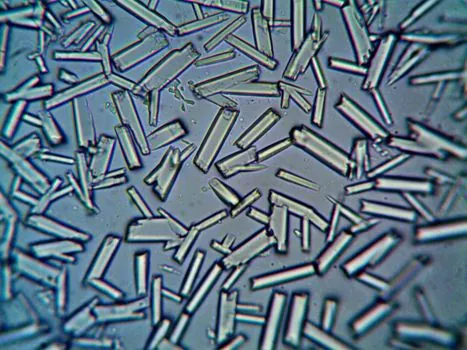
Spray drying of the calcined cathode slurry is the step that converts the active material into a free-flowing powder with controlled bulk density and sphericity, and consistency control of the inlet temperature, atomization pressure, feed rate, and outlet moisture is what determines yield and tap density [S6]. On a 2026 production dryer, the typical control loop is an inlet-temperature PID around a thermal-mass flow controller for drying-gas flow, with a multifunction process calibrator used during quarterly loop checks on the temperature and pressure transmitters.
Powder sphericity, moisture content, and PSD distributions are the response variables that the dryer DCS is trying to hold, and deviation in any one of them propagates into electrode coating defects in the cell plant [S6]. Closed-loop control of spray-drying parameters has been credited with delivering tighter powder sphericity and lower scrap rates in the lithium-battery cathode segment [S6].
Options comparison: NMC, NCA, LFP, sodium-ion on instrumentation burden
Process-instrumentation burden varies sharply by cathode family. NMC and NCA, the Ni-rich layered oxides that dominate the North American market, demand tight pH, ORP, and O2 control because small stoichiometry drift cuts reversible capacity, while LFP (LiFePO4), the fastest growing North American segment at 11.5% CAGR, runs a much simpler carbothermal reduction with no ammonia co-precipitation reactor, so its loop count is lower but its Fe/PO4 stoichiometry and carbon-coating step still need inline monitoring [S5].
Polyanionic and sodium-ion chemistries shift the instrumentation load toward crystal-structure verification (XRD) and Fe/Mn redox control, and they trade lower energy density for higher thermal stability, which relaxes some of the off-gas monitoring that NMC requires [S3]. For Ni-rich layered oxides, structural instability and electrolyte reactivity at high state of charge are the named failure modes, and these are precisely what tighter calcination oxygen and dew-point control mitigate [S3].
Failure modes, data quality and RL-driven design

Reinforcement learning (RL) frameworks for cathode design have been published in 2026 with explicit state, action, reward, and policy formulations, and the review identifies data scarcity, dataset bias, and reward function design as the dominant practical constraints on deploying these models inside a process control loop [S3]. A directly citable technical assertion from the literature: "The cathode performance is critically influenced by certain key parameters, i.e., composition, crystal structures, ion transport, and degradation behaviour" [S3].
Standard batch-release controls on a 2026 cathode line include PSD, BET surface area, tap density, pH, moisture, residual Li2CO3/LiOH, and trace metal assays, and any drift in these is what eventually shows up as cell-to-cell capacity variance or TMD-driven capacity fade in the field [S2]. Adopting ILP-aligned inline spectroscopy plus machine-learning feedback on calciner off-gas has been proposed as a path to cut scrap and improve first-pass yield, with physical validity and experimental validation still listed as open problems [S3]. For facilities spec work in adjacent process units, the lamps and light fittings and lighting equipment and electric lamps categories on battery dry rooms, and the broader construction machinery and equipment envelope for precursor handling, are commonly listed as separate equipment-specification workstreams alongside the instrumentation scope.
Trackable signals for the next node: an updated North America cathode materials 2026-2031 capacity build-out from the same market publisher [S5], and a follow-up RL benchmark paper with experimentally validated reward functions for pCAM co-precipitation, which the 2026 review explicitly flagged as an open gap [S3].
This topic is covered further in Counter-Drone Market Pulse: Capital, Hardware and Integration Across Land, Sea and Air....