A CE-marked machine has to ship with a current EU Declaration of Conformity, translated instructions, and a 10-year-retention technical file built around an EN ISO 12100 risk assessment; the same set is required from 20 January 2027 under Machinery Regulation (EU) 2023/1230, which replaces Directive 2006/42/EC [S2][S4].
What the file actually contains is a defined set of records, not a generic project folder, and the recent planning guides (Orenda, July 2026) treat traceability of evidence, version, and support period as the part most builders underestimate [S1].
The core document set: DoC, technical file, instructions, and CE marking itself
Every CE-marked product on the EU market requires an EU Declaration of Conformity (DoC) that must be kept up to date and updated if any of its elements change; the DoC is the legal attestation that the product meets the applicable directives and harmonised standards [S3]. A missing or inaccurate translation of the DoC, the instructions for use, or the safety and warning information can block market entry or trigger enforcement action in the member state where the machine is placed on the market [S2].
The technical file is the internal evidence pack behind the DoC. For machinery it is built around EN ISO 12100 for risk assessment and EN ISO 13849-1 for the required performance level of safety-related control parts, and is reinforced by the harmonised A, B, and C standards selected for that specific machine [S4]. The technical file itself can be kept in one working language (often English) as long as the user-facing instructions and DoC are in every official language of the destination member state, drawn from the 24 official EU languages; local-language summaries can still be demanded by enforcement authorities during a check [S2].
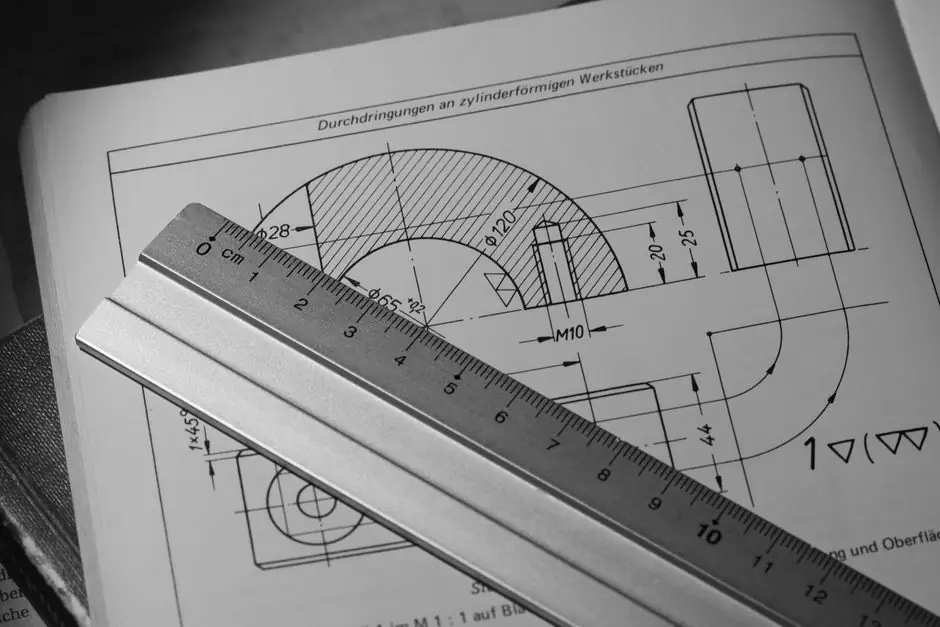
The practical file for one machine, in a usable order, is: (1) a machine description and intended-use statement; (2) the EN ISO 12100 risk assessment with hazard list, risk estimation, and protective measures; (3) the list of applicable directives and harmonised standards with their Official Journal references and processing status; (4) design drawings, schematics, circuit and pneumatic/hydraulic diagrams; (5) calculation notes and any test or verification reports; (6) the operating instructions translated for each destination market; (7) the signed EU Declaration of Conformity listing the directives and standards used; (8) the CE marking affixed to the machine; and (9) any notified-body certificate for machines in Annex IV of the Machinery Directive or Part A of Annex I of the Machinery Regulation [S4]. The CE mark must be attached to the machine and accompanied by the DoC, and these two together close the regulatory loop [S5].
Which directives and standards land in the DoC
The DoC's list of directives and harmonised standards is not a guess: CE-Copilot's standards finder references the Official Journal of the EU, including Annex IV of Machinery Directive 2006/42/EC and Annex I (Parts A and B) of Machinery Regulation (EU) 2023/1230, to determine whether a notified body is required, and records the harmonisation status of each A, B, or C standard against that official source [S4].
In practice a machine builder pulls in 2006/42/EC (or 2023/1230 from 20 January 2027), the Low Voltage Directive 2014/35/EU, the EMC Directive 2014/30/EU, the Machinery-specific Radio Equipment Directive (2014/53/EU) only if a radio function is present, and any sector regulation such as ATEX 2014/34/EU for explosive atmospheres or the Pressure Equipment Directive 2014/68/EU if a relevant assembly is integrated [S2][S4]. Each entry on the DoC must be the exact directive or regulation number, the harmonised standard with its part and year, and only standards whose references are published in the Official Journal of the EU for that directive can carry a presumption of conformity [S4].
Translation discipline: 24 languages, one source, in sync

CE-marked user-facing content must be translated into every official language of every member state where the product is placed on the market, and a manufacturer selling into Germany, France, Spain, and Italy needs the same manual and DoC in German, French, Spanish, and Italian, kept in sync as the product changes [S2]. The 24 EU official languages are Bulgarian, Croatian, Czech, Danish, Dutch, English, Estonian, Finnish, French, German, Greek, Hungarian, Irish, Italian, Latvian, Lithuanian, Maltese, Polish, Portuguese, Romanian, Slovak, Slovenian, Spanish, and Swedish; the exact set is driven by the distribution footprint, not by a single EU default [S2].
Two practical rules sit on top of that. First, format fidelity: a DoC is a structured legal attestation, and a translation that reflows the product identifiers, the list of directives and harmonised standards, or the signatory block undermines the document, so the layout, the warning pictograms, and the embedded text in figures must be preserved [S2]. Second, language of the technical file: the internal file can stay in the working language, typically English, but enforcement authorities can require specific parts in the local language during a check, and the user-facing instructions and DoC cannot [S2].
The Cyber Resilience Act layer that now sits on top
For a machine with any product with digital elements, the EU Cyber Resilience Act (Regulation (EU) 2024/2847) adds another file set that has to be linked to the same machine lifecycle, and this set has two distinct dates: Article 14 reporting obligations apply from 11 September 2026, and the main obligations apply from 11 December 2027 [S1].
Concretely, a machine builder preparing for the CRA must map each product with digital elements to its versions, software and hardware components, supported configurations, customers, and support period, and keep technical evidence linked to the product lifecycle: risk assessment, design decisions, tests, component due diligence, instructions, changes, and support actions [S1]. A vulnerability intake, triage, correction, disclosure, and reporting workflow has to be in place before an actively exploited vulnerability or severe incident occurs, and a remote connection alone does not answer who evaluates the impact, what corrective action is possible, or whether a legal reporting duty has been triggered [S1].
Retention, who is in scope, and what 2023/1230 changes on 20 January 2027

EU DoCs have to be kept up to date and revised whenever any of their listed elements change, and the technical file has to be available to enforcement authorities on request for ten years after the last machine of the model is placed on the market, which is why traceability of evidence, version, and support period is treated as the part most builders underestimate [S1][S3].
EU manufacturers and non-EU exporters carry the same file obligations, and from 20 January 2027 the legal basis shifts from Machinery Directive 2006/42/EC to Machinery Regulation (EU) 2023/1230, so Annex references move (Annex IV to Annex I, Parts A and B), the conformity-assessment flow changes, and the DoC must be reissued against the regulation rather than the directive for any machine placed on the market after that date [S2][S4]. The new regulation is a regulation, not a directive, so it applies directly in every member state without national transposition, which tightens the timing for builders selling across the 24-language market set [S2].
Two trackable signals to watch into Q4 2026: the 11 September 2026 CRA Article 14 reporting effective date, which will surface the first set of mandatory vulnerability and incident reports and expose which builders have a working intake and triage workflow, and the 20 January 2027 cutover from 2006/42/EC to 2023/1230, which is the deadline by which a builder's DoC, technical file, and Annex check have to be reissued for any new serial number or any modified machine placed on the EU market [S1][S2][S4].
Component reference pages worth checking: coding machine, core machine, and cutting machine.
See also our earlier report, TOPCon Cell Yield Loss by Process Step: Where the Line Bleeds.