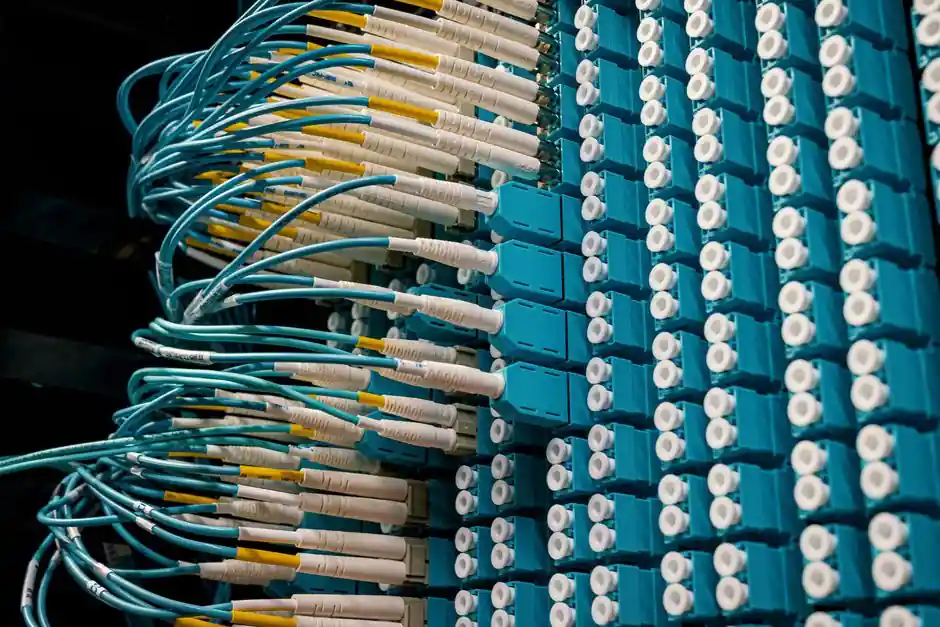
Phased migration is the right default for most plants running legacy controllers such as Allen-Bradley PLC-5, SLC 500, Siemens S7-300, or GE 90-30, because it spreads capital cost, limits each cutover window to one line or one panel, and lets engineers validate the new PLC before touching the next zone [S3][S4].
A single-shutdown "big bang" cutover, by contrast, only fits small, well-documented systems where total permissible downtime is short and the entire I/O count can be re-terminated inside one planned outage [S1][S2].
Lifecycle status, not age, drives the urgency
Rockwell Automation assigns every product one of four lifecycle categories: Active, Active Mature, End of Life, and Discontinued, and each one maps to a different migration window. Active Mature hardware still ships but long-term availability is not guaranteed, so procurement should stock critical spares and engineering should begin scoping a timeline. End of Life means spare parts exist only in remaining distributor inventory or the secondary market with rising prices, and these units should be prioritised for migration within 12 to 24 months. Discontinued hardware offers no spares, no firmware updates, and no technical support, and a failed processor in this state forces an emergency migration under production pressure [S3].
A 20-year-old PLC relying on parts sourced from online auctions is one such example: rebuild channels thin out, lead times stretch from weeks into months, and legacy instruction sets shrink the talent pool that can troubleshoot them [S1][S5].
Phased cutover: where it wins and where it stalls
Phased migration spreads cost over multiple budget cycles and reduces the downtime needed for each stage, so it is the default recommendation in most published migration playbooks [S1][S2]. South Shore Controls documents a 90-day roadmap that begins with a 30-day physical walk-down to inventory every processor, I/O rack, variable frequency drive, and communication module, recording catalog number, series, firmware revision, and current lifecycle status before any panel is opened [S3].
The trade-off is real: legacy and modern hardware must operate side by side for the duration of the project, so compatibility planning covers the HMI, the industrial network (Ethernet/IP, Profinet, Profibus), and any safety controller sharing the same safety PLC backplane [S1][S4]. Older HMIs typically lack the memory, processing power, and modern communication protocols to keep up with a current-generation controller, so they almost always need to be replaced in the same phase as the CPU [S1].
Single-shutdown cutover: only when the system is small and known
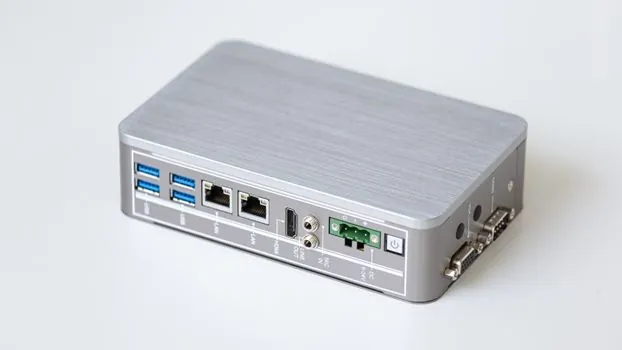
A complete control-system replacement during one shutdown is sometimes unavoidable, but it is not always practical. The condition where it works is a tightly bounded system with verified program backups, accurate electrical drawings, and a short, firm outage window [S2][S4].
LaFayette Engineering catalogues this as "Method A: like-for-like swap with conversion tools", the fastest schedule when the I/O and field wiring stay in place, but it demands the most rigorous Factory Acceptance Test (FAT) because there is no fallback once the line is dark [S5]. PLC-Group's strategy table rates a Complete PLC Migration as the strongest long-term supportability outcome, but flags greater engineering, testing, and commissioning effort than any partial approach [S4].
Side-by-side: which strategy matches which situation
Five candidate strategies recur across the published playbooks, and they line up against the same four decision criteria: best fit, main advantage, main consideration, and typical downtime exposure [S4].
Continuing to maintain the existing system fits stable equipment with available spares and verified backups, gives the lowest capex, and carries rising risk as parts and expertise go scarce. Replacing failed components only fits systems with isolated hardware failures and is the fastest recovery, but it leaves the wider obsolescence risk untouched. Phased migration fits large systems that cannot be replaced in one shutdown, spreads cost and disruption, and demands careful interface planning. Partial upgrade fits applications where the CPU, HMI, or network presents the greatest risk, targets the weakest subsystem, and still requires legacy and modern hardware to coexist. Complete migration fits unsupported or high-risk systems with poor documentation and limited spares, provides the strongest long-term supportability, and requires the heaviest engineering and commissioning effort [S4].
Method C in the conveyor playbook, "parallel rack and shadow run with emulation plus hard cut", sits between the two extremes: the new PLC control rack runs in parallel with the legacy one for a validation period, then a single hard cutover happens once the shadow run is clean, which is the closest most plants get to a big-bang outcome without inheriting its risk [S5].
Decision signals that tip the call

Choose phased migration when the plant runs continuous processes, when more than one line is in scope, when spare parts are already on extended lead times, or when engineering depth in the legacy instruction set is concentrated in one or two people [S2][S3][S4].
Choose single-shutdown cutover when the system is small enough to re-terminate inside the planned outage, when program backups and electrical drawings are verified, when the legacy platform is past Discontinued status and a parallel run would itself require obsolete spares, or when a Class I Div 1 area forces a single hot-work permit window. The HMI, the network, and any safety controller must be re-validated against the same hazard analysis in either path, and rollback procedures plus updated drawings are non-negotiable deliverables before the cutover starts [S2][S4][S5].
What the 90-day phased playbook actually contains
The South Shore Controls roadmap sequences the work into five named phases: Assessment (days 1 to 30), Design and Procurement (days 31 to 60), Build and Stage (days 61 to 80), Cutover and Commissioning (days 81 to 88), and Stabilisation and Documentation (days 89 to 90), with the cutover window itself capped at roughly one week for a single line or panel [S3].
LaFayette Engineering layers a similar five-phase structure on conveyor work: Discovery and risk register, Controls design and emulation, Panel and rack build with FAT, Field install and Site Acceptance Test (SAT) staged or parallel, and Ramp, training, and stabilisation. KPIs to anchor the business case include line availability at or above 99.5% and a 40% cut in mean time to clear the top 10 alarms, with the migration itself expected to deliver 15% throughput and 30% mis-sort reduction on a typical conveyor project [S5].
Trackable signals to watch between now and the next planned outage

First signal: any End of Life or Discontinued controller in the inventory, because those should already be inside a 12 to 24 month migration window. Second signal: the number of spares still purchasable through authorised distributors rather than brokers, since a move to broker-only supply is the clearest trigger to lock in a phased scope. [S3]
For plants still weighing the call, the 90-day phased roadmap published in May 2026 [S3] and the strategy comparison table published in August 2026 [S4] are the most concrete starting points, and the server line automation roadmap covers adjacent fixtured cutover practice that pairs with a single-shutdown hard cut.