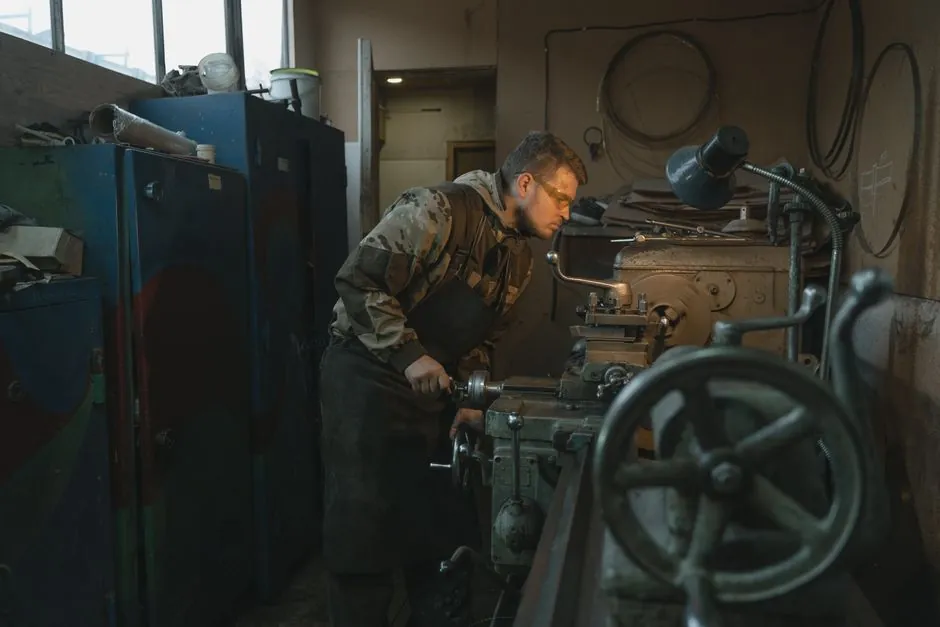
Under Machinery Regulation (EU) 2023/1230, the technical file for a machine placed on the EU market must contain the elements listed in Annex VII and be available to market surveillance authorities for at least 10 years after the last unit is placed on the market [S2][S7].
The file is not a certificate. No notified body issues, stamps, or pre-approves it; the manufacturer builds it, owns it, and presents it on request [S2]. The structure is governed by the directive in scope, so a machinery file is heavier than a low-voltage electrical file and considerably heavier than a toy file [S2][S5].
Scope and legal anchor: when Annex VII applies
Annex VII to the Machinery Regulation 2023/1230 is the explicit content list for machinery technical files, requiring design documents, the risk assessment, circuit diagrams, test reports, the operating instructions, and the EU Declaration of Conformity [S7]. The same set of documents is required whether or not a Notified Body is involved in the conformity assessment; the Notified Body simply reviews a subset of the same file when the machinery falls under one of the Annex IV categories [S2][S4]. For products that incidentally fall under other directives, the technical file is the sum of each directive's requirements: a machine with electrical equipment additionally inherits the relevant low-voltage and EMC documentation, and a machine intended for explosive atmospheres inherits ATEX 114 documentation [S5].
Retention is 10 years from the date the last unit of the model was placed on the market; for machinery covered by Annex IV the same 10-year clock applies unless a specific article of the Regulation changes it [S2][S7]. Non-EU manufacturers typically discharge that obligation through an Authorised Representative established in the Union, who must be able to produce the file on demand [S4].
Document checklist at a glance
A complete machinery technical file is built from a fixed, finite set of document groups, not a single template: general description and intended use; detailed photographs of the product as placed on the market; the list of applicable EU directives and harmonised standards used to demonstrate conformity; an Essential Health and Safety Requirements (EHSR) checklist mapping each requirement of Annex I to the design measure that addresses it; manufacturing drawings, bills of materials, and supporting calculations; the risk assessment and risk reduction record; test reports and certificates from in-house or external laboratories; the operating instructions; and the signed EU Declaration of Conformity [S2][S3][S7]. The harmonised-standard list is where US-built machines most often fail: UL, ANSI, and NFPA citations do not substitute for EN standards cited in the Official Journal [S2].
A practical baseline of harmonised standards for a general industrial machine includes EN ISO 12100:2010 for the risk assessment methodology, EN 60204-1 for electrical equipment of machines, and EN ISO 13849-1 for safety-related control systems; the exact list depends on the functions and hazards of the specific machine [S3]. Drawings should be at a level that allows the design to be reproduced: a general arrangement drawing, a wiring/circuit diagram, and a hydraulic or pneumatic schematic where applicable [S1].
EN ISO 12100 risk assessment: the file's centre of gravity

The risk assessment is the single most technically demanding section of a machinery technical file, because every other document either feeds it or is justified by it [S2]. EN ISO 12100:2010 defines the methodology: identify hazards, estimate and evaluate risks, apply the three-step hierarchy of inherent safe design, safeguarding, and information for use, and re-evaluate until residual risk is acceptable [S3]. The output is a hazard list, a risk matrix, the protective measures implemented, and a residual-risk evaluation that flows directly into the warnings section of the instructions [S4].
For each safety-related control function, EN ISO 13849-1 provides the performance level (PL a through PL e) and the required safety category (B, 1, 2, 3, 4), calculated from MTTFd, B10d, diagnostic coverage, and common-cause failure data for each subsystem [S3]. A machine that has, for example, a guard interlock on a pressure sensor feedback channel or a pressure transmitter on a hydraulic block with a safety function inherits the PL calculation into the same risk-assessment dossier. The file must show the calculation, the test report confirming category and PL, and the wiring diagram that implements the architecture; without all three, the conformity argument for that safety function is incomplete.
Test reports, certificates, and what "evidence" actually means
Test reports and certificates are the evidence layer that turns a design dossier into a conformity demonstration: type-test reports for electrical safety, EMC, noise, vibration, and any functional safety performance tests, plus calibration certificates for the instruments used [S3][S4]. Where a Notified Body issues an EU-type examination certificate under an Annex IV module, the certificate itself, its annexes, and the notified body's report become part of the file alongside the manufacturer's own supporting tests [S3].
The Declaration of Conformity is the cover sheet, not a substitute for the file: it states the manufacturer's name and address, the machine description, the directives and harmonised standards applied, the notified body where relevant, the place and date, and the signature of the responsible person [S2][S3]. Market surveillance authorities treat a missing or unsigned Declaration as a non-conformity regardless of how complete the rest of the file is [S2].
Comparison: which sections actually get audited first
From a market-surveillance perspective, the file sections that consistently draw the most attention are the EHSR checklist, the EN ISO 12100 risk assessment, the safety-related control validation per EN ISO 13849-1, the operating instructions, and the Declaration of Conformity, in that order. A US-built general-purpose machine typically fails on two specific items: citing ANSI/UL instead of EN standards in the EHSR table, and providing a risk assessment that lists hazards but does not show the three-step risk-reduction process required by EN ISO 12100 [S2][S4]. A third recurring failure is the operating instructions missing the noise declaration value, the residual-risk warnings, and the required pictograms from EN ISO 7010.
The file depth scales with risk class: a simple bench tool needs maybe 30 to 60 pages of structured documentation, while an Annex IV machine with safety-rated control functions will routinely run 400 to 800 pages including schematics and full PL calculations [S1][S7]. Either way the file has to be legible: a logical folder structure, unique document IDs, and a version-control record are expected, because the file is a living document that must be re-issued when the machine, the standards list, or the production process changes [S4].
Who prepares it, who keeps it, and the role of the Authorised Representative
The manufacturer is the legal owner of the file and the only party that can issue the Declaration of Conformity; importers must be able to access it, an Authorised Representative holds a copy on behalf of non-EU manufacturers, the Notified Body sees the relevant section during conformity assessment, and market surveillance authorities can demand the full set [S4]. For a US-built machine shipped into the EU, the practical workflow is: manufacturer drafts in English with a parallel EN-language operating-instructions draft, Authorised Representative holds the file and the DoC, and the EU importer is contractually bound to keep traceability for the retention period [S2][S4].
For a manufacturer already running an ISO 9001 or ISO 13485 quality system, the technical file is not a parallel universe; it is a controlled-document register that pulls design records, change notes, supplier certificates, calibration records, and CAPA from the QMS and binds them to a specific machine model [S3][S5]. The mistake to avoid is treating the file as a one-off project deliverable, because the obligation to keep it current survives the product's commercial life and re-opens every time a design change, a standards revision, or a field incident touches the machine [S2][S4].
Trackable signals for engineers: watch for the next European Commission update to the harmonised-standard list published in the Official Journal under Machinery Regulation 2023/1230, and for EN ISO 12100 maintenance work that may produce a revised methodology in the coming years, since any change in the cited standard forces a re-review of the EHSR checklist and the risk assessment in every existing file. A practical next step is to gap-check a current in-service file against Annex VII's list and against the current EN standards cited in the Official Journal, then close any EHSR rows that reference withdrawn standards. A second trackable node is the operational link between a machine's safety-related control validation and the PLC programming evidence: the safety logic block, the parameter map, and the validation test report must all carry matching revision identifiers, otherwise the file is technically inconsistent on the safety function alone.
Background reading: Gasket Material Chart: Temperature and Pressure Envelopes for Specifying Engineers.