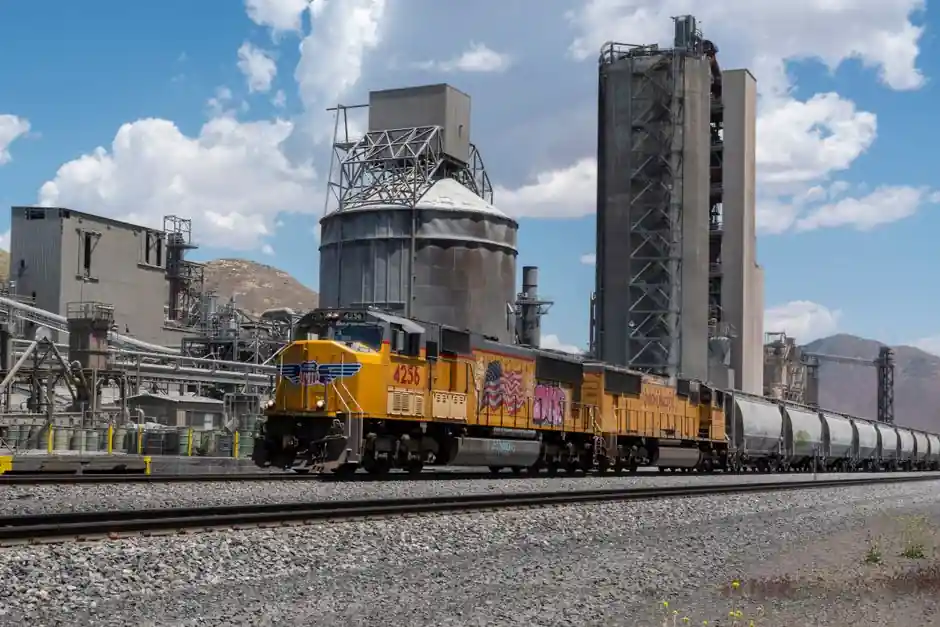
Cement-plant conveyor chains operate in one of the harshest mechanical environments in continuous process industry, where the working zones around the kiln inlet and clinker cooler expose chains to sustained temperatures above 800°C (1472°F) and to abrasive clinker fragments larger than 50 mm [S3].
The selection problem is not a single decision but a four-axis trade: chain family (roller, apron/pan, drag, bucket-elevator), pin-bush material and hardening, attachment geometry, and lubrication strategy, all bound to which of the cement plant's nine or ten material-handling stations the chain is being specified for [S1][S2].
Five Failure Modes That Drive Chain Specification
Abrasive wear is the primary degradation mode across every cement-plant conveyor: cement raw mix, limestone, and especially clinker act as a continuous sandblasting media against the pin, bush, roller, and pan surfaces, thinning components and driving elongation until the chain jumps sprockets [S3][S4]. High-temperature exposure at the kiln inlet and clinker cooler reduces tensile strength of plain carbon and low-alloy steels while accelerating oxidation and scale formation, with thermal-fatigue cracking observed where chains cycle in and out of the hot zone [S3]. Shock loading from the charging face of large raw-mill or clinker chunks creates instantaneous forces that exceed the static bulk weight of the conveyed material, a key reason why standard roller chain sizes selected by simple catalogue pull-strength tables under-perform in apron service [S1][S3]. Dust combined with process moisture drives corrosion that pits contact surfaces and works synergistically with abrasion, accelerating metal loss well beyond what either mechanism causes alone [S3]. Misalignment, usually from worn sprockets or distorted tracks, loads one strand of the chain and converts steady tension into bending fatigue on the inner-link plates [S3].
Match Chain Family to the Conveyor Function, Not the Brand
Apron/pan and case conveyors move clinker, hot raw-meal, and finished cement on articulated steel pans, and require heavy-duty conveyor chain with through-hardened pins and bushes; ZEXUS specifies special surface hardening on the pin, bushing and roller for these applications to extend life in highly abrasive service [S2]. Bucket elevators lifting raw meal, clinker, or finished cement vertically use matched pairs of chain conveyor strands with welded attachments; Renold markets these specifically to absorb the shock loading inherent to digging buckets at the boot [S8]. Drag and steel drag conveyors (also called "scraper" or "en-masse" conveyors) inside enclosed casings move gypsum, clinker dust, and similar granular materials, and ZEXUS's steel drag chain is built from welded link-plate and barrel sections for heavy, hard materials [S2]. Reclaimer chains serving circular stockpile-reclaim machines and pan conveyor chains under the clinker cooler are the most extreme-duty variants and are typically custom-engineered to the OEM of the reclaimer or cooler rather than bought from a generic catalog [S1].
Material and Hardness Selection: Alloy, Heat-Treat, Surface Engineering
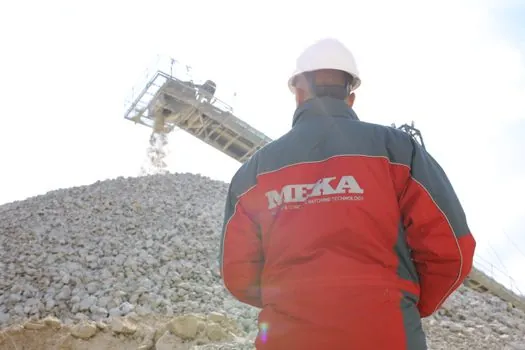
Heat-resistant alloy steels are the baseline for cement-plant chain pins, bushes, and rollers, with surface treatments such as induction hardening, carburising, or nitriding applied selectively to wear surfaces while the core stays tough for impact resistance [S2][S4]. Galvanised, nickel-plated, or full stainless-steel chain is reserved for outdoor or chemically aggressive zones, with the trade-off that austenitic stainless grades lose tensile strength faster than low-alloy steels once the temperature climbs much above 600°C, so stainless is the wrong choice at the kiln inlet even though it is the right choice at the raw-meal dust filter [S4]. High-temperature sections additionally require consideration of thermal expansion: a chain that is correctly tensioned cold will lose tension as it heats, and slack-side sag drives sprocket-jump failures, a problem addressed in the field with automatic or hydraulic tensioners rather than with a stiffer chain [S1][S3]. Abrasive-wear life scales more with surface hardness than with bulk hardness, which is why suppliers push pin/bush hardening rather than simply upgrading the link-plate steel [S2].
Operating-Condition Data the Buyer Must Capture Before Sizing
Five numerical inputs decide the chain size and family: material bulk density (clinker ≈ 1.5 t/m³, raw meal ≈ 1.2 t/m³, limestone ≈ 1.6 t/m³), throughput (typical horizontal cement conveyors run about 300 t/h at 35 m/min on a single-strand chain conveyor [S6]), peak lump size at the feed (often 50-150 mm in primary crushing and cooler discharge), ambient and material temperature profile along the conveyor (peak above 800°C at the kiln inlet, 200-400°C at the cooler discharge), and presence of corrosive species such as chlorides from alternative-fuel substitution, moisture from wet scrubbers, or alkalis from the preheater [S3][S4][S5]. The cement plant runs continuous shifts, so any chain specified for less than 20 h/day operation is being oversized for service factor; the standard industry expectation is 20-24 h/day, seven days a week, with planned stops only [S5].
Comparison: Chain Family vs Decision Criteria
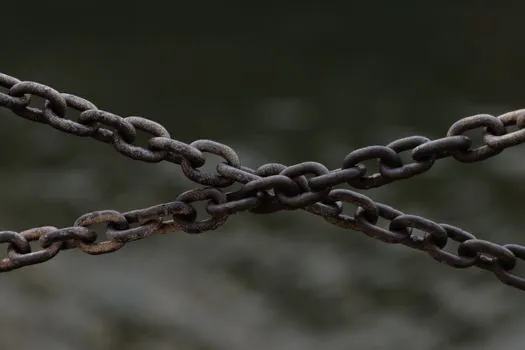
Apron/pan chain is the right answer where the material is hot (>200°C), lumpy, and abrasive: it carries the load on articulated pans, tolerates impact, and can be specified with through-hardened pins and bushes; cost is high and speed is low [S1][S2]. Bucket-elevator chain is the only answer for vertical lifting of bulk material, must be supplied as matched strand pairs with matched-pitch attachments, and is designed for shock absorption at the boot rather than for abrasive pan service [S8]. Drag/en-masse chain fits enclosed, horizontal or inclined transport of granular non-lumpy material, runs slower, and depends on a sealed casing for dust control, so it is the right answer for finished cement and raw-meal dust rather than for clinker [S2]. Standard roller chain has a place only on light-duty drives, transfer conveyors, and packaged-cement palletisers, not on clinker or kiln-feed service, where its small rollers and unhardened pins are destroyed in days [S1][S3]. The hidden fifth option, silent chain (inverted-tooth), shows up in some European cement-plant bucket-elevator designs for low-noise, high-speed lifts, but its higher cost and sensitivity to misalignment make it a niche choice in modern plants [S1].
Maintenance, Sprocket Pairing, and Common Failure Patterns
Three maintenance rules appear across every cement-chain supplier guidance: (1) regular inspection with chain-elongation measured pin-to-pin and compared against a 3% discard threshold, because elongation beyond 3% of nominal pitch guarantees sprocket-tooth jump under shock load [S3][S4]; (2) lubrication with high-temperature, graphite- or PTFE-based grease on the pin-bush joint for hot zones, and standard heavy-duty mineral grease in cooler, dustier zones where the lubricant must also repel fines [S4]; (3) sprocket pairing, with worn sprockets always replaced together with the chain, since a new chain running on hooked sprocket teeth accelerates wear and brings the failure forward by months [S3][S4]. The most common premature-failure pattern in the field is not chain tensile break but plate-eye cracking at the inner link, driven by a combination of abrasive thinning, corrosion pitting, and shock bending, a failure mode that is invisible to simple pull-strength checks and that mandates pin-by-pin NDT or dye-penetrant inspection at every major shutdown [S3].
Sourcing, Standards, and What to Verify With the Supplier
Spec sheets should reference the working load (not just breaking load), the recommended service factor (typically 1.2-1.8 for cement conveyors), the pin-bush hardness range in HRC or HV, the operating temperature rating, and the elongation at break, with the supplier's test certificates traceable to a heat-treatment batch [S1][S3]. Material traceability to ISO-grade alloy steels and conformity of the chain conveyor assembly to the equipment builder's mechanical drawing are the two documents that most often get waived at purchase and that later decide warranty disputes [S1][S4]. Cement-plant conveyors are not a commodity-belt market, so verify that the supplier has installed references in a live cement kiln, not just in aggregate or mining service: clinker cooler duty and limestone quarry duty are not interchangeable, and suppliers that quote both interchangeably are signalling that they have not engineered for the kiln-inlet temperature band [S1][S2].
Track three signals over the next planning cycle: kiln-inlet peak temperatures from your last two annual audits, mean time between planned overhauls on apron feeders at the cooler discharge, and chain-elongation measurements taken at every planned stop, since these three numbers, plotted together, predict the next chain-replacement window and let the procurement side lock in mill-rolling slots before the next peak-season clinker push [S1][S3][S8].
Background reading: Spec-First Selection Map for Explosion-Proof Electrical Gear.