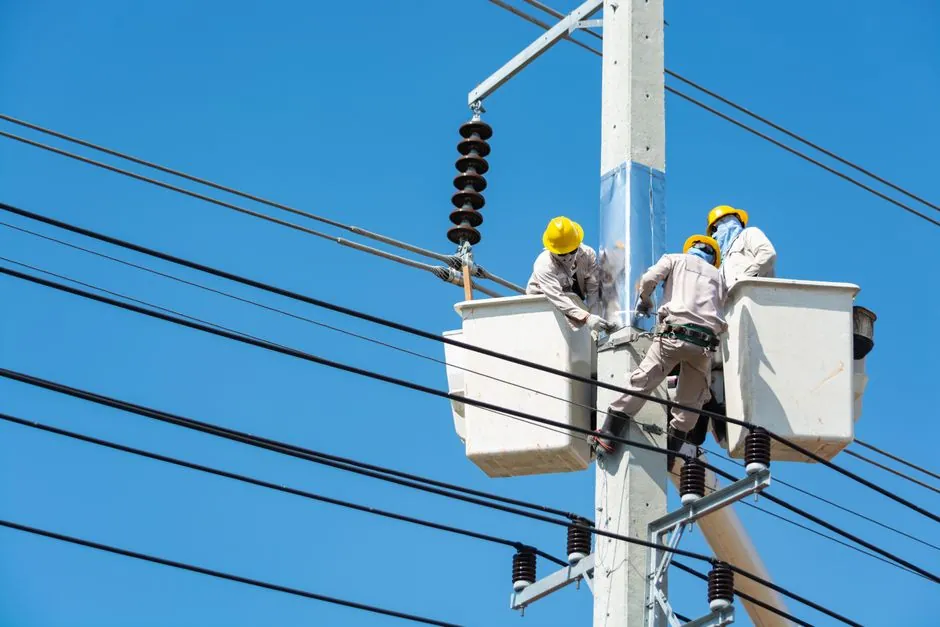
Explosion-proof electrical gear is selected by first classifying the location (Zone 0/1/2 for gases, Zone 20/21/22 for dusts, or the parallel NEC Division 1/2 system), then matching the gas group (IIA, IIB, IIC), temperature class (T1 to T6), and IEC 60079 protection type (d, e, p, i) to that classification [S1][S5].
The right device is rarely the cheapest one; it is the one whose certification mark, ambient rating, and enclosure material line up with the area classification drawing signed by a competent person, which is why this article is built around the four axes a process engineer actually decides on: zone, gas group, temperature class, and protection concept.
Hazardous Area Classification: Zones, Divisions, and Groups
Under the IECEx and ATEX systems, gas atmospheres are split into Zone 0 (continuous presence), Zone 1 (likely during normal operation), and Zone 2 (not likely, and brief if it does), while dust atmospheres map to Zone 20, 21, and 22 on the same likelihood scale [S1]. The NEC Division system inside NFPA 70 (Article 500) covers Division 1 and Division 2, with Articles 505 and 506 adding a Zone-system overlay that mirrors IEC; Canada uses CSA C22.1 Section 18 for Zones and Appendix J for Divisions [S5].
Apparatus groups narrow the match further: Group I covers mining, Group II covers surface gases split into IIA, IIB, and IIC (with IIC being the most restrictive, including hydrogen and acetylene), and Group III covers dusts split into IIIA (fibers/flyings), IIIB (non-conductive dust), and IIIC (conductive dust) [S1]. Selecting a IIC-rated enclosure where only IIA gas is present is legal but wasteful; selecting IIA where IIC is present is unsafe, which is why the group must be read off the hazardous-area drawing, not the datasheet title.
IEC 60079 Protection Types: d, e, p, i Compared
Flameproof enclosure (Ex d) contains any internal ignition and vents the cooled gas through machined flame paths; increased safety (Ex e) forbids arcs and limits surface temperature on terminals and enclosures; pressurization (Ex p, types px, py, pz) holds a positive protective-gas pressure inside the cabinet so the hazardous atmosphere cannot enter; intrinsic safety (Ex ia, ib, ic) limits circuit energy below ignition thresholds even under fault conditions, with ia tolerating two faults, ib one, and ic operation in normal conditions only [S1].
The four concepts trade off against each other on five criteria a buyer can score directly. Ex d is the workhorse for motors, junction boxes, and lighting in Zone 1, with the broadest third-party certification base. Ex e is used for terminal boxes, motors with special winding protection, and battery enclosures, where no switching or arcing parts exist. Ex p is preferred where a non-Ex certified control device, such as a PLC or VFD, must live in Zone 1, because the purge controller and pressure switch become the certified safety function. Ex i is the only practical concept for Zone 0 gas and Zone 20 dust, and for field instruments whose signal loops must be energy-limited at the barrier [S1][S5]. Cost per kilowatt falls in the order Ex i > Ex p > Ex d > Ex e, while engineering effort for installation falls in roughly the reverse order, because Ex d requires heavy conduit, threaded joints, and sealed fittings.
Enclosure Materials, Temperature Class, and IP Rating
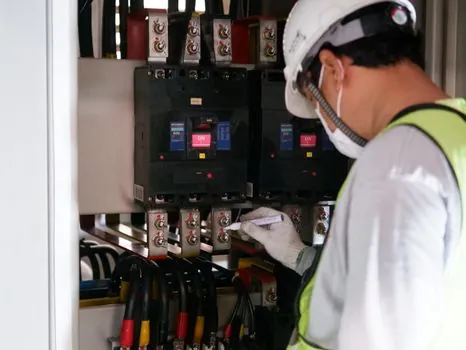
Common enclosure materials are stainless steel AISI 304 and AISI 316L, marine-grade aluminum alloys, borosilicate glass for luminaires and sight windows, and selected engineering plastics; 316L is the default for offshore and chloride exposure, while cast aluminum is the default for onshore skids where weight and heat dissipation matter [S1]. Surface temperature class is bounded against the auto-ignition temperature of the gas or dust cloud, with T6 capped at 85 degrees Celsius, T5 at 100, T4 at 135, T3 at 200, T2 at 300, and T1 at 450, so specifying T4 against a hydrogen sulfide service that auto-ignites at 260 degrees Celsius is a hard pass.
IP code sits on top of the Ex marking: Zone 1 enclosures are typically IP65 or higher for dust and jet-water exposure, while offshore decks and open-pit mining often call for IP66 or IP67. A common error is treating IP66 as a substitute for Ex d, when in fact IP only describes water and dust ingress and the Ex d flame path is an independent mechanical requirement with its own gap-length and surface-roughness limits in IEC 60079-1 [S1][S5].
Cables, Glands, Conduit Seals, and Fittings as Part of the System
Explosion-proof electrical integrity fails more often at the cable and fitting interface than inside the enclosure, which is why certified hazardous-area cables and matching Ex d or Ex e cable glands are specified as one system [S2]. Three cable families cover most installations: armored cables (SWA or STA) for mechanical protection on offshore platforms and refineries, instrumentation cables with overall screen for low-level signal circuits, and high-load power cables with flame-retardant, oil-resistant, and UV-resistant sheathing for outdoor trays [S2].
Conduit seals are mandatory at boundary crossings between Zone 1 and Zone 2 in the NEC system, and between classified and unclassified spaces in IEC systems; explosion-proof fittings and seal fittings are selected to limit flame propagation and to keep the gas migration path through the cable core closed off [S8]. Practical rules from the field: never reuse a damaged flame-path surface, never mix an Ex d gland on an Ex e box, and never run a single multi-core cable through two separate classified zones without re-evaluating the routing, because the cable core itself becomes the conduit for gas migration [S2][S8]. A guide to explosion-proof fittings is worth reading alongside any explanation of the broader protection framework because the fitting and the philosophy have to be specified together.
Who Explosion-Proof Electrical Is, and Is Not, For
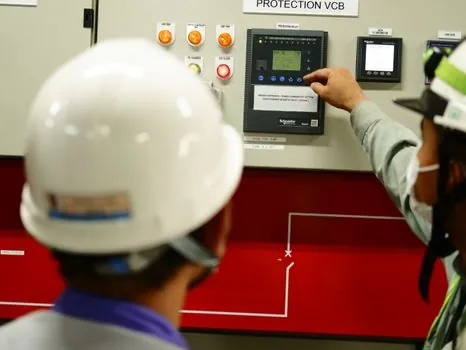
This equipment is for locations with a documented hazardous-area classification, typically oil and gas upstream and midstream, refineries, petrochemical plants, pharmaceutical and solvent handling, grain silos, coal handling, paint shops, and any Zone 1 or Zone 2 area around a bulk solvent or LPG storage vessel [S1][S4]. It is also the only defensible choice for new construction under ATEX 2014/34/EU in the EU, the parallel IECEx system used in Australia, the Middle East, and parts of Asia, and the NEC Division system in the United States [S1][S5].
Explosion-proof gear is not for clean rooms, server rooms, offices, schools, or general manufacturing without flammable atmospheres, where the cost premium of typically three to ten times a standard enclosure and the heavier conduit runs add no real safety value [S4]. It is also not a substitute for engineering out the hazard: replacing a Zone 0 with a sealed nitrogen blanket, or moving a control panel out of a classified area entirely, will almost always beat buying more certified hardware [S5]. Engineers at smaller skid builders sometimes over-spec by buying Ex d boxes for what is actually a Zone 2 panel, when a lower-cost Ex nA or Ex ec non-sparking concept on IEC 60079-15 would be both compliant and cheaper.
Standards, Certification Marks, and Documentation
Three certification marks dominate the world market: ATEX 2014/34/EU for the European Union, IECEx for the global IEC scheme, and UL or CSA listings under the NEC/CEC system in North America; GOST-R and CCC round out the picture for Russia/EAEU and China respectively [S1][S4]. A genuine Ex product carries a nameplate string that includes the Ex mark, the protection type letter or letters, the gas or dust group, the temperature class, and the certificate number traceable to a notified body, and that string is the only reliable proof that the unit was actually tested, not just designed to look the part [S1].
On the installation side, the US uses NFPA 70 (NEC) Articles 500 to 506 and NFPA 497 / NFPA 499 for classification guidance, the API publishes RP 500 and RP 505 for petroleum facilities, and Europe uses EN 60079-14 for design and installation, with the operator obligations laid out in the ATEX 1999/92/EC (also called ATEX 137) worker directive [S5]. A practical sourcing question for any procurement officer is whether the certificate covers the exact assembly you are buying, because many vendors sell an Ex d enclosure with a separately purchased terminal block that is itself not Ex d certified, which voids the system certificate.
Selection Workflow a Process Engineer Can Run on Monday
Step 1, confirm the area classification drawing and extract zone, gas or dust group, and auto-ignition temperature of the worst-case substance present. Step 2, choose the protection type: Ex i for Zone 0 and field instruments, Ex d for Zone 1 motors, junction boxes, and lighting, Ex p for Zone 1 control panels housing non-Ex electronics, Ex e for Zone 1 or 2 terminal and connection boxes, and Ex nA or Ex ec for Zone 2 non-sparking equipment [S1][S3]. Step 3, lock the temperature class at one class below the auto-ignition temperature, and the IP code at the worst expected water and dust exposure.
Step 4, pick the enclosure material (316L stainless for offshore and chemical, cast aluminum for onshore skids, glass-reinforced polyester for corrosive fumes) and specify matching certified cable glands and conduit seals from the same supplier family to keep the certification chain intact [S2][S8]. Step 5, audit the documentation: ATEX or IECEx certificate of conformity, third-party test report, installation drawing, and any user-manual conditions for safe use, including the ambient temperature range, which is often a hidden -20 to +40 or -40 to +60 degrees Celsius limit on the certificate. Cross-checking these five steps against the practical encyclopedia entry on explosion-proof work and the distribution-system perspective catches most of the over-spec and under-spec errors seen on real projects.
Common Failure Modes Buyers Should Engineer Out
The four failure modes that show up in incident reports are: (1) substitution of standard conduit fittings inside an Ex d conduit run, breaking the flame path; (2) field-drilled extra cable entries on an Ex d enclosure, which destroys certification because the flame path geometry is uncontrolled; (3) running a cable through two different zones without re-evaluating gas migration along the cable core, which can turn a Zone 2 gland into a path into Zone 1; (4) ambient temperature drift above the certified range, common when an enclosure sits next to a hot pipe or in direct sun, which silently invalidates the T-class rating [S1][S2][S8].
A second cluster of failures sits on the maintenance side: painted-over nameplates, missing bolts on flame-path covers, and re-used gaskets that no longer meet the compression spec. Buyers who standardize on a small set of vetted Ex d and Ex e families, stock the correct spare gaskets and bolts, and run a six-monthly visual inspection of the flame-path surfaces catch these issues before the next hot work permit or shutdown [S1][S8]. Tracking the broader spec-first guidance for upstream, midstream, and refinery service gives a project-level view of the same decision points.
Trackable next signals for the next procurement cycle include the rollout of any updated IEC 60079-0 and IEC 60079-1 alignment, the expansion of IECEx certificates into markets that still rely on GOST-R, and the gradual replacement of cast-iron Ex d enclosures with 316L stainless and glass-reinforced polyester units on offshore projects; each of these shifts changes the cost-per-kilowatt baseline and the on-shore vs offshore specification rule of thumb discussed above [S1][S2][S5].