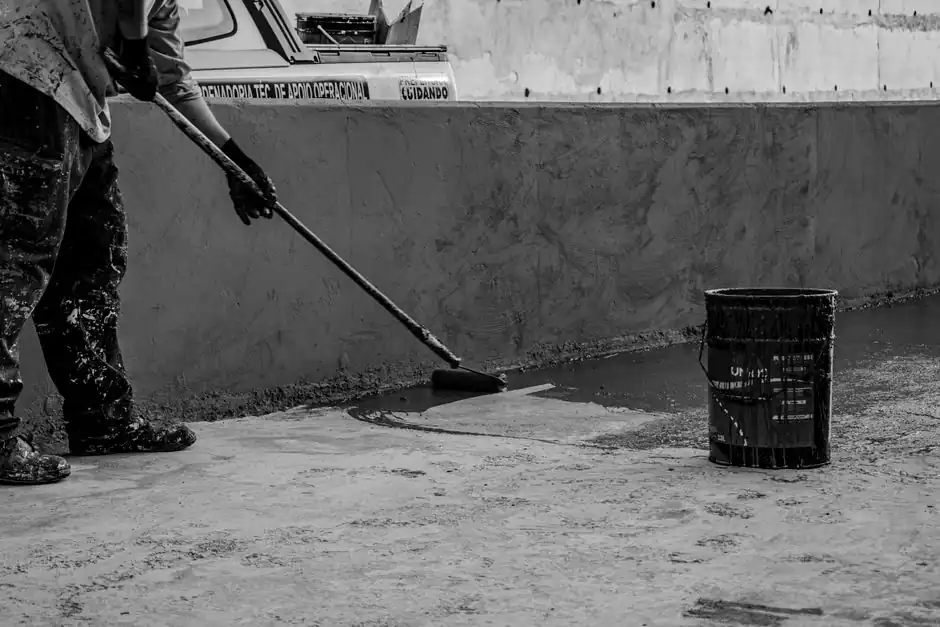
Cementitious waterproofing forms a rigid cement-based barrier for concrete and masonry, while bituminous waterproofing forms a more flexible asphalt-based barrier suited to foundations and basement walls [S1][S4].
The correct choice depends on hydrostatic pressure, substrate movement, detailing, installation access, and whether the system must bridge cracks, with a 50-year service life commonly requested for new buildings [S1].
System scope and performance boundary
Both options belong to below-grade waterproofing systems, not merely dampproofing. Waterproofing is intended to resist water under pressure, while dampproofing only retards soil moisture and cannot resist hydrostatic pressure [S3].
Cementitious coatings are mixed from cement, sand and water and applied by brush or roller to create a hard layer over concrete or masonry [S4][S5]. Their advantage is direct adhesion to compatible mineral substrates; their limitation is lower flexibility, with cracking possible when application or substrate preparation is inadequate [S4].
Bituminous coating uses asphalt or bitumen and provides a water-resistant layer that is more flexible than conventional cementitious coating [S4]. In basement work, it belongs to the broader family of waterproof mortars and bituminous coatings used for below-grade structures, alongside fully bonded sheet membranes, polyurea membranes, watertight concrete systems, joint sealing and drainage boards [S1].
Application geometry is a practical distinction. Liquid-applied polyurethane systems form a seamless elastic layer at corners and irregular junctions, whereas bituminous sheet membranes use reinforced rolls with overlaps for large, regular areas [S2]. This comparison explains why liquid-applied and cementitious options can handle details more readily than roll goods, while bituminous rolls are efficient over large wall areas.
Decision matrix: mechanics, movement and detailing
Cementitious coating scores well for rigid-substrate adhesion, local repairability and compatibility with mineral surfaces, but it is less tolerant of movement than bituminous coating and can crack if poorly applied [S4]. It is a better fit where the basement wall is stable, the surface is concrete or masonry, and the design places the barrier directly against sound substrate.
Bituminous coating scores well for flexibility, water resistance and large-area coverage, including foundation and basement walls [S2][S4]. It is less convenient around complex geometry than a seamless coating because roll joints require overlaps and lap detailing [S2].
A practical comparison is: cementitious versus bituminous on flexibility, detailing and substrate type. Cementitious offers lower flexibility, better performance on concrete and masonry, and easier local application; bituminous offers higher flexibility, broad foundation-wall applicability, and efficient coverage of large regular surfaces. Neither should be selected as a generic substitute for a fully bonded sheet membrane where the design specifically requires resistance to lateral water underflow [S1].
Do not confuse the bituminous coating with a bituminous sheet membrane. A coating is applied as a coating to the substrate; a sheet membrane is factory-made in rolls with a reinforcement carrier and a defined overlap or bonding detail [S2]. Both can serve foundation applications, but their installation controls and joint behavior differ.
Use-case recommendations
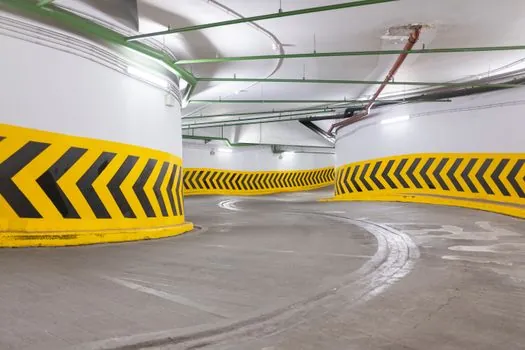
Use cementitious coating for a stable concrete or masonry basement wall where local repairs, mineral-substrate adhesion and complex corners are the dominant requirements. The product must be applied to a clean, sound and prepared surface because inadequate preparation can cause cracking and reduce adhesion [S4][S5].
Use bituminous coating or a bituminous membrane for foundation and basement-wall areas where higher flexibility is required and the wall presents long, regular fields that can be covered efficiently. APP- and SBS-modified bituminous products are available, and their flexibility and mechanical performance depend on polymer modification and reinforcement [S2].
Use a fully bonded sheet membrane when high water pressure and crack-bridging performance drive the selection. Sika identifies fully bonded FPO/TPO sheet membranes for high water-pressure requirements, with full bonding, no lateral water underflow, high flexibility, crack bridging and high durability listed as benefits [S1].
Consider crystalline waterproofing only as a defined design comparison, not as an automatic replacement for a complete membrane or coating system. The underlying decision remains whether the application needs a thin penetrative treatment, a bonded barrier, or a drainage and detailing assembly.
Installation constraints and failure modes
Cementitious coating depends heavily on substrate condition and workmanship. The substrate must be clean and smooth for adhesion and durability, and a rigid cement-based layer is less able to accommodate movement [S4][S5]. Poor mixing, application, curing, or preparation can produce cracking, while movement at joints and penetrations requires compatible detailing rather than reliance on the coating alone.
Bituminous coating must be protected from damage caused by backfilling, sharp aggregate, and installation traffic. Dampproofing guidance notes that careless backfilling can damage a foundation coating and that ordinary dampproofing has limited resistance to movement or concrete cracking [S3]. The same construction discipline applies to a higher-performance waterproofing system.
For sheet membranes, joints, laps, terminations and penetrations are critical because the membrane is not seamless. For coatings, continuity at corners, wall-to-slab junctions and penetrations is critical because local discontinuities become initiation points for ingress. A modified bitumen membrane should be assessed against the same detailing and backfill controls, not only its membrane designation.
Site conditions can change the selection. Water-table height, soil type, drainage performance and possible chemical exposure affect barrier selection, while a high water table increases the consequence of leakage and calls for a stronger engineered barrier [S5]. UV exposure is less decisive for buried surfaces than for terraces or roofs, but protection during exposure and backfill remains important.
Procurement, standards and verification
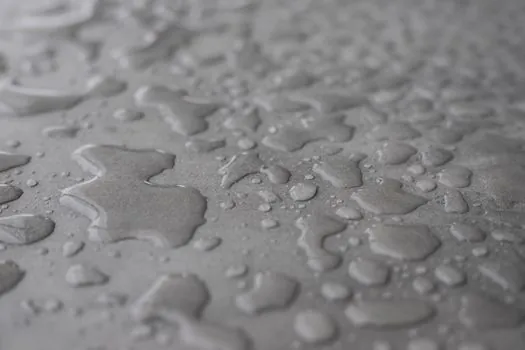
Specify the complete system, not a generic can or roll: substrate preparation, primer, coating or membrane type, reinforcement, thickness, number of coats, joint treatment, protection, drainage and compatibility with any waterproof coating or drainage-board system [S1][S5]. The project basis should also state expected service life, exposure conditions and acceptance testing.
National waterproofing requirements must be checked against the project jurisdiction and wall use. The cited building-code guidance identifies permitted dampproofing materials, including bituminous coating and acrylic-modified cement, for foundation walls retaining earth and enclosing below-grade interior spaces [S3]. That dampproofing provision should not be treated as evidence that either coating can resist hydrostatic pressure.
Verify performance with project-specific submittals and site records. Sika describes its below-grade solutions as tested and certified to national and international standards, and its system list includes waterproofing mortars and bituminous coatings, polyurea membranes, watertight concrete, joint sealing and drainage boards [S1]. Request the exact product data, test reports, substrate limits, curing requirements and warranty conditions for the selected grade.
Use HDPE geomembrane terminology only for thermoplastic sheet membranes and do not classify an asphalt coating or cementitious mortar as an HDPE product. The same discipline applies to standards references: use the standard cited by the product and project authority for the actual test or installation requirement rather than attaching a generic standard number.
Final selection by site condition
Choose cementitious coating for stable concrete or masonry, repair-friendly details and direct substrate protection. Choose bituminous coating for greater flexibility and efficient coverage of larger basement or foundation areas, subject to joint, lap and backfill protection. If high water pressure or substantial crack bridging governs, evaluate a fully bonded sheet membrane as the baseline rather than forcing a generic coating comparison [S1][S2][S4].
Before ordering, fix three project facts in the specification: the design water condition, the expected structural movement, and the required detailing at joints and penetrations. Those three facts determine whether the economical choice is cementitious mortar, bituminous coating, a bituminous sheet system or a more highly engineered membrane assembly [S1][S5].