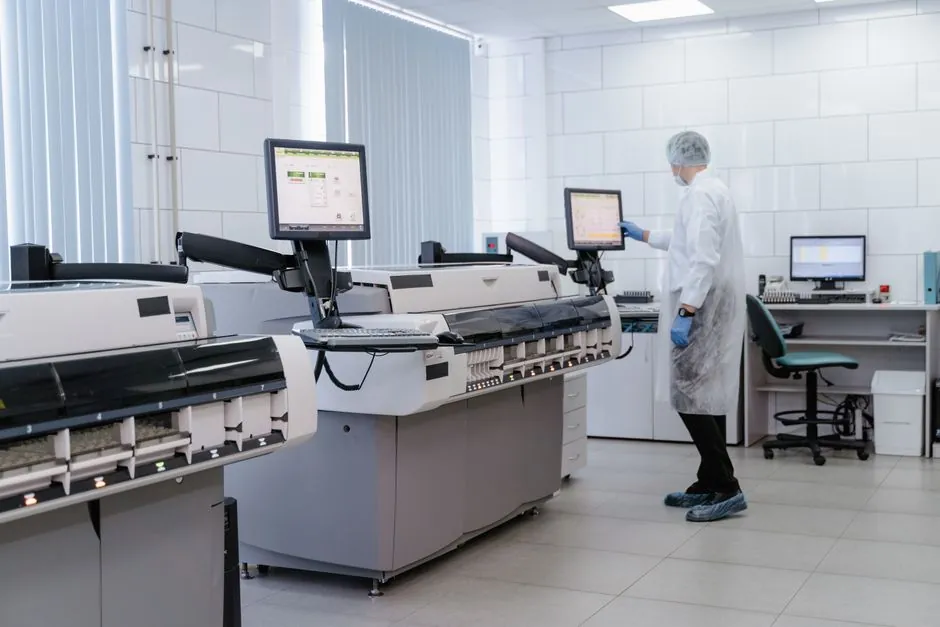
Continuous emission monitoring system (CEMS) demand is being pulled upward by regulatory enforcement rather than voluntary reporting: 40 CFR Part 60 Appendix B Performance Specifications and Appendix F quality-assurance procedures govern the acceptability of any CEMS used to determine compliance with US emission standards on a continuous basis [S1].
The 2026 CEMS market is valued at USD 1,613.25 million, with a 2035 forecast of USD 2,376.83 million [S2]. Broader emission monitoring system (EMS) data pegs the 2023 CEMS segment at USD 3.17 billion out of a USD 3.9 billion EMS total, with the residual split across predictive and stack-testing methods [S4]. India alone has a target of 4,247 Online CEMS (OCEMS) units across 17 industrial categories under CPCB guidelines [S4].
What CEMS Measures and How the System Is Built
A CEMS is the total equipment required to determine a gas or particulate matter concentration or emission rate from pollutant analyzer measurements combined with a conversion equation, graph, or computer program, producing results in units of the applicable emission limitation or standard [S1].
The measurable envelope covers SO₂, NOₓ, CO, CO₂, O₂, HCl, H₂S, mercury, VOCs, and particulate matter, with stack gas flow, moisture, temperature, and opacity often added at the same monitoring location [S5]. A typical installation consists of a sampling probe, filter, sample line or umbilical, gas conditioning, calibration gas system, one or more analyzers, and a Data Acquisition and Handling System (DAHS) that performs the compliance calculations and stores the data record [S5].
Probe and filter maintenance are the dominant field-reliability variables, since extractive CEMS are exposed to wet, particulate-laden stack gas before any analyzer sees the sample. For broader context on process data infrastructure that CEMS feeds, see this 2026 IIoT data historian comparison: Data Historian vs Time-Series Database for IIoT: 2026 Decision Matrix.
Regulatory Anchors That Force CEMS Procurement
In the United States, the EPA mandates CEMS under various regulations, with Performance Specifications used to evaluate acceptability at or soon after installation, and Appendix F to 40 CFR Part 60 defining the QC/QA procedures that determine whether CEMS data is acceptable for compliance use [S1][S4].
Stack test methods alone do not substitute for CEMS in the regulated categories; continual compliance determinations and exceedance determinations are the two legal pathways that drive permanent hardware, not portable analyzers [S1]. A predictive emission monitoring system (PEMS) is a defined alternative in EPA guidance, using process or control device operating parameters plus a conversion equation or model, and the agency has been studying PEMS applicability for NOₓ compliance with a draft accuracy/precision protocol in development [S1].
Technology Selection: Extractive vs In-Situ vs Predictive
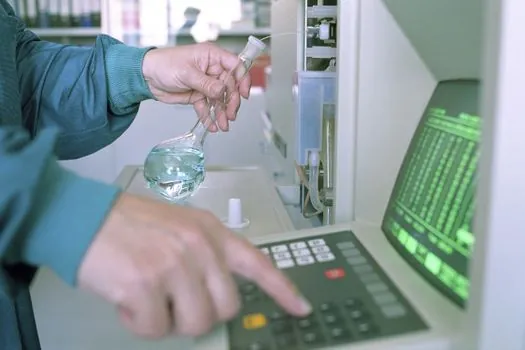
The three principal CEMS architectures are extractive (heated sample line pulls gas to a rack-mounted analyzer), in-situ or integrated path (optical measurement across the stack or duct), and predictive (model-based, no direct flue-gas analyzer for some pollutants) [S1][S3][S5].
Extractive systems handle the broadest pollutant set including HCl, H₂S, and mercury, because wet-chemistry and UV/IR analyzers can be conditioned upstream; in-situ optical systems dominate opacity, dust, and some NOₓ/SO₂ measurements where response time and avoiding sample conditioning outweigh multi-pollutant flexibility [S3][S5]. For larger procurement planning tied to the 2026 cycle, the related infrastructure question of factory throughput shows up in this 2026 diesel generator lead-time brief: 2 MW and 3 MW Diesel Generator Lead Times in 2026: Factory Quotas, Commissioning.
Cost, Calibration, and Lifecycle Drivers in 2026
The EPA-published CEMS Cost Model (March 2007 release on the EMC page) remains the reference workbook for capital and operating cost lines, used to compare extractive and dilution architectures against facility throughput and pollutant count [S1].
Calibration gas selection is non-trivial: span gas concentration must bracket the applicable emission limit, and zero/span checks drive the relative-accuracy test audit (RATA) frequency referenced in Appendix F [S1][S3]. Filter maintenance is the single highest-frequency preventive task, while probe location is set by EPA stratification criteria and the June 1994 EPA guidance on relative accuracy locations [S1][S3]. Material-grade procurement for stacks and sample lines runs in parallel to CEMS upgrades, and the 2026 stainless-steel discount channel in this brief is useful as a reference price point: October 6, 2026 Stainless-Steel Procurement Signal: Consumer-Channel Discounts Across Cutlery, Cookware, and Hydration SKUs.
Where CEMS Demand Is Concentrated Through 2026
Coal- and gas-fired utility boilers, cement and lime kilns, refinery fluid catalytic cracking units, sulfuric and nitric acid plants, pulp and paper recovery boilers, and municipal waste combustors are the traditional CEMS-mandated categories under 40 CFR Part 60, with 40 CFR Part 63 (NESHAP) layering hazardous-air-pollutant CEMS on top of the criteria-pollutant base [S1].
India's 4,247-unit OCEMS target across 17 industrial categories under the CPCB framework is the largest single national deployment signal visible in 2026 data, and Germany's USD 12,590 million in 2023 emission-trading-system revenue is the largest ETS-backed CEMS enforcement economy [S4]. Hungary, with 53% of companies setting monitored GHG targets in 2022, is the Central/Eastern Europe outlier driving voluntary CEMS-style monitoring outside mandatory regimes [S4].
Failure Modes and Specification Pitfalls
Stack-gas stratification will bias any single-point CEMS reading; the EPA's June 21, 1994 stratification determination procedure is the explicit method for selecting an equivalent measurement location [S1]. Probe clogging, umbilical condensation, and filter breakthrough are the three dominant extractive-system failure modes, while drift in optical alignment and window fouling dominate in-situ designs [S3].
For a multi-pollutant facility, the most common specification error is to specify a NOₓ/CO/O₂ analyzer for a process that is also subject to an SO₂ or HCl limit, which forces a second extractive train and a separate sample conditioning system [S1][S5]. Predictive monitoring is not a drop-in for CEMS in the regulated categories; the EPA has only studied PEMS for NOₓ at specific source types, and a draft protocol for PEMS accuracy and precision remains the gating document [S1].
Trackable 2026 signals to watch: India's OCEMS rollout cadence against the 4,247-unit target [S4], the EPA CEMS Cost Model update status, and any finalization of the draft PEMS accuracy/precision protocol referenced in the EMC guidance [S1].
For component-level specifications, see condition monitoring system, power monitoring system, and vibration condition monitoring.