For 2 MW (2,000 kW) and 3 MW (3,000 kW) standby diesel generators, 2026 factory lead times span 52 to 105+ weeks depending on emissions tier, OEM allocation status, and whether the quote carries a confirmed production slot, a 16.7% standby-to-continuous derate further reduces usable capacity on common hyperscale platforms [S2][S3].
The shortfall traces to AI-driven data center demand, with U.S. data center diesel nameplate reaching 55 GW in 2024 versus 20 GW in 2018, and Virginia alone holding 27 GW across 10,500+ permitted units [S1][S3]. Major-OEM large-frame slots are reported allocated into 2028, and Caterpillar's backlog reached roughly $63 billion, conditions that push non-allocation buyers toward second-tier brands, paralleled smaller frames, or tested surplus stock.
Lead-Time Range by Size and Configuration
Industry data places the 1,250-3,250 kW standby diesel class at 52 to 105+ weeks in 2026, with 52 weeks representing a slot-confirmed Tier 2 emergency-use build and 105+ weeks reflecting consultancy figures for hyperscaler-dominated large-frame slots [S1][S2]. Dealer-published ranges cluster lower: 52 to 70 weeks for 1,250-3,250 kW frames under typical Tier 4 Final packaging, versus 12 to 39 weeks for 750-1,000 kW units and 12 to 30 weeks for 500-600 kW standby diesels [S4].
Emissions configuration is the largest swing factor. An EPA Tier 4 Final package under 40 CFR Part 60 Subpart IIII with SCR aftertreatment, diesel particulate filter, and air-district paperwork adds queue time on top of an engine platform that is often identical to a Tier 2 emergency-use unit [S2]. OEM confirmations for 2-3 MW standby gensets can quote 74 weeks or more, with medium-voltage switchgear and transformers often gating the project even when the generator itself is available [S2].
2 MW vs 3 MW: Procurement Comparison
Choosing between 2 MW and 3 MW standby diesel frames is no longer a simple kW decision; it now hinges on allocation status, emissions packaging, and the secondary-market price gap. [S2]
<strong>2 MW (2,000 kW) standby diesel:</strong> Factory lead time 52 to 105+ weeks. Common platforms include Cummins DQKAB and MTU 16V4000 DS2000; observed asking prices on Tier 2 secondary-market sets sit around $685,500 for Cummins DQKAB and $666,765 for MTU 16V4000 DS2000, usable only where the permit basis still allows Tier 2 [S3]. Used 2,000 kW diesel sets run roughly $280,000 to $650,000 in 2026 depending on hours, switchgear inclusion, and emissions certification status [S6].
<strong>3 MW (3,000 kW) standby diesel:</strong> Factory lead time 52 to 105+ weeks. Hyperscale node sizing clusters around Cummins DQKAN, Caterpillar C175-16, Rehlko KD3250, and Generac's 2.25-3.25 MW lineup; the Cat C175-16 carries a published 16.7% standby-to-continuous derate (3,000 ekW mission-critical down to 2,500 ekW continuous), a figure that materially changes usable fleet capacity on continuous-duty contracts [S3].
Decision criteria buyers weigh against each other: factory lead time (lower on Tier 2 emergency-use configs), emissions compliance (Tier 4 Final versus Tier 2), usable continuous rating (derated versus nameplate), and secondary-market availability. Tier 4 Final engines carry the longest queues because the engine platform may be identical to Tier 2, but the certification path, aftertreatment, and air-permit paperwork are not [S2][S3].
Switchgear and Transformer Bottlenecks
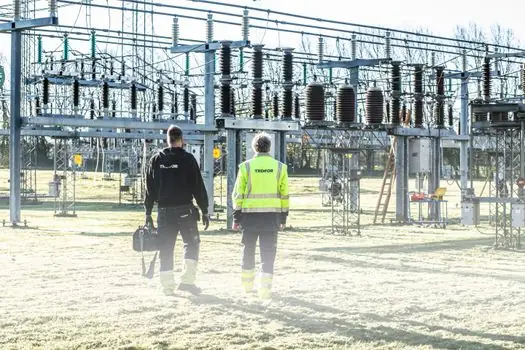
Even when the genset itself arrives on schedule, downstream switchgear and transformers gate the project, sometimes for longer than the generator. Medium-voltage switchgear for data center class is running 52 to 84+ weeks, with some quoted up to 72 weeks; published 44-week averages blend commodity classes and understate the data-center segment [S1][S2]. Large automatic transfer switches (ATS) are amperage-driven, with 250-400A at 7 weeks, 600A at 10 weeks, 800-1,600A at 14 weeks, 2,000A at 20 weeks, 3,000A at 23 weeks, and 4,000A at 31 weeks [S4].
Three-phase padmount transformers for data center class run 40+ weeks; blended 30-week averages include residential units and obscure the real lead time on the substation-class gear data centers actually need [S2]. These bottlenecks are why ordering "early" is now a 12-to-18-month design-stage activity rather than a construction-stage activity, and why standardising transformer specs across sites has become a procurement priority. Engineers specifying diesel generator control and protection systems should plan ATS procurement against the genset PO date, not the energization date.
Alternatives When the Factory Quote Does Not Fit
Tested used and surplus gensets remain the fastest procurement path, shipping in 1 to 4 weeks from dealer stock, independent of the OEM queue [S1][S2]. Data center refresh cycles feed the same boom's used market with low-hour units: low-hour large gensets that once sold at 40-50% of new now command 60-75% when new delivery is a year out, the market pricing the value of time [S1]. A tested used unit delivered this month is frequently the lowest total-cost option once the downtime risk of a 12-month wait is capitalised.
Paralleled smaller frames (two 500 kW units in lieu of one 1,000 kW unit, or four 750 kW in lieu of one 3 MW) trade switchgear cost and complexity for shorter queues and N+1 redundancy a single large unit cannot provide; 500-1,000 kW standby diesels run 12 to 52 weeks depending on OEM allocation [S1][S4]. Natural gas gensets (70-500 kW) carry 26 to 39 week lead times and easier permitting in strict air districts, with the trade-off of pipeline dependency during regional disasters and derated pickup performance versus diesel [S1][S4].
Cancelled-order inventory is a third channel: project delays and cancellations periodically release nearly-new units from cancelled hyperscaler orders, and these typically ship faster than factory slots at a price below new. Procurement teams should maintain a watching brief with the major dealers (USP&E, Cleveland Brothers, Global Power, PowerGen Enterprises) and pre-qualify vendors early. Related procurement patterns for other long-lead equipment, like transformer spec standardisation, share the same logic: design-stage decisions capture the next available factory slot.
Regulatory and Site Constraints

Lead time is no longer the binding constraint; the air permit attached to a 3 MW Tier 4 Final set often is. Illinois Tier 4 begins biting applications on 2026-12-01, and draft Virginia DEQ NOx guidance would compress permittable platforms, a regulatory shift that can force a generator swap late in design even when the factory has confirmed a build slot [S3]. A secondary-market Tier 2 set is usable only where the permit basis still allows Tier 2, which is a shrinking map; buyers in non-attainment areas should not assume a 2019-vintage emissions class is still specifiable.
Diesel keeps winning the emergency-backup spec sheet for three structural reasons: diesel sets commonly start and accept full load quickly to satisfy emergency standby code, stored-fuel energy density supports extended on-site runtime with no pipeline dependency or gas-supply curtailment risk, and the OEM bench is deep at the node where hyperscale standardises [S3]. Reference data for sizing on-site fuel storage against run-time targets sits in published diesel generator fuel consumption charts covering 20 kW to 4,000 kW at 25%, 50%, 75%, and 100% load.
Decision Framework for a 2 MW or 3 MW Buy in Q4 2026
For a buyer with an energization date inside 6 months, the realistic options are tested used/surplus stock (1-4 weeks) or paralleled smaller frames (12-30 weeks for 500-1,000 kW units), not a new 2 MW or 3 MW factory build. The 52 to 105+ week factory window is only competitive when the project timeline is 18+ months out and the OEM can offer a slot-confirmed build with an escalation cap. [S2]
For a buyer with an 18-to-36-month timeline, the choice is between Tier 2 emergency-use (shorter queue, but shrinking air-permit footprint) and Tier 4 Final (longer queue, broader air-permit acceptance, applies in Illinois from 2026-12-01). Hyperscaler-allocated brands (Caterpillar, Cummins, Rehlko) carry the deepest backlogs; second-tier OEMs with open order books quote materially shorter windows on comparable frames [S2].
Useful project-management defaults for procurement teams in 2026: order at design stage, not at construction; negotiate price-escalation caps; specify switchgear and transformers against the genset PO date; pre-qualify two used-equipment dealers; and treat any factory quote without a confirmed production slot as an opening position, not a delivery date. Engineers planning the commissioning test sequence should also budget the 20-40% post-factory buffer that turns a 52-week quote into a 65 to 75 week critical-load path [S2].
Trackable Signals to Watch
Three signals will move the 2 MW and 3 MW lead-time curve in the next two quarters: Caterpillar's quarterly backlog disclosures (the $63 billion figure is the leading indicator of slot tightness), the final form of Virginia DEQ NOx guidance for data center standby engines, and the Illinois Tier 4 effective date of 2026-12-01, which forces Tier 2-vs-Tier 4 buying decisions on every new application in the state. [S3]