
A centrifugal pulp pump should deliver the required flow and total dynamic head while operating at 50–120% of its best efficiency point, with NPSH available exceeding NPSH required [S2].
This guide covers stock preparation, dilute and medium-consistency pulp, and high-consistency applications where fibers, entrained air, abrasives, temperature, and vibration change the selection limits.
Define the pulp duty before choosing a pump
Selection must begin with the process liquid, not the pump catalogue: record pulp consistency, fiber length, temperature, viscosity, solids, pH, abrasiveness, and whether the pulp contains entrained air [S1].
Flow data should identify minimum, normal, and maximum production rates. For example, a duty cycling 50 m³/h through a heat exchanger requires a pump that meets 50 m³/h at the calculated head without adding separate margins to every step [S1].
Total dynamic head is the sum of static elevation, friction losses, suction and discharge pressure differences, and velocity-head effects. Calculate total dynamic head as static head plus friction losses and pressure difference.
Match centrifugal and positive-displacement options
Centrifugal pumps are appropriate for relatively free-flowing suspensions, including many stock-preparation and dilute-pulp duties, but fibers must remain within the impeller passage and eye limits supplied by the manufacturer. [S4]
Do not select a standard low-consistency centrifugal pump simply because its published maximum flow exceeds the duty. Check that the stated flow refers to the intended pulp consistency, and verify the vendor’s curve basis, test liquid and wear configuration.
Configure the impeller and hydraulics
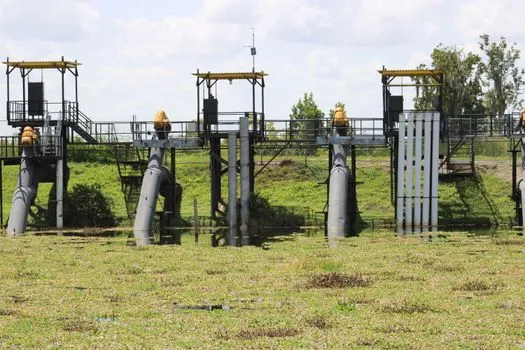
At high consistency, use a straight inlet arrangement. The high-consistency pulp system should provide continuous feed and balance production, while the inlet pipe should deliver pulp evenly through a screw or twin-roll feeder into the pump [S5].
Keep the outlet piping short and minimize elbows. For high-consistency pulp piping, the elbow centerline bend radius should generally exceed four pipe diameters, while equivalent length should be calculated as 1.5–2 times the elbow length [S5].
Control NPSH, air, and solids
NPSH available at the pump suction must exceed NPSH required by the selected duty point, and the margin should be reassessed at maximum flow, minimum tank level, highest liquid temperature, and the most restrictive suction condition [S1][S3].
A submerged suction, straight approach, and vortex-elimination device are engineering controls, but they do not replace the NPSH check [S3].
Set a minimum acceptable operating flow before final selection. Pumps that are oversized for a low-flow duty can recirculate or operate away from BEP, increasing vibration, seal stress and power consumption. A practical target range cited for centrifugal pumps is 50–120% of BEP flow, while another selection method recommends 80–110% of BEP flow when the installed curve permits [S1][S2].
Specify materials, seals, and wear parts
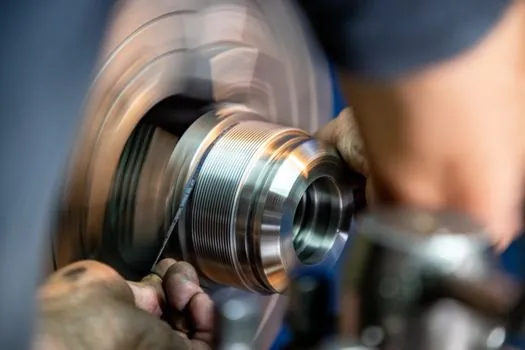
Internal materials must be selected for pH, dissolved chemicals, fiber abrasiveness, pulp temperature and the presence of entrained solids. Specify casing, impeller, shaft, shaft sleeve, wear rings and seal faces as separate line items, including alloy or elastomer grades [S1].
The data sheet should identify the material grade, hardness, and applicable wetted-part configuration rather than merely stating “stainless steel” [S2].
The shaft-seal plan must account for process leakage, emissions, maintenance access and washdown. Select the shaft seal as part of the pump-selection process.
Size the motor and installation
Hydraulic power is calculated as P = rho × g × Q × H, with pump shaft power calculated as P divided by pump efficiency; the motor rating then requires an agreed service margin. The selection process must account for density, minimum and maximum flow, head, efficiency, starting method and site voltage [S1].
Pump selection should account for installed cost, efficiency and operating costs, life expectancy and reliability, ease of service and maintenance, floor space, seismic concerns, and local parts availability and vendor support.
For a high-consistency installation, select the pump caliber and speed to suit the known outlet pipe rather than assuming a catalogue connection can pass the required fiber and consistency [S5]. A separate screw pump selection for pulp and paper is warranted when dense stock cannot remain reliably pumpable within the centrifugal impeller’s operating envelope.
Apply a procurement and acceptance checklist

The procurement document should require the guaranteed duty point, curve, BEP location, NPSH required, allowable operating range, and maximum continuous operating point, not only a nominal flow and head [S1][S3].
Require the manufacturer to state the test liquid, density used to convert head, impeller model and diameter, trim limits, motor horsepower or kW, and whether the quoted curve is guaranteed in the specified configuration.
Use factory witness testing for critical stock pumps to verify flow, head, power draw, vibration and bearing condition. Also require written confirmation of the maximum solid size, pulp consistency, temperature and permissible fiber length that the vendor will accept.
During commissioning, record suction pressure, discharge pressure, flow, motor current, vibration and bearing temperature at minimum, normal and maximum production rates. Compare the measured operating point with the approved pump curve, then correct the system or trim configuration if it falls outside the specified operating envelope [S1][S3].
