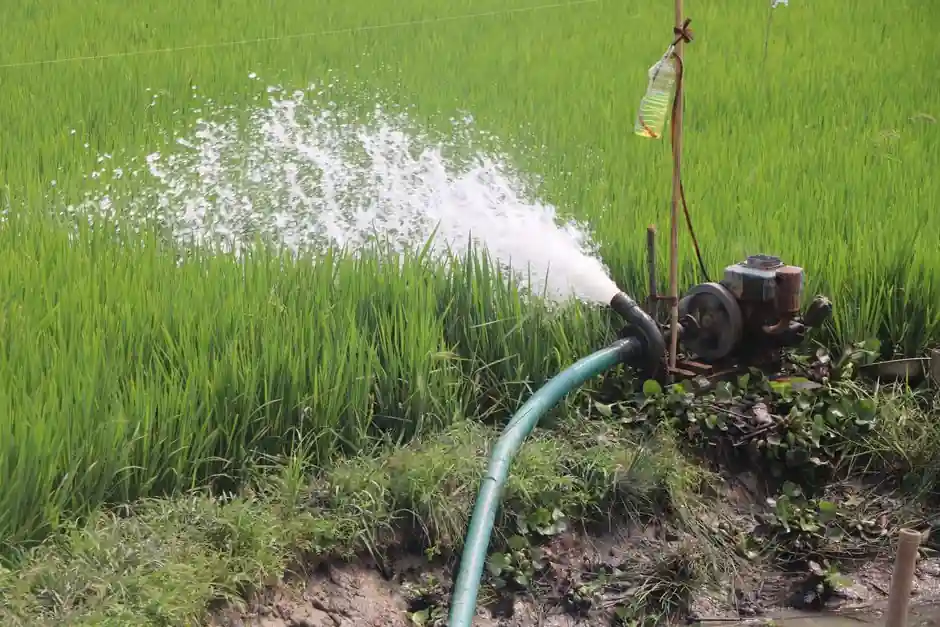
To make an irrigation system as efficient as possible, the pump must be selected to match the requirements of the water source, the water distribution system, and the irrigation equipment [S1].
Selection depends on the water source, pipe layout, system pressure, operating frequency, power supply, corrosion exposure, and maintenance access [S1][S2].
Pump Type and Irrigation Duty
Centrifugal pumps are appropriate for irrigation systems with substantial flow and moderate-to-high head, including sprinkler, turf, pressure-boosting, and filter-flushing duties [S2][S4]. NSW guidance classifies pumps as rotodynamic pumps, including centrifugal, mixed-flow, mixed-flow borehole, and axial pumps, or positive-displacement pumps [S2].
Rotodynamic equipment is generally favored for commercial sprinkler irrigation because high efficiency is required at comparatively high pressures [S2]. NSW guidance classifies centrifugal, mixed-flow, mixed-flow borehole, and axial pumps as rotodynamic pumps [S2]. NSW guidance identifies mixed-flow pumps as one type of rotodynamic pump [S2].
NSW guidance identifies piston pumps and helical-rotor pumps as examples of positive-displacement pumps [S2].
Flow, Pressure, and Total Dynamic Head
The required duty begins with two hydraulic quantities: flow rate, expressed in GPM, L/s, or m³/h, and pressure, expressed in psi or as head in feet or metres [S3]. The pump must supply enough flow to feed the largest irrigation area and enough pressure to operate every sprinkler head [S3].
For an overview of the centrifugal-pump category, see centrifugal pumps.
Suction Conditions and Operating Limits
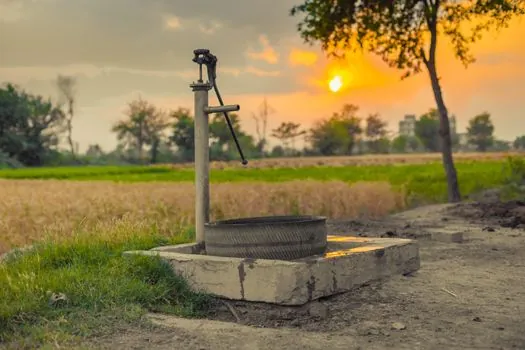
Suction conditions can eliminate a pump before hydraulic efficiency is considered, particularly with a shallow well, pond, river, or lake where the available submergence changes with drawdown [S1][S2]. The pump must be selected to match the requirements of the water source, the water distribution system, and the irrigation equipment [S1].
Centrifugal pumps rely on one or more impellers to increase fluid pressure [S4].
Comparison of Main Pump Options
The correct comparison is hydraulic performance against the actual irrigation constraint, not simply unit purchase cost. Radial-flow centrifugal pumps suit conventional surface-water, pond, tank, and booster applications where moderate-to-high head and accessible installation are required [S1][S2][S4].
Power, Motor, and System Compatibility
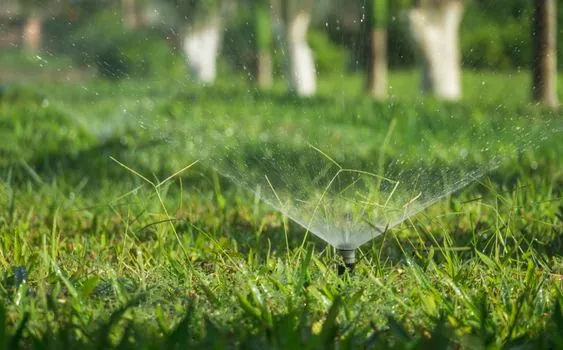
Power selection must cover available voltage, motor output, starting method, operating frequency, and the cost of the energy source [S2][S3]. Electric motors near an outdoor installation may require appropriate environmental protection and shelter, while petrol, diesel, or solar power may be necessary where grid access is absent [S2][S3].
Do not size the motor only by dividing a nominal flow and head into one operating point.
Booster pumps add pressure to the existing pressure of a system and are used where higher pressures or a pressure differential is needed [S4]. Further guidance on multistage centrifugal equipment is available in multistage centrifugal pump selection for irrigation.
Materials, Corrosion, and Maintenance
Water chemistry, sediment, abrasive particles, and agricultural chemicals determine wetted-material selection [S1][S2]. Corrosion and wear exposure should be evaluated at the outset, together with the facilities available for routine maintenance [S2]. A non-submerged centrifugal installation is generally less exposed to corrosion than a submerged machine, but chemical compatibility still requires verification [S2].
Surface pumps have an access advantage because the impeller and shaft are above the water and can be inspected without lifting a submerged motor [S2]. For deep-well or submersible alternatives, the operating environment, motor cooling, cable entry, and retrieval method become part of the selection [S3].
Review the complete operating inventory before issuing a purchase specification: water source, required flow, total suction head, total dynamic head, operating frequency, power supply, physical envelope, shelter, corrosion exposure, and maintenance access [S1][S2]. Confirm that the final model can pass through the intended operating range without violating minimum-flow or maximum-pressure limits.
Purchase and Acceptance Criteria
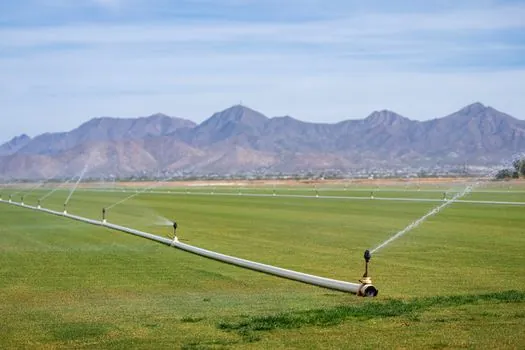
The correct shortlist contains pumps whose published curves pass through or near the calculated duty point, not simply pumps marketed for irrigation. Require documentation of rated flow, head, speed, efficiency, absorbed motor power, maximum pressure, minimum continuous flow, suction limits, materials, motor protection, and curve configuration [S1][S2].
Before acceptance, verify the pump nameplate and curve against the calculated flow and TDH, confirm rotation, inspect the suction and discharge piping for leakage, and test that the installed pressure and flow correspond to the design point. The water-head conversion provides a useful cross-check: 2.31 ft of water column equals 1 psi [S1].
Track three signals before approval: the design flow and total dynamic head, the available suction margin at minimum seasonal water level, and the motor load at the expected operating point. A pump that fails any of those checks is not a selection, regardless of its nominal horsepower or catalogue suitability [S1][S2].