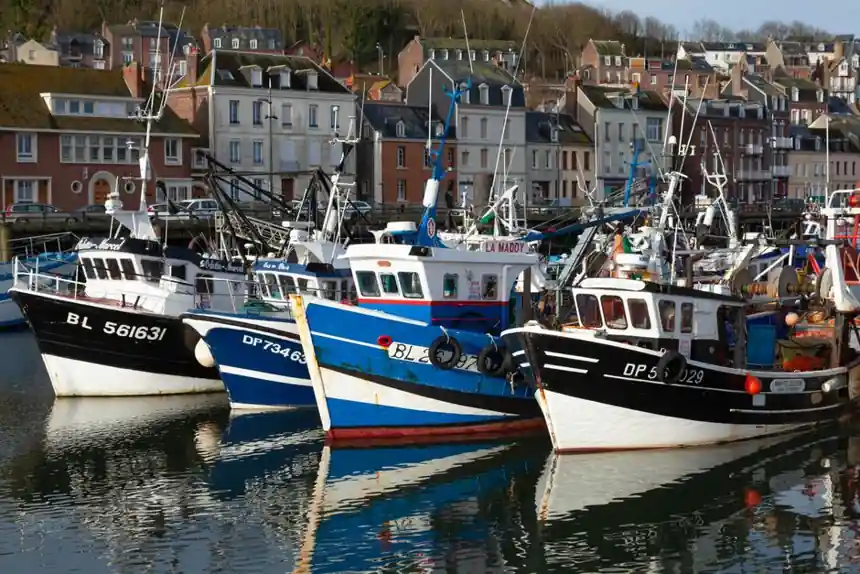
Marine centrifugal pumps cover duties from 11,355 m³/h and heads to 215 m in a representative industrial selection range [S2].
The correct shipboard pump depends on the liquid, required flow, total head, suction condition, space envelope, corrosion exposure, and class-society approval [S1][S4].
Define the Duty Before Choosing the Pump
Specify the required flow rate in m³/h, total head in m, liquid temperature, suction pressure, and operating hours before selecting a pump arrangement. The governing requirement is to meet the flow demand while keeping the duty point inside the pump operating range [S6].
For a marine system, total head includes static elevation, pipe and fitting friction, vessel pressure, and the required discharge pressure. A pump that generates enough head but operates outside its stable hydraulic range is not an acceptable selection [S7].
Centrifugal pumps are the normal choice for seawater, freshwater, cooling water, ballast, bilge, washdown, and other low-viscosity duties because they provide high flow in a compact package [S4]. Positive-displacement pumps remain relevant for viscous liquid, metered transfer, and high-pressure applications, including some firefighting duties [S1][S5].
Choose the Arrangement by Suction and Space
A standard centrifugal pump generally is not self-priming, so positive suction, a foot valve with a priming tank, or a dedicated priming arrangement must be provided [S4]. A self-priming unit is more appropriate where the suction level varies and no foot valve is installed, a common bilge-drainage condition [S4].
For an engine-room cross-sectional comparison, a vertical marine pump saves floor space but needs height; a horizontal pump has a low centre of gravity and low vibration; and a double-suction pump balances axial thrust while supporting much higher flow [S4]. The practical choice is therefore installation geometry, not simply the highest available flow rating.
Match Materials to Seawater and Liquid Exposure

Material selection begins with the pumped liquid, chloride concentration, temperature, velocity, and erosion conditions. Seawater systems require corrosion-resistant wetted parts, while freshwater duties can use different alloys and polymers without exposing them to the same chloride environment [S4].
The casing, impeller, shaft, seal faces, fasteners, and non-metallic components must be checked separately. A corrosion-resistant casing does not compensate for an unsuitable seal face or a shaft material that is unsuitable in the specified service [S4].
Marine pumps may handle seawater, freshwater, cooling water, fuel, waste, and ballast fluids, but those services are not hydraulically or materially interchangeable [S5]. Fuel transfer requires attention to flash point, viscosity, permeation, and sealing; a centrifugal unit intended for water must not be assumed suitable merely because its rated flow and head are adequate.
Match Capacity, Head, and Speed to the System
Use the system curve rather than a single rated operating point. The selected pump must deliver the required flow at the calculated total head without operating too near shutoff or at a flow that exceeds the machine’s permissible limits [S6].
A centrifugal pump selection guide lists capacities up to 11,355 m³/h (50,000 GPM) and heads up to 215 m (700 ft) for industrial, municipal, and marine services [S2]. These are selection envelopes, not guarantees that one pump model suits every marine installation.
The comparison is straightforward: a single-stage pump is normally preferable where one impeller can meet the required head; a multistage pump is appropriate where higher pressure is needed without relying on excessive impeller diameter or speed; a double-suction pump is preferred where very high flow and balanced axial loading justify its larger arrangement; and a positive-displacement pump is preferred where controlled delivery of a smaller or medium flow at higher pressure is more important [S4][S5].
Apply the Correct Marine Service Type
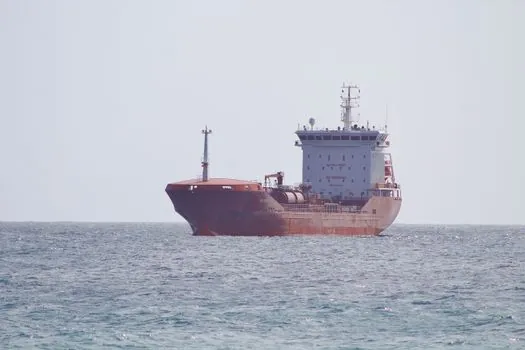
Select the duty by vessel system rather than by pump family alone. Bilge and drainage service requires reliable suction across changing liquid levels; ballast service prioritizes flow and endurance; firefighting service requires the specified pressure duty; seawater cooling requires corrosion-resistant construction; and boiler or freshwater service may require a clean, reliable circulating arrangement [S4][S5].
Centrifugal pumps are commonly assigned to ballast and boiler-feed duties because of their versatility [S5]. However, positive-displacement pumps are often preferred for highly viscous fluids and some high-discharge-pressure applications, while reciprocating arrangements offer strong suction capability but greater mechanical complexity [S1][S5].
Do not select a mainstream centrifugal pump for a metering duty, highly viscous fuel transfer, extreme high-pressure delivery, or a system requiring sustained self-priming. Those conditions favor a positive-displacement, self-priming, or specially engineered arrangement. For a broader process comparison, see Centrifugal Pump Selection for Oil and Gas.
Verify Class Approval, Installation, and Maintenance
Class approval belongs in the purchase specification, not as a final administrative step. The marine centrifugal pump must be selected for the vessel class, service, and required documentation, with attention to the marine centrifugal construction and approval route [S4].
The datasheet and approval package should identify the model, pump and motor ratings, duty limits, fluid and temperature range, wetted materials, seal arrangement, drawing, test requirements, and applicable class documentation. One published selection guide describes three principal marine centrifugal arrangements: vertical, horizontal end-suction, and double-suction split-casing [S4].
Installation checks include suction-pipe size and slope, discharge isolation, alignment, foundation load, motor rotation, venting, drain provisions, guard coverage, and access for seal and impeller maintenance. A double-suction pump’s horizontally split casing improves access to the impeller and seals without removing pipework, while a horizontal end-suction pump is comparatively easy to service in a confined engine room [S4].
Use a Traceable Shortlist
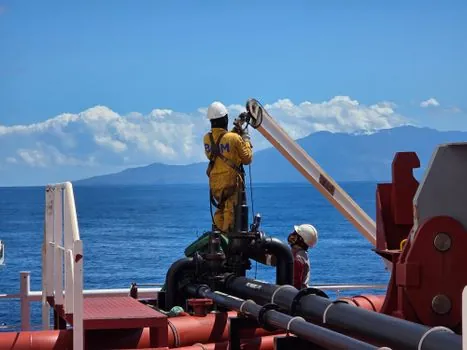
Build the shortlist by recording four controlled inputs: minimum and maximum design flow in m³/h, total head in m, suction condition in metres of water or bar, and the exact liquid with its normal and maximum temperature. Then map each candidate to a published pump curve, motor rating, material schedule, and class-approval package [S2][S6][S7].
Reject any candidate whose required duty point lies outside its stable operating range, whose seawater materials are incomplete, whose suction arrangement is incompatible with the vessel, or whose approval package does not match the intended service [S4][S6].
Request the selected model’s certified curve, material drawing, seal specification, maximum allowable operating conditions, test records, and class certificate before order release. Track the final approved duty point and installation arrangement against the vendor curve; either mismatch is a procurement hold point.