
Hot pressing can achieve over 99.5% theoretical density in 3–10 minutes, versus 90–98% after conventional sintering, making it the stronger choice for dense non-oxide ceramic components [S4].
The decision depends on density, geometry, cycle time, tooling cost, and machining tolerance: pressureless sintering scales better, while hot pressing applies heat and pressure simultaneously [S2][S4].
Process Difference: Pressureless Cycle vs Simultaneous Heat and Load
Conventional sintering reaches 90–98% density [S4].
Hot pressing loads powder into a die or graphite tooling system, applies pressure, heats the compact, holds it while particle bonds develop, then cools and ejects the part [S2]. The reported hot-pressing process uses temperatures of 1400–2000 °C and pressures up to 50 MPa [S4]. Hot pressing can reduce the densification temperature by 100–200 °C relative to pressureless sintering for advanced technical ceramics [S6].
Density, Cycle Time and Microstructure
Hot pressing can achieve over 99.5% of theoretical density, compared with 90–98% for traditional sintering [S4].
Shorter exposure limits grain growth, and applied pressure closes pores while particle contacts form necks, helping produce a finer and more uniform microstructure [S4]. That advantage has particular value for SiC, whose strong covalent Si-C bonds make pressureless densification difficult [S1]. In a SiC/YAG study, 5 wt% YAG at 1950 °C and 30 MPa produced 98.53% relative density, 675 MPa bending strength, 17.92 GPa Vickers hardness, and 386 GPa elastic modulus [S1].
Decision Matrix: Tooling, Cost and Production Volume
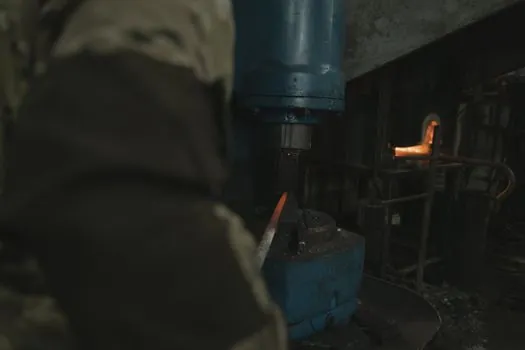
Hot pressing should be considered when higher density, lower residual porosity, or improved dimensional control is required compared with a pressureless route, subject to material and geometry review, and tooling direction, part height, wall thickness, powder flow, binder content, thermal expansion, cooling rate, and ejection method can limit the geometry [S2]. Hot pressing wins on density, cycle time, and dimensional control where those properties justify the added process burden [S2].
Geometry is the second decisive criterion. Hot pressing requires access along the pressing direction and favors simple-to-moderate shapes; undercuts, fragile features, high walls, and side details complicate die filling, ejection, and thickness control [S2]. Process selection should account for the material, part geometry, density target, shrinkage risk, tooling cost, and inspection requirements [S2]. A third criterion is secondary machining: hot-pressed parts may still need machining for holes, datum features, sealing faces, and tight dimensions [S2].
Application Fit: Seals, Wear Parts and Production Components
Hot-pressed SiC/YAG composite ceramics achieved 98.53% relative density, 675 MPa bending strength, up to 17.92 GPa Vickers hardness, and 386 GPa elastic modulus under suitable sintering conditions, and the composites are promising as dry gas seal materials for centrifugal compressors [S1]. It is also appropriate for difficult-to-sinter ceramics, metal-matrix composites, and parts requiring lower residual porosity or tighter dimensional control [S2][S4].
Conventional sintering reaches 90–98% density, while process selection should account for material, part geometry, density target, shrinkage risk, tooling cost, and inspection requirements [S2][S4]. Hot pressing is not a universal replacement for powder forming: powder flow, binder content, thermal expansion, cooling rate, pressing direction, and ejection method still govern yield [S2].
Additives, Purity and Processing Risks
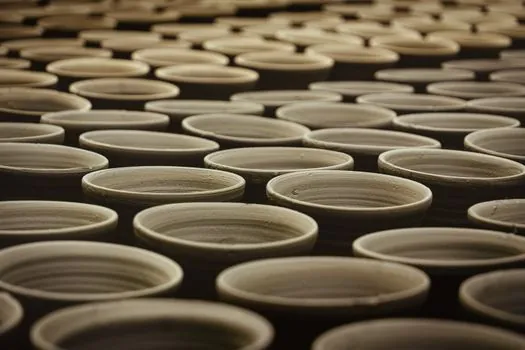
Hot pressing can produce ultra-high-purity ceramic products without sintering or forming additives, but many practical formulations deliberately use additives to create a liquid phase and improve densification [S8]. In the SiC/YAG example, uniform YAG distribution formed a liquid phase and, together with 30 MPa pressure, lowered the sintering temperature and refined the crystal size [S1].
Tooling direction, part height, wall thickness, powder flow, binder content, thermal expansion, cooling rate, and ejection method can limit the geometry in hot pressing [S2]. Residual porosity and grain size should be treated as measurable acceptance criteria rather than inferred from furnace temperature alone. In SiC/YAG composite ceramics, YAG content and uniform distribution forming a liquid phase, together with hot pressing, affect densification, crystal size, bending strength, hardness, and elastic modulus [S1].
Specification Checklist for a Valid Process Decision
Buyers should define the powder material, part type, critical surfaces, and related requirements, while process selection should account for the density target, geometry, shrinkage risk, tooling cost, and inspection requirements [S2]. For hot pressing, include the required pressure, temperature, hold time, atmosphere, tooling material, heating method, cooling rate, and ejection method in the process qualification.
Do not transfer the SiC/YAG result, 1950 °C and 30 MPa, to another ceramic grade as a generic recipe [S1]. The reported hot-pressing process reference uses temperatures of 1400–2000 °C and pressures up to 50 MPa [S4]. Validate density by an agreed method and mechanical properties on representative coupons or parts, then compare scrap and post-machining cost with the cycle-time gain [S2][S4].
For a first-pass decision, specify pressureless sintering for volume production and complex geometry; specify hot pressing when density above the conventional 90–98% range, a 3–10 minute densification target, or controlled microstructure is worth the additional tooling and process cost [S2][S4].