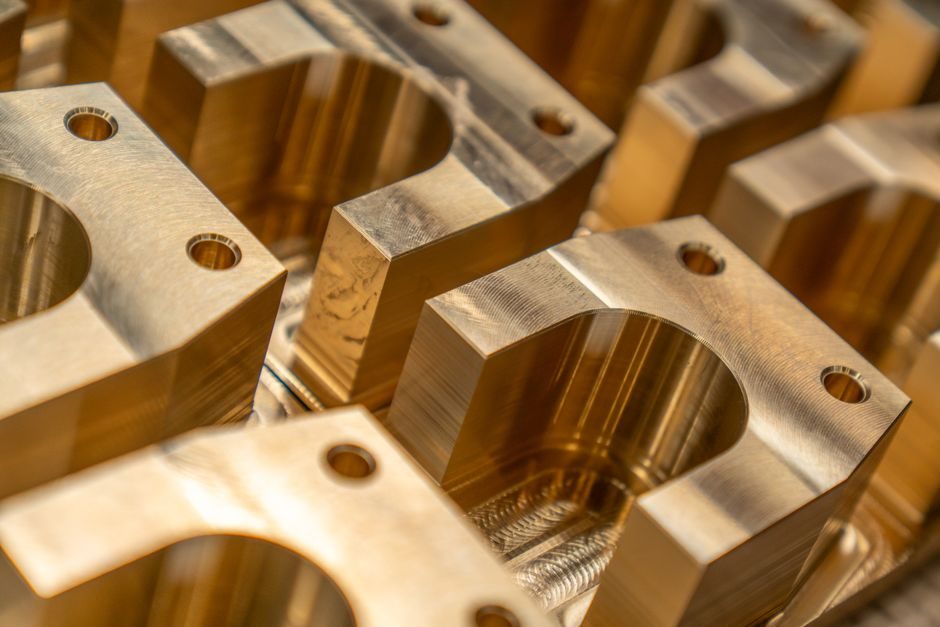
Custom ceramic machined parts in 2026 typically price in the US$8-15/kg range for commodity RBSIC (SiSiC) structural shapes at 20 kg MOQ, while tight-tolerance alumina, zirconia and boron-carbide finished components are quoted per-piece against a multi-axis cost stack of material, grinding time, fixturing and inspection [S2].
The US machining-services market for technical ceramics is mature: TQ Abrasive Machining (CA, USA) has been operating since 1994 and lists defense, semiconductor, microwave, automotive and nuclear wear components as its primary quoting lanes, with 24-hour typical RFQ turnaround on prototype work [S3]. On the capital-equipment side, double-sided ceramic polishing/lapping capacity is dominated by machines such as the SPEEDFAM DSM20B-5P-4D, which finishes 15 × 200 mm or 5 × 300 mm ceramic/substrate wafers per batch to low nanotopography [S1].
Material Price Bands and Where Each Fits
Alumina (Al2O3, 95-99.7%) is the cost baseline of the technical-ceramics family, widely used for alumina ceramic wear tiles, insulator rods and semiconductor fixtures, and it is the most forgiving material to grind with diamond tooling [S3]. Zirconia (YSZ, 3 mol% Y2O3) typically runs 3-5x the per-kg price of alumina but offers higher fracture toughness, which is why it shows up in valve seats, pump plungers and medical parts on TQ's component list [S3].
Silicon carbide sits at the high end: the Made-in-China wholesale index shows RBSIC (SiSiC) rollers and cross beams at US$8.00-15.00 per kg with a 20 kg MOQ, which is the structural-ceramic reference price for kiln furniture, heat-exchanger tubes and wear liners [S2]. Boron carbide (B4C), used for nuclear shielding tiles and sandblast nozzles, is generally the most expensive machinable ceramic on a per-kg basis and requires diamond grinding with high wheel wear cost, according to TQ Abrasive Machining's published capability list [S3].
What Drives the Quoted Price on a Custom Part
Four levers move a ceramic machined-part quote more than the raw-material line: (1) tolerance — going from ±0.1 mm to ±0.01 mm on alumina can multiply grinding time by 3-5x; (2) surface finish — Ra 0.8 µm and below usually requires lapping or polishing on a machine class such as the SPEEDFAM DSM-series double-sided lapper, sized for 200/300 mm wafer batches [S1]; (3) geometry complexity — thin walls, deep holes and small radii (R ≤ 0.5 mm) push shops toward diamond grinding or ultrasonic machining rather than standard surface grinding; (4) batch size — prototype runs (1-10 pcs) carry heavy setup amortisation, while production runs (≥ 100 pcs) spread it out, and many US job shops target 24-hour RFQ response on the prototype tier [S3].
Finishing process selection is itself a cost variable. Double-sided lapping is the standard for ceramic substrates and seal faces because it produces matched, low-nanotopography surfaces in batches of 5-15 wafers depending on diameter [S1]. For prismatic parts (tiles, rods, blocks), surface grinding with diamond wheels is typical; for internal features, ultrasonic or laser-assisted machining is added, with each step priced as a separate operation on the quote [S3].
Typical 2026 Sourcing Routes and Lead Times
Three routes dominate ceramic machined-part sourcing in 2026: (a) Chinese wholesale platforms for standard RBSIC shapes and simple ground parts at the lowest $/kg, with the 20 kg MOQ and US$8-15/kg band shown above [S2]; (b) US-based job shops like TQ Abrasive Machining for tight-tolerance, low-volume, ITAR- or nuclear-qualified work where the value is in the machining rather than the blank [S3]; (c) OEM integration directly with a ceramic parts manufacturer when volumes exceed a few hundred pieces per month and a dedicated fixture pays back.
For an engineer comparing routes on a sight glass liner or pump seal, the decision is usually not $/kg but cost-per-installed-part including scrap rate, lead time and traceability. China-sourced blanks win on price and lead time for non-critical shapes; US-sourced finished parts win on tolerance, certification paperwork and on-time delivery for nuclear, semiconductor and aerospace programs [S3].
Where Polishing/Lapping Equipment Fits the Cost Model
The SPEEDFAM DSM20B-5P-4D is an industrial, automatic, double-sided ceramic polishing machine made by SPEEDFAM NV/SA in Belgium [S1]. The smaller-footprint DSM16B-5L/P-V covers double-sided CNC lapping/polishing in the same family for lower-volume or smaller-diameter parts [S1].
For a buyer, the takeaway is that any shop running this class of equipment can hit Ra in the single-digit nm range on ceramic faces at a cost that is competitive with hand-lapping — but only above a minimum batch size, which is why small R&D lots are still quoted by hand or single-sided methods. Ceramic bearing races and linear guide rolling-element substitutes are a typical application that benefits from this double-sided finishing route, since raceway flatness drives load distribution and noise.
Failure Modes and Cost Traps
Ceramic machined parts fail in three well-known ways that the quote must price for: (1) edge chipping on thin walls and sharp corners, usually caused by insufficient chamfering or aggressive diamond-grit infeed; (2) surface sub-surface damage (SSD) from grinding, which drops strength by 20-40% versus the as-sintered baseline if not removed by a final lapping or polishing step; (3) thermal-shock fracture on start-up in kiln or heat-exchanger service, which is mitigated by material selection (SiSiC over alumina) rather than by machining [S2][S3].
Two cost traps to watch in 2026: first, accepting the headline $/kg on a Chinese RFQ without checking whether the price includes grinding to print or only the as-sintered blank — many RBSIC quotes are blank-only [S2]. Second, underspecifying inspection; for parts destined for semiconductor, nuclear or aerospace end-use, dimensional reports and surface-finish traces are typically priced as a separate line and can add 5-15% to the order value, so a like-for-like RFQ must include them [S3].
Standards, Specifications and the Sourcing Checklist
Material specifications for technical ceramics are usually called out against ISO 14704 (flexural strength), ISO 14644 (cleanroom-related surface) and ASTM C1161 (flexural strength of advanced ceramics), with surface finish referenced to ISO 4287/4288 (Ra parameters) on the print. For nuclear and oilfield service, NACE MR0175 covers sour-environment material compatibility for ceramic-metallic assemblies, while semiconductor-grade alumina and SiC substrates are typically ordered against SEMI-grade cleanliness and flatness specs. For the part itself, the most common drawing requirements are: material designation, density (e.g. ≥ 3.85 g/cm³ for 95% alumina), surface finish Ra, edge break, lot traceability and, where relevant, ISO 2768-m or tighter general tolerances. [S1]
A practical 2026 RFQ checklist: (1) material grade and reference standard; (2) finished dimensional tolerances, with critical features called out; (3) surface finish Ra per face, with any lapped/polished faces identified; (4) batch size and annual volume; (5) inspection scope (CMM report, surface profilometer, visual); (6) certification (material cert, RoHS, REACH, ITAR, nuclear QA); (7) target unit price and target lead time. A clean RFQ on these seven lines typically returns comparable quotes from both Chinese and US shops, which is the only reliable way to benchmark a planetary gearbox seal or crossed-roller retainer-grade ceramic part.
Trackable signals for the next sourcing cycle: (1) shifts in the RBSIC $/kg index on wholesale platforms away from the US$8-15 band; (2) new ISO/ASTM revisions governing ceramic-substrate flatness and nanotopography that change the equipment class required for finishing; (3) the spread between Chinese blank-only and US finished-part quotes for the same drawing, which is currently the single largest variable in any ceramic machined-part landed-cost model.
For related coverage, see Linear Guide Rails in Smart Manufacturing: Specs, Gantry Stacks and 2026 Sourcing Map.