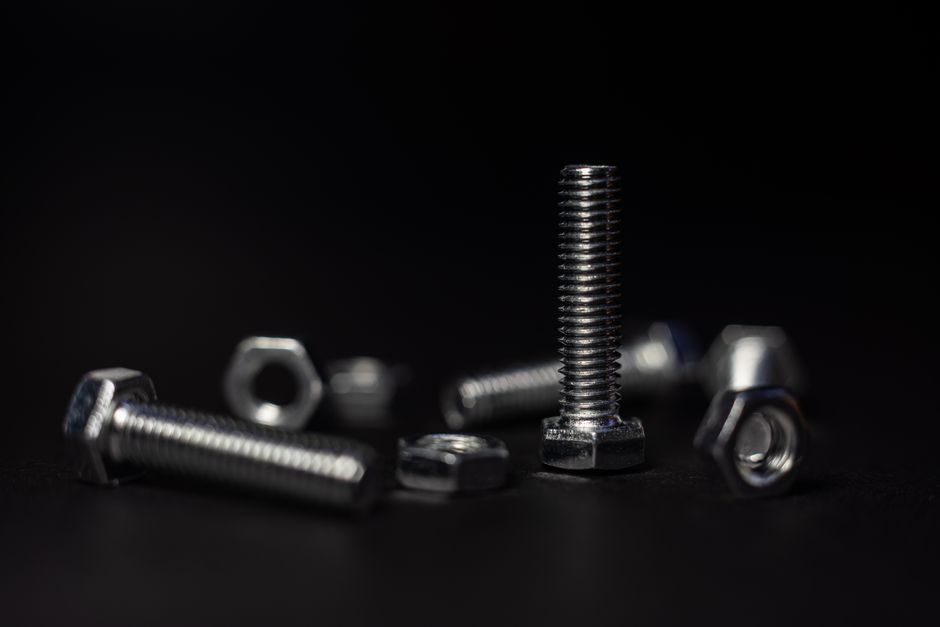
Distributor spot pricing for both CP Grade 2 and Ti-6Al-4V (Grade 5) titanium round bar clustered at US$18.00–22.00 per kg with a 1 kg MOQ across the surveyed Chinese supply base, with ASTM B265 Gr1/Gr12 line items listed alongside Grade 5 rod on the same price band [S4].
Stocking distributors now split the market into three lanes: aerospace/military round bar and billet (AS9100, AMS 4928), medical-grade barstock for implants and instruments (ASTM F136, ISO 5832-3), and commercial-purity Grade 1/2 bar for chemical, marine and general engineering. Edge International has supplied medical barstock since 1989 [S2], while Titanium Processing Center has held the largest US billet inventory since 1999 under AS9100/ISO 9001 [S1].
Grade and Standard Map: Which Spec for Which Job
ASTM B348 covers titanium and titanium alloy bar and billet in grades 1–38, and is the dominant bar/billet spec referenced by US distributors and Chinese exporters; ASTM B265 covers plate/sheet, and is frequently cross-quoted on bar listings because the same heat lot often feeds both forms [S4].
For aerospace structural bar, AMS 4928 (Ti-6Al-4V bar) and AMS 4911 (Ti-6Al-4V plate) are the usual call-outs, with AS9100 certification required at the distributor level for chain-of-custody — Titanium Processing Center lists AS9100 + ISO 9001 alongside WBENC as their 2026 standing [S1]. Medical implant bar defaults to ASTM F136 / ISO 5832-3 (Ti-6Al-4V ELI) and ASTM F67 (CP Grade 1–4 unalloyed), with Edge International explicitly serving the orthopaedic, spine and trauma device sectors under that regime [S2].
China-origin suppliers surveyed in July 2026 push Gr1/Gr12 to ASTM B265 plate-mill stock, Gr2 blocks to ASTM B381 (forgings), Gr2 rings to ASTM B381, and Ti-6Al-4V U-joint bolts as discrete items — a useful tell that the same mill is selling across B265, B348 and B381 within a single catalogue [S3]. Welding consumables show up separately under AWS A5.16 (Ti and Ti-alloy welding wire and rod) [S3], which is the right spec when bar is being consumed as filler or as a weld-prep feedstock.
Form Factor Decision: Round Bar vs Hex Bar vs Hollow Bar vs Billet
Solid round bar (typically 3 mm–300 mm+ diameter) is the default machinist feedstock and dominates distributor stock; rectangular bar ("rec bar") is a flat stock variant for guide-rail and bracket machining [S1]. Hex bar (3/8"–2" AF) is stocked for high-volume fastener and coupling production — Rongyuan lists DIN 933 hex-head screws produced from their own hex bar stock [S3], which is a useful proof point that the same mill is selling bar stock and finished fasteners.
Hollow titanium bar is a niche but real product line at Chinese mills, used for hydraulic cylinder sleeves, valve trim and lightweight shafting where the customer machines the OD/ID concentric pair from one piece [S3]. Titanium billet (the larger, near-net-shape forging feedstock) sits in a different distribution lane: Titanium Processing Center explicitly claims "the largest inventory of titanium billets in North America" and serves aerospace, nuclear, oil & gas, medical and defense from that billet base [S1]. For reference on how bar stock fits into broader titanium alloy selection logic, the grade and form map above is the entry point — once a form factor is fixed, the standard usually follows.
Criteria Comparison: CP Grades vs Ti-6Al-4V vs Ti-6Al-4V ELI
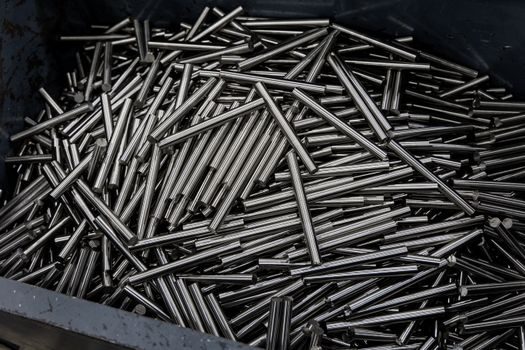
Three decision axes drive almost every titanium bar spec: strength, weldability/corrosion behaviour, and biocompatibility. Commercially pure (CP) Grade 1, 2, 3 and 4 step up in tensile strength (roughly 240 MPa → 550 MPa UTS) and in oxygen/iron interstitials, while keeping an alpha microstructure that welds easily and resists nitric acid, wet chlorine and seawater. Ti-6Al-4V (Grade 5) is an alpha-beta alloy at roughly 895 MPa UTS, the workhorse for aerospace structures and high-stress fasteners, but it is not a default seawater choice without a closer look at crevice corrosion. [S1]
Ti-6Al-4V ELI (Extra Low Interstitial, Grade 23, ASTM F136 / ISO 5832-3) tightens the oxygen and iron ceilings so the alloy can be used in long-term orthopaedic implants where fatigue and biological response dominate the design. The US$18–22/kg price band surveyed at Tianzhu and similar Chinese mills is identical for Grade 2 and Grade 5 in the July 2026 spot listings [S4], so price alone does not break the tie — mechanical and regulatory requirements do. For shop-floor context on how a round bar is fed into a precision motion axis, linear guide carriage bodies are commonly machined from CP Grade 2 or Grade 5 bar, and crossed roller guide rings similarly originate as forged bar stock before being ground to raceway tolerance.
Source Map: North America, China and the Medical Lane
North American aerospace bar flows through AS9100 stocking distributors (Titanium Processing Center, Supra Alloys) with in-house band sawing, waterjet, plate sawing and shearing as value-add services [S1][S5]. Tiger Titanium runs ready-to-ship inventory in Los Angeles and additional US sites, covering sheet, plate, tube, round bar and weld wire.
China-origin supply is concentrated in Shaanxi and Jiangsu: Rongyuan (Shaanxi Rongyuan) covers plate/sheet, bar, wire, fittings, fasteners and finished machined parts under one catalogue [S3]; XI GONG Ti (Baoji Xigong) markets itself as an "integrated titanium solutions" producer from raw material to finished components [S6]; Zhangjiagang Channel Int'l supplies pipe, tube, sheet, plate, bar and foil from a Suzhou-Jiangsu base. On the Made-in-China marketplace, Tianzhu Special Steel's July 2026 listings of "Certified Stock Titanium Bar by ASTM B265 Standard Gr1 Gr12" and "Certified Titanium Bar Grade 5 / Grade 2 Rod Stock" at US$18.00–22.00/kg with CE marks valid from 2024-12-11 are representative of the export-ready tier [S4].
Medical bar is its own channel. Edge International (Banner Industries, Dayton OH) has been a medical-only stocking distributor since 1989, concentrating on orthopaedic, spine and trauma device manufacturers and managing Dodd-Frank 3TG conflict-mineral compliance across cobalt, stainless and titanium bar [S2]. That focus on a single regulatory lane is the reason most medical OEMs do not buy from the general industrial distributors above — the chain of custody, melt-source traceability and ASTM F136 / ISO 5832-3 paperwork is the product. For buyers who also need fluid-system components around titanium bar installations, industrial valve bodies and pressure transmitter process connections are frequently machined from the same Grade 2 bar feedstock, and flow meter trim runs into the same ASTM B348 lot stream.
Verification, MOQ and Lead-Time Reality

For 2026 sourcing, the minimum hard data points on any titanium bar quote should be: ASTM/AMS/UNS spec and revision, heat number with mill test report (MTR/CMTR), actual dimensional tolerance (e.g. ASTM B348 hot-finished vs cold-finished), surface condition (pickled, turned, ground), and whether the material is "dual-certified" (e.g. Grade 2/Grade 4) [S1][S3]. The surveyed China-origin listings are showing 1 kg MOQs at the marketplace level, which is a retail/sample-tier signal rather than a production-tier one [S4]; true aerospace and medical production lots run in metric-tonne batches with multi-week to multi-month lead times.
Distributor-side value-add matters more than catalogue breadth: band sawing, waterjet cutting, plate sawing and shearing are standard offerings at US distributors [S1], and Supra Alloys positions itself around titanium plus "high temperature alloy" bar, sheet and plate rather than commodity steel [S5]. Buyers specifying Ti-6Al-4V for fatigue-loaded aerospace structure should request AMS 4928 with a solution-treat-and-age condition; buyers specifying CP Grade 2 for chemical service should request ASTM B348 with ASTM B265 cross-reference for the same heat, and confirm the hydrogen limit (generally ≤150 ppm per the relevant ASTM B348 grade clause) on the MTR.
Common Failure Modes and Selection Pitfalls
Three selection pitfalls recur in 2026 procurement: (1) buying "Grade 5" without specifying ELI versus standard interstitial limits, which then fails fatigue in long-life medical or aerospace service; (2) accepting bar that is dual-certified to the wrong dual (e.g. dual Grade 2/Grade 4 conflates strength steps and can mislead the machine shop); and (3) confusing bar spec (ASTM B348) with plate spec (ASTM B265) on the line item — Chinese marketplace listings often blur the two because the same heat lot feeds both forms [S3][S4].
A fourth pitfall is the assumption that distributor inventory equals production inventory. Distributor stock at Tianzhu and similar 2026 listings is sized for sample and small-batch buyers at the 1 kg MOQ level [S4]; for multi-tonne recurring production, the contract goes back to a mill (Baoji, Shaanxi Rongyuan, Zhangjiagang Channel or a US prime) with a separate distributor call-off. Buyers should also confirm the AS9100 certificate is current and scope-appropriate — holding an AS9100 for a service centre is not the same as holding it for a mill that produces the original billet. Related buying logic on weight-driven components is laid out in Aluminum Die Casting Selection Guide: Process, Alloy, Tonnage and Sourcing, which uses the same criteria-based pattern when alloy price and lead-time dominate the decision.
Titanium sourcing references cite ASTM B265-certified bar stock carrying CE certification at US$18.00–22.00 per kilogram, and medical-implant manufacturers can source barstock from dedicated medical-grade distributors such as Edge International. Trackable next signals for July 2026 onward: any tightening of AMS 4928 revision language around traceability, and any change in the CE/AS9100 status of the surveyed Chinese exporters as their 2024-12-11 CE windows come up for renewal [S1][S2][S4].