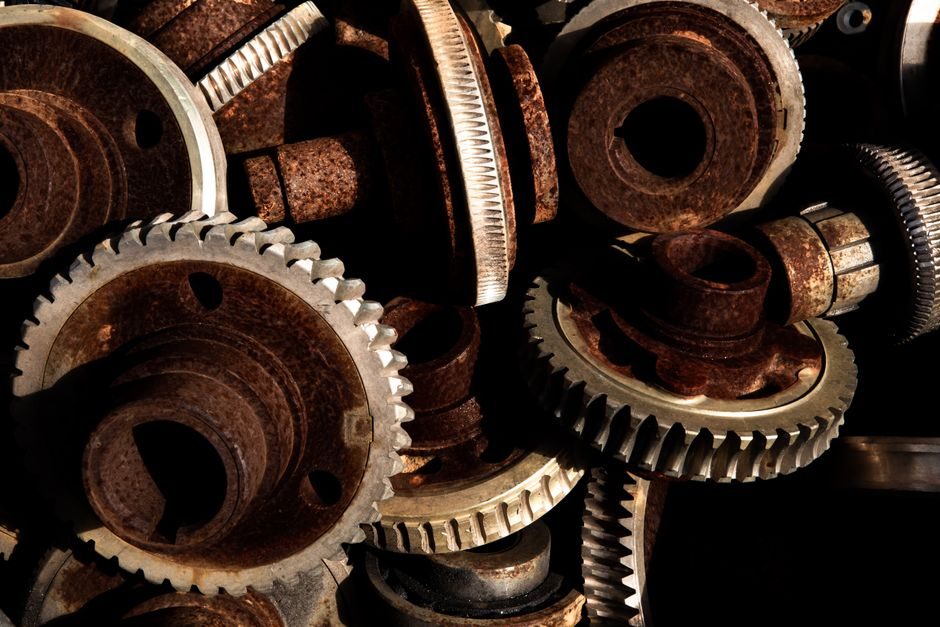
Ceramic machined parts are organized into five functional families — wear components, electrical insulators, thermal management parts, structural/aerospace hardware, and biomedical components — and the material grade selected dictates both the machining route and the achievable tolerance band [S3][S8].
Alumina (Al₂O₃), zirconia (ZrO₂), silicon nitride (Si₃N₄), silicon carbide (SiC), and machinable glass-ceramic (MACOR, Shapal) cover roughly 90% of commercial demand, with the harder Si₃N₄ and SiC grades requiring diamond tooling while machinable glass-ceramics can be cut with carbide tools in the as-delivered state [S3][S8]. Standard tolerance bands for post-sinter grinding sit in the ±0.025 mm (±0.001 in) range, with precision lapping reaching ±0.005 mm on critical features [S3].
Reference resources on ceramic machining cover categories and types of ceramics as a key topic for evaluating ceramic material options for machined parts.
Alumina machined parts dominate the wear and electrical-insulation categories because of their 9 on the Mohs scale hardness, dielectric strength typically cited above 10 kV/mm for 96% purity grades, and unit cost that is 30–50% below zirconia equivalents [S3][S8].
Zirconia (Y-TZP) is selected where fracture toughness matters more than peak hardness — values around 5–10 MPa·m^(1/2) versus alumina's 3–4 MPa·m^(1/2) — making it the default for medical implants, ferrules, and high-stress structural bushings, as detailed in the zirconia ceramic reference page. Silicon nitride targets high-temperature rotating hardware (bearings, turbochargers) thanks to a thermal-shock resistance roughly double that of alumina, while silicon carbide is the first choice for sliding seals and armor because of its thermal conductivity near 120 W/m·K and Mohs hardness of 9.5 [S3].
Green-Body vs Post-Sinter Machining Routes
Green-body machining operates on bisque-fired ceramic before full densification and accepts standard steel tooling because the part is still porous and soft, which collapses both cycle time and tool cost compared with post-sinter diamond grinding [S3][S6].
Post-sinter (hard) machining is required for any feature that the firing shrink — typically 12–20% linear for pressed alumina — cannot hold to drawing, including hole diameters, threads, sealing faces, and critical flatness on flanges or sputter targets [S3][S2]. The trade-off is grinding-induced sub-surface damage: on SiC the affected layer is typically 5–15 µm deep, which is why lapping and polishing follow grinding for vacuum and semiconductor-spec parts [S3].
Wear-Resistant and Mechanical Ceramic Machined Parts
Wear-component machining is the largest single category by part count and includes tiles, liners, nozzles, valve seats, pump sleeves, and chute liners, predominantly in alumina (85–99.5% Al₂O₃) and reaction-bonded SiC for abrasive service [S2][S3].
Boron carbide tiles — B₄C, Mohs ~9.5 and density 2.52 g/cm³ — are the lightest commercial ceramic option for ballistic and neutron-shielding wear service, and are machined by specialist shops into flat tiles, curved panels, and custom geometries to customer print [S2]. Sputtering targets, ceramic discs, and rods/tubes for furnace furniture round out the wear-and-mechanical family, with the broader industrial ceramic family page indexing the full grade tree.
Electrical, Thermal, and Vacuum Insulator Ceramic Parts
MACOR machinable glass-ceramic is the reference material for ultra-high-vacuum insulator and coil-support parts because it can be machined with carbide tooling, then fired-brazed with a compatible sealing glass to deliver a hermetic, vacuum-tight joint rated for UHV environments [S4].
Steady-state vacuum parts in MACOR include microwave-tube spacers, headers, and windows, plus field-ion microscope sample holders where dielectric loss at RF must stay low [S4]. For higher-temperature insulators — alumina substrates, BeO heat sinks, and AlN carriers — machining routes are exclusively post-sinter diamond grinding with surface Ra targets commonly specified at 0.4 µm or finer for thermal-interface bonding [S3]. Microwave tube and vacuum tube components, including cathode assemblies and rare-earth-magnet housings, are also listed as standard machined ceramic items in production inventories [S2].
Cutting Tool, Semiconductor, and Aerospace Ceramic Machined Parts
Ceramic cutting tools themselves are machined from mixed alumina/TiC/TiN grades (so-called "mixed ceramic") and are rated for hard-part machining up to HRC62, with the metallic carbide/nitride phase lifting thermal conductivity and allowing higher cutting speeds than pure alumina inserts [S5].
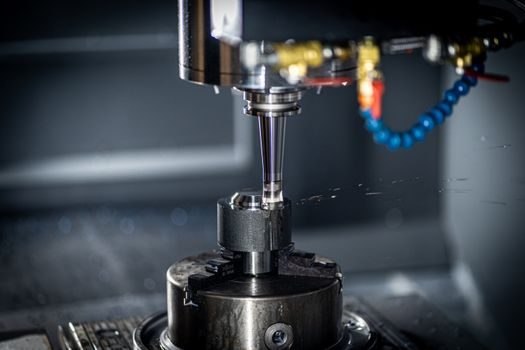
Semiconductor and aerospace applications share the tightest tolerance band in ceramic machining: flat tiles, radomes, missile nose cones, and close-tolerance insulator rods are machined with diamond tooling on rigid CNC platforms such as the Haas DT-1 (20-station ATC, high-speed spindle) when high-speed drilling and tapping of ceramic substrates is required [S3][S2]. For part-design and tolerance guidance, the embedded part and alumina ceramic reference pages document typical press-and-sinter shrinkage and recommended wall-thickness ratios for these demanding geometries.
Reference resources on ceramic machining discuss the advantages, disadvantages, and applications of ceramics to indicate when ceramic machined parts are appropriate.
Ceramic machined parts are specified when at least one of the following applies: operating temperature above 500 °C, abrasive or corrosive service that would wear a metal part, electrical insulation above 10 kV/mm, or weight-critical rotating hardware where Si₃N₄ bearings cut mass by ~60% versus steel [S3][S4].
They are a poor fit for sharp internal corners thinner than 1 mm (chipping risk), impact-loaded assemblies without a metal housing, and any design where post-sinter tolerance below ±0.01 mm is needed over a length greater than 50 mm without lapping — the failure mode is chipping or microcracking initiated at ground surfaces [S3][S8]. When the requirement is "metal-like" ductility and high impact, ceramic bearing components are typically paired with metal races for that exact reason, never run as all-ceramic assemblies under shock load. Machinable glass-ceramics (MACOR, Shapal, boron nitride) collapse lead time and tooling cost for prototype lots under 50 pieces, but their upper use temperature of about 800–1000 °C rules them out for turbine-class service [S8].
Standards, Sourcing Signals, and Trackable Specs

ASTM C1161 (flexural strength), C1326 (Weibull modulus for advanced ceramics), and C1421 (Hertzian contact fatigue) are the standard reference points buyers request when qualifying a ceramic machined part, and NIST SP 834 remains the baseline U.S. reference for ceramic machining practice and characterisation [S1][S3].
Trackable signals for the next sourcing cycle: confirm the part is post-sinter diamond ground versus green-machined (it changes unit cost by 2–5×), require a surface Ra value rather than a vague "smooth finish", and ask for the as-fired density in g/cm³ — 3.90 g/cm³ for 96% alumina versus 3.98 g/cm³ for 99.5% is a fast discriminator between wear-grade and insulator-grade stock [S3][S8]. For wear-tile and lining geometries, the ceramic tile reference page lists standard thicknesses from 6 mm to 25 mm that align with the typical inventory offered by specialist machining shops [S2].