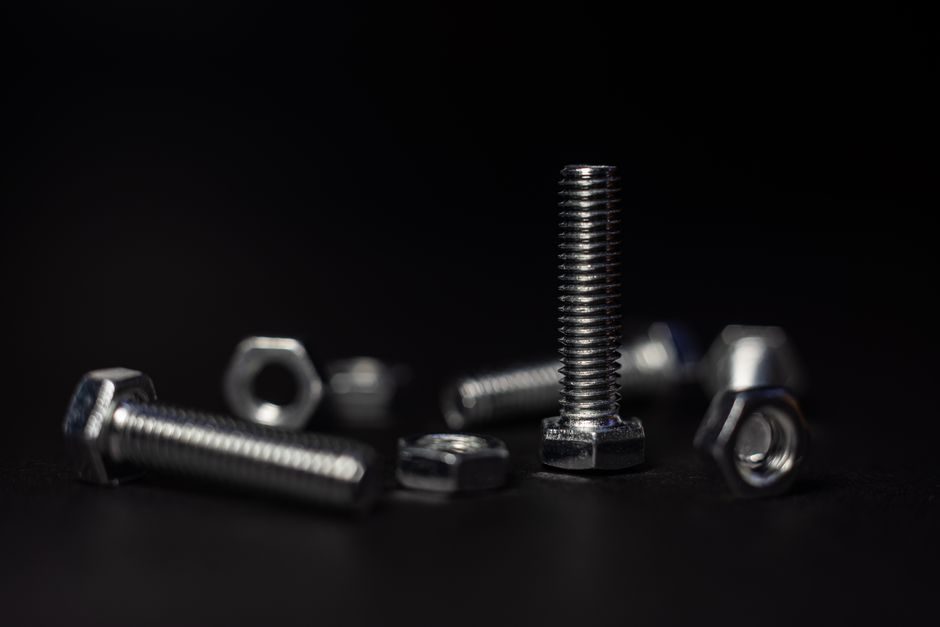
Round, square, hexagon, and flat titanium bar stock is produced in China to ASTM B348 across commercially pure GR1, GR2, GR3, GR4, the GR5 Ti-6Al-4V alpha-beta alloy, the palladium-stabilised GR7, and the GR12 Ti-0.3Mo-0.8Ni grade, with round bar covering 5–200 mm diameter and 1 kg MOQ listings at US$18.00–22.00/kg on Made-in-China as of 2026-07-03 [S3][S6].
Grade 2 commercially pure titanium and Grade 5 Ti-6Al-4V dominate the bar-stock catalogue at suppliers Jinshan, ABLTI, Baoji Intelle, and Tianzhu Special Steel, while Grade 1, Grade 4, Grade 7, and Grade 12 appear as scheduled mill runs rather than shelf stock [S2][S3][S6][S7]. Form factor, surface finish, and a mill-test certificate are the three line items that move a quote from "ask" to PO.
Geometry and Dimensional Envelope
Jinshan Titanium Industry Group lists a 5–200 mm round-bar diameter range, 6–30 mm square side, SW = 85 mm hex (across-flats), and 6–30 mm × 12–100 mm flat, with blank or polished (annealed) finish as standard — these are the working sizes that map directly onto ASTM B348 h-and-c tolerances [S3]. ABLTI Corporation (ABL Titanium) ships round, square, hex, and flat bars from the same envelope and couples geometry to end-use: round stock for aircraft-turbine and engine shafts, hex for fasteners, square/flat for machined structural blocks [S7].
For procurement, the practical meaning is that anything above 200 mm round or beyond 100 mm flat face is a forging or a plate-edge cut, not a mill bar; the 5 mm round floor also matters because most Chinese mills hold 8–100 mm round as deep-stock and treat sub-8 mm as a wire-line product. This is why titanium bar-stock inventory pages at titanium alloy reference points almost always show round bar in the 10–150 mm band as the bulk SKU.
Grade Selection: CP GR1–GR4 vs GR5 vs GR7 vs GR12
CP grades GR1 through GR4 are unalloyed with rising oxygen and iron controlling tensile strength: GR1 is the most formable, GR4 the strongest of the CP series, and GR2 is the workhorse for chemical and marine service where weldability and corrosion resistance outweigh strength [S2][S3]. GR5 (Ti-6Al-4V) is the alpha-beta alloy for aerospace structural and high-performance mechanical parts — ABLTI lists engine components, aircraft structural components, and aerospace fasteners on GR5 bar [S7].
Jinshan and Tianzhu stock titanium bar in grades including GR7 and GR12, with ASTM B348 listed as the bar-stock standard alongside ASTM B265, F67, and F136 for related product forms [S2][S3][S6]. The price differential is real: GR5 and GR7 typically price above CP GR2 because of alloying cost and longer mill lead-time, so buy the corrosion or strength margin you can justify, not the headline grade.
Standards, Certification, and What to Demand on the MTC
The governing bar standard is ASTM B348, with sheet/plate covered by ASTM B265 and aerospace implant grades tracked to ASTM F136 (ELI Ti-6Al-4V) and ASTM F67 (CP) for medical and surgical-stock applications [S2]. New Future Ti explicitly cross-lists GR1, GR2, GR3, GR4, GR5, GR7, and GR12 plate under ASTM B265 alongside the same grades of B348 bar, so the spec chain on a single shipment can span B265 + B348 + F67/F136 without conflict [S2].
Jinshan ships with ISO 9001:2008 and either an MTC or third-party certificate, and ABLTI is audited to Bureau Veritas (UKAS quality management) — these are the minimum paperwork to demand on a 2026 PO, especially for nuclear, medical, or offshore builds where traceability is a contractual line item [S3][S7]. For sour-service oilfield, NACE MR0175 compliance is a separate test report and is not automatic on B348 bar, so the grade alone (GR12 or GR5) is not enough — order the MR0175 certificate by name.
Application Map by Industry
By application segment, the 2026 supply-side listings cluster into four buckets: chemical/petroleum/nuclear/marine/electrolytic (Jinshan); aircraft turbines, engine components, structural components, fasteners, and high-performance auto/marine parts (ABLTI); and medical devices plus sports equipment (cross-listed at ABLTI and New Future Ti) [S3][S7]. Tianzhu Special Steel sells Gr1/Gr12 bar under ASTM B265 to chemical plant builders, and Renaissance Fittings (Mumbai) supplies GR2 bar to India's process-piping fabricators from a US$20/kg entry point [S5][S6].
Tiger Titanium runs a US-side stocking model — over US$8 million of inventory in Los Angeles plus multiple U.S. depots — focused on sheet remnants and prototyping lots rather than long bar, which is the model a U.S. job shop will hit when it needs 1–50 kg of CP or GR5 round for a one-off, not a 1 t mill run [S4]. Ukrainian supplier Fiko Ltd and Indian supplier Renaissance Fittings cover the EU and South Asia distribution tail, while most of the tonnage out of China moves through Baoji (Shaanxi) and Jinshan, both of which are CP-GR2/GR5 heavy [S1][S3][S5].
Where Titanium Bar Fits Against Alternatives
For a like-for-like corrosion comparison, see how a pressure transmitter wetted-parts decision in a chloride scrubber drives the same GR7/GR12 call.
Versus a flow meter or industrial valve trim upgrade, switching the bar feedstock to GR2/GR12 is a slower ROI and only pays when the existing 316L valve is failing on a 6–18 month cycle, so do not retrofit as a "while-we're-here" item — run it as a planned turnaround scope. For sour-service and NACE MR0175, pressure sensor and valve-trim decisions downstream of a bar-stock change should be re-validated against the new galvanic map, since titanium coupled to a less-noble alloy in a conductive electrolyte reverses the expected protection.
2026 Supply, Lead-Time, and Price Signals
The Made-in-China 2026-07-03 snapshot shows Tianzhu's ASTM B265 Gr1/Gr12 bar at US$18.00–22.00/kg with 1 kg MOQ and a CE certificate valid since 2024-12-11, and a parallel Gr5/Gr2 listing in the same US$18–22/kg band — note that Gr5 at the same nominal price as CP GR2 is a listing artefact, not a real spot price, and a serious PO will requote with an alloy surcharge [S6]. Jinshan's go4WorldBusiness listing anchors at $22 with MOQ not specified for the round-bar SKU [S3].
Renaissance Fittings out of Mumbai enters at "start from US$20" with a 4.6/21 review rating — useful as a South Asia reference, but the same form-factor-equals-price assumption does not hold for GR5 or GR7 [S5]. The trader-price uniformity on Made-in-China (US$18–22/kg) is the "starting" point for 1 kg prototype orders; volume buyers should expect a tiered reduction at 100 kg, 1 t, and 10 t, with mill lead-time of 30–60 days for non-stocked grades (GR7, GR12) and 7–21 days for stocked GR2/GR5 round bar at Baoji and Jinshan [S1][S3][S6].
Common Pitfalls When Specifying Titanium Bar
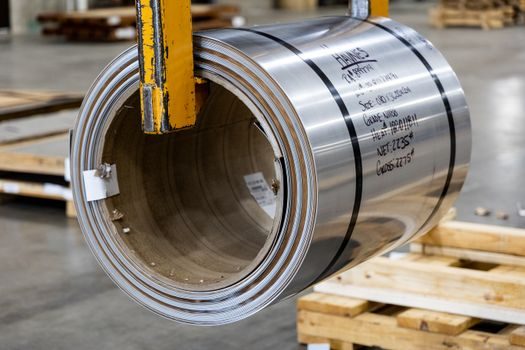
First, do not assume B348 bar is dual-certified to AMS or ASTM F67/F136 without checking the MTC — F67 (CP, surgical implants) and F136 (ELI Ti-6Al-4V) require tighter interstitial limits and a separate test programme [S2]. Second, do not order GR2 and accept GR5, or vice versa, on a "titanium bar" line item — the alloy surcharge, weld procedure, and heat-treatment window are different and the mill will not substitute without written approval. Third, polished (annealed) finish is not the same as peeled or ground; if the downstream operation is a precision OD turn, order h-and-c tolerance or tighter, not "polished" [S3].
Fourth, on trading platforms, a "CE certified" badge is a supplier self-declaration, not a notified-body test report — verify the certificate number and validity directly with the issuer before shipping it on a CE-marked assembly [S6]. Fifth, "titanium bar" without a dimensional envelope usually means round; if you need hex (SW 85 mm) or flat (6–30 × 12–100 mm), write the geometry on the PO, because round-bar stock and mill cycles are different from flat-bar cycles even at the same supplier [S3][S7]. For related context on spec-driven metal stock buying, see the recent magnesium die casting process routes and alloys map and the storage rack system types and load classes breakdown — both run on the same spec-first procurement discipline.