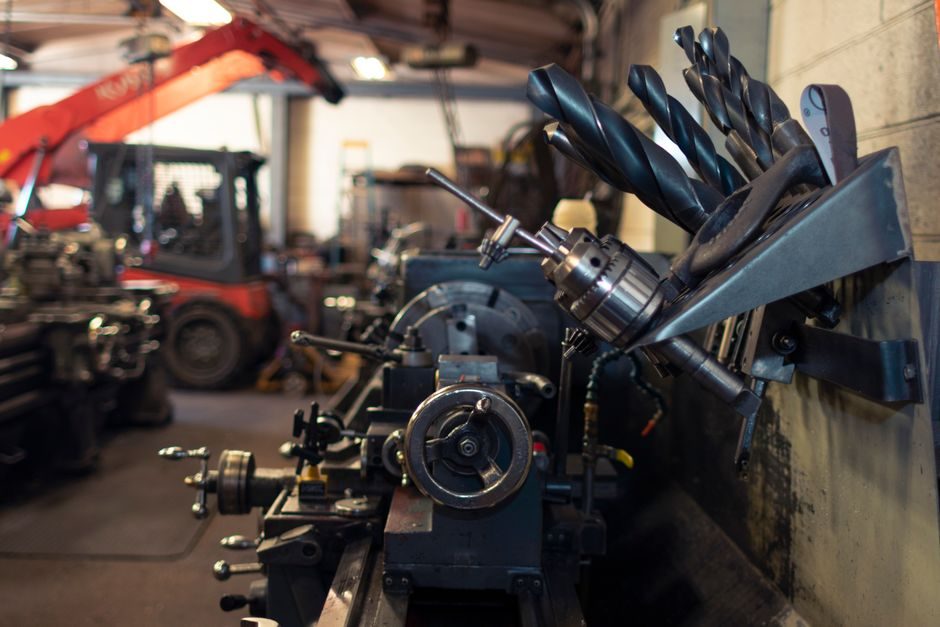
Machined graphite spans four forming families — extrusion, isostatic pressing, vibration molding, and conventional molding — that together define the achievable density, grain size, and tolerance ceiling of every downstream part [S3].
Across aerospace, semiconductor, metallurgy, and chemical processing, the same base material is specified in grades ranging from coarse structural blocks to ultrafine EDM stock with sub-4 µm average particle size, and the grade choice — not just the shape — is what locks in service performance [S3][S6][S7].
Forming Process Families and Their Machining Ceilings
Each graphite forming route produces a characteristic grain structure and density band, and that band is what bounds the tolerances a buyer can reasonably specify [S3]. Extrusion yields long anisotropic grain ideal for electrodes, furnace heating elements, and continuous casting dies where directional conductivity is acceptable; vibration molding produces medium-density shapes for general industrial seals and brushes; conventional (compression) molding delivers large structural blocks used in metallurgy and foundry tooling; isostatic pressing — cold or hot — gives the finest, most isotropic grain, the highest density, and the tightest machinable tolerance, which is why it dominates semiconductor, EDM electrode, and aerospace applications [S3][S6].
Buyers comparing quotes should always confirm the forming route before pricing, because the same finished part quoted in extruded vs. isostatic graphite can differ in machinable tolerance by a factor of three or more, and the cost gap is not proportional to the geometric complexity [S3].
Grade Bands: Coarse, Fine, and Ultrafine Graphite
Graphite grades are sorted by average particle size, and that single parameter drives strength, surface finish, wear rate, and electrical resistivity all at once [S6][S7]. Semco Carbon and other mill suppliers list coarse-grain grades for crucibles, foundry dies, and large furnace furniture; fine-grain grades for continuous casting dies, rocket nozzles, electrical brushes, heating elements, and work-holding jigs; and very-fine / ultrafine grades for tight-tolerance machined details, EDM electrodes, plastic injection molds, and semiconductor fixtures [S6].
For EDM specifically, POCO EDM-3 is published as an isotropic ultrafine graphite with average particle size under 4 µm, flexural strength of 17,500 psi (≈1,230 kg/cm²), compressive strength of 21,500 psi (≈1,511 kg/cm²), 76 Shore hardness, and electrical resistivity of 500 µΩ·in (12.7 µΩ·m) — numbers that make it a baseline reference for any EDM electrode sourcing decision [S7].
Industrial Application Map: Where Each Grade Lands
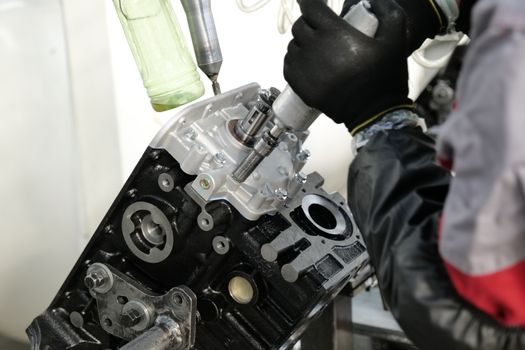
Aerospace buyers draw on machined graphite for heat shields, rocket nozzles, thermal protection components, and lightweight structures that must survive extreme temperatures; automotive plants consume graphite electrodes, spark plug components, lubrication parts, and brake friction materials; semiconductor and electronics lines need high-purity graphite fixtures, heat sinks, and wafer-handling components; metallurgy and foundry operations run graphite crucibles, continuous casting dies, and extrusion table run-out slabs [S4][S5]. Pyrotek's catalog adds conveying-system slabs, quartz and vacuum-furnace furniture, plus nuclear and chemical-service custom machined parts as distinct application silos [S4].
The selection logic in practice is that temperature and purity dominate the grade call: a heat shield and an EDM electrode are both "machined graphite" but they are not bid against the same grade family, and conflating them in a quote is a common sourcing error [S4][S5][S7].
Comparison of Forming Routes on Four Decision Criteria
On four concrete decision criteria — achievable density, grain isotropy, machinable tolerance, and typical cost premium relative to extruded stock — isostatic pressing wins on every axis except throughput, which is why it commands the highest price; extrusion wins on throughput and directional conductivity but loses on tolerance and isotropy; vibration and compression molding sit between the two for cost but cannot match isostatic density [S3][S6].
For parts under 10 mm wall thickness with surface finishes under 0.8 µm Ra, only isostatic ultrafine graphite is realistically machinable; coarser grades chip and fray at that geometry regardless of tooling [S3][S7].
Tooling, Machining Practice, and Known Failure Modes
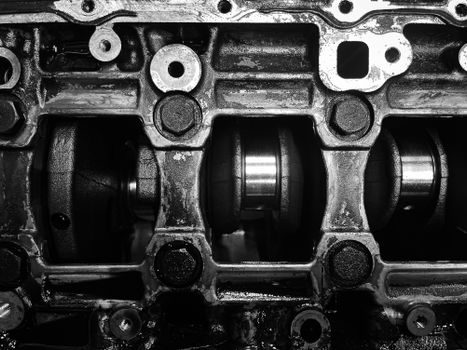
Graphite cuts by a plow, not a shearing action: tools slice through a brittle crystalline matrix, producing fine swarf and dust rather than continuous chips, which means dust extraction and sharp dedicated cutters are non-negotiable [S3][S8]. Indexable carbide tools are the standard roughing choice, while CVD-diamond-coated end mills — such as those in the Harvey Tool graphite range — are specified for finishing ultrafine EDM and semiconductor grades where carbide wears out fast [S8].
Compressive failure during clamping is the dominant mechanical failure mode, not chipping at the cut: over-clamping cracks the workpiece before the tool touches it, so machinists are advised to test to failure on a sample to set a safe clamping window, particularly on thin-wall isostatic parts [S3].
Adjacent Materials and Substitution Boundaries
Graphite-impregnated carbon fiber packing (e.g., GP322) sits adjacent to solid machined graphite in sealing applications, where each carbon fiber strand is impregnated with graphite particles to combine the flexibility of fiber with the lubricity of graphite [S2]. This is a different part category from a machined graphite seal ring, but it is commonly cross-quoted by buyers who need a lubricious, thermally tolerant sealing element and can accept a braided form [S2].
For wear surfaces in lighter-duty sanding and lubrication service, graphite-coated canvas (GC and HD types, plus ultra-thin and adhesive-backed variants) uses 99.99% natural flake graphite either bonded to a substrate cloth or fixed to the back with adhesive, and is specified for wide-belt sanders and flat sanders where solid graphite would be over-engineered [S1].
Buyers sourcing solid machined graphite parts are often sourcing industrial valves and flow meters for the same high-temperature lines — graphite seals and vanes appear in chemical and vacuum-service valve trim, which is why a single procurement package frequently spans both categories.
For a process-engineer audience, the practical rule when comparing graphite grades to alternative materials is: solid graphite wins on thermal stability and self-lubrication above ~400 °C, but it loses on impact strength, so any application with mechanical shock should look to graphite-impregnated composites, pressure transmitter diaphragms in exotic alloys, or ceramic alternatives rather than monolithic graphite [S3][S6]. Tracking grade reference specs (particle size, flexural and compressive strength, resistivity) and the forming route on every quote is the only reliable way to keep machined graphite sourcing on a spec, not on a brand name. For related sourcing context on thermal-process equipment, the vacuum packaging machine types and application map covers adjacent thin-material forming and tolerance logic.