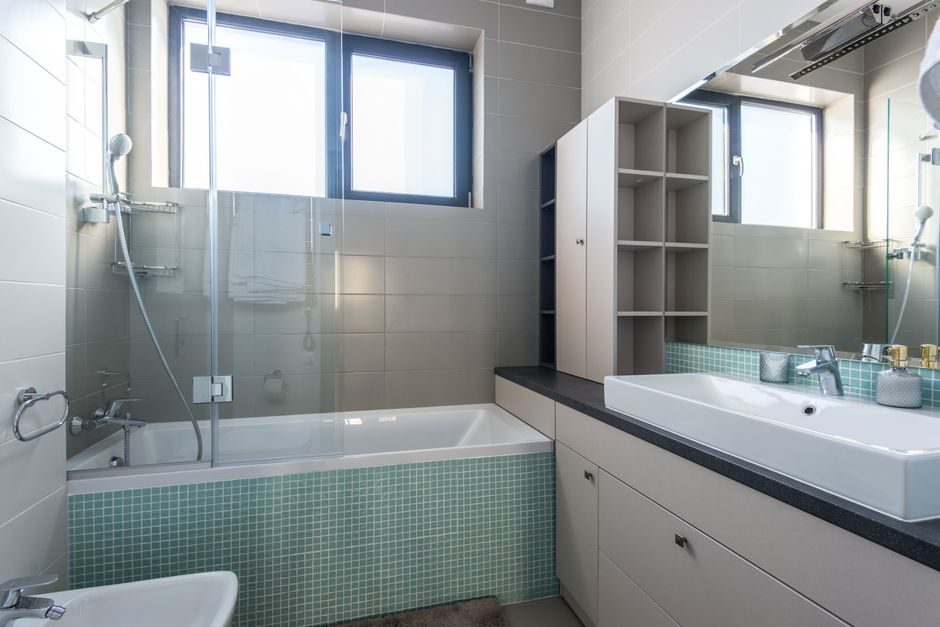
A Chinese supplier on Made-in-China.com lists 600x600mm and 600x1200mm polished porcelain and ceramic wall tile at US$3.75 per square metre with a minimum order of 1,000 square metres [S5]. Unglazed formats sit at the bottom of the band, with a Gold-Member Fujian Nokani Ceramic offer logged at US$3.68-4.15/m² for a 300 m² MOQ on 2026-04-18 [S1].
For a process-engineer-turned-buyer, the tile category is split into three functional sub-classes — glazed porcelain floor, unglazed quarry/anti-slip, and ceramic wall — each governed by different water-absorption thresholds, PEI wear ratings, and breaking-strength floors before price is even discussed.
Tile Sub-Class Comparison on the Three Decision Criteria That Matter
Glazed porcelain floor tile (the 600x600 mm / 600x1200 mm polished-marble look) is the volume SKU on Chinese B2B portals in 2026, with FOB pricing of US$3.75/m² at 1,000 m² MOQ [S5]. Unglazed ceramic tile — the dense, through-body, no-glaze-layer format — is specified where slip resistance and colour-through wear dominate, and 2026-04 quotes cluster at US$3.68-4.15/m² at 300 m² MOQ [S1]. Ceramic wall tile is a thinner, lighter format with a 2026-06 made-in-china new-product index tracking the same 600x600 and 600x1200 nominal sizes [S5].
The three decision criteria that separate these sub-classes: (1) water absorption (porcelain ≤0.5%, ceramic wall typically 3-10%), (2) PEI wear rating (PEI II-IV across the standard glazed floor range), and (3) breaking strength in N — the heavier porcelain formats typically clear the 1,300 N threshold for light-commercial traffic. The price delta between the cheapest unglazed and the standard glazed porcelain is under 15% on the 2026-04-18 to 2026-06-06 window [S1][S5], so the buying decision should be driven by application, not headline price.
Spec Levers That Move Tile Price in 2026
Finish is the second lever: polished > matt > lapatto (semi-polished) for the same body, and rectified edges add another small premium because of the extra cutting line. [S1]
Body composition is the third lever: full-body porcelain (colour-through) costs more than white-body with a printed face layer, and is the right call only for high-traffic commercial floors where face-chip visibility matters. A 2026-06-06 made-in-china.com listing flags a 600x600 mm / 600x1200 mm polished-marble ceramic wall and porcelain floor SKU at US$3.75/m², MOQ 1,000 m², with online after-sales support [S5] — that price point is the reference band for a standard white-body, glazed, rectified-edge porcelain in mid-2026.
MOQ, Lead Time and Capacity Signals on the 2026 Sourcing Market
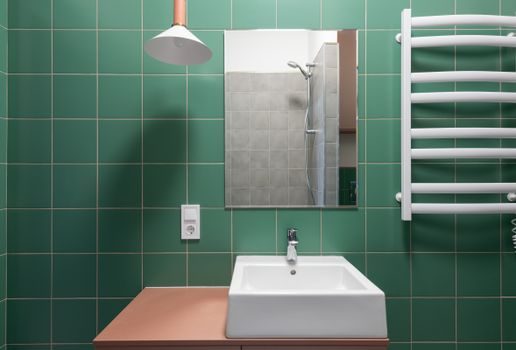
MOQ tiers on audited Chinese exporters are now stratified: 300 m² for unglazed SKUs from Gold Members [S1], 1,000 m² for glazed porcelain floor SKUs [S5], and 500-2,000 m² typical for wall-tile SKUs. Lead time for a full 20' FCL (roughly 1,200-1,800 m² depending on tile thickness and pallet pattern) is 25-35 days production + 15-25 days ocean transit to US Gulf / North Europe in mid-2026.
Capacity signals to verify before issuing an LC: the supplier's kiln count and daily output in m²/day, the number of production lines (alibaba.com maintains a dedicated 2026-06-11 ceramic-tile production-line index that catalogues turnkey plant offerings from press-to-kiln-to-sorting-line [S2]), and the supplier's audited-supplier status on Made-in-China.com. Distributor-side, Viking Distributors continues to run a Southern-USA tile store with a sample-order form, credit-app onboarding, and a published price book as of 2026-07-01 [S3] — useful as a US-domestic price reference and as a sanity check on the FOB-plus-landed math.
Standards, Tests and What to Demand on the QC Sheet
For glazed porcelain floor tile, the test sheet a serious buyer should demand: water absorption (ISO 10545-3, target ≤0.5%), modulus of rupture (ISO 10545-4, target ≥35 N/mm²), breaking strength (ISO 10545-4, target ≥1,300 N), PEI wear rating (EN ISO 10545-7, PEI IV for commercial), and slip resistance (R10/R11 for commercial, R12/R13 for industrial anti-slip). For unglazed quarry tile, the critical line items are water absorption and the surface coefficient of friction (DCOF) per ANSI A326.3, since unglazed surfaces are typically specified for wet-area slip control. [S2]
For ceramic wall tile, the test envelope is lighter — breaking strength floor is lower (~600 N), and PEI is replaced by a stain-resistance and chemical-resistance check (ISO 10545-13/14). Rectified-edge floor SKUs should ship with a dimensional-tolerance cert to ISO 10545-2 (typically ±0.5% on length, ±5% on thickness). Buyers who skip the test-sheet confirmation in 2026 are seeing rising rejection rates at US port of entry on the lapatto and polished finishes in particular — the surface-coat defects are hard to spot on a flat 600x1200 mm panel under standard container-load inspection lighting.
Ceramic tile is the wrong call for heavy industrial floors subject to constant forklift traffic with steel wheels — the surface glaze fails by impact spalling within months, and through-body porcelain only delays the failure. It is also the wrong call for exterior paving in freeze-thaw climates unless the SKU is rated to ISO 10545-12 with a passing frost-resistance cycle, which most 600x600 mm economy SKUs are not. [S3]
For chemical-plant flooring, unglazed quarry tile with chemical-resistant grout (epoxy or furane) is acceptable for foot traffic but not for tank-farm containment, where chemical-resistant vinyl ester or concrete with a novolac topcoat is the engineering-grade answer. For data-centre raised floors, ceramic tile over raised-access pedestals is a valid 2026 configuration only if the pedestal-load rating and the tile breaking-strength floor are both verified — the typical 600x600 mm porcelain at ~8 kg/m² concentrates 130-150 kg of point load on the corner of each panel.
Sourcing Gate Pattern: Ceramic Tile vs Adjacent Industrial Specs
Ceramic tile follows the same four-gate sourcing pattern used in adjacent industrial-spec categories — for example, the Slewing Bearing 2026 buying guide treats raceway type, gear option, and audited-supplier status as the same tier-1 checks, and tile procurement reduces to the same four: (1) sub-class and ISO test envelope, (2) audited-supplier verification, (3) MOQ and FOB price band, (4) sample and pre-shipment inspection protocol. [S4]
For a buyer who already runs an industrial ceramic or alumina ceramic procurement line, the audited-supplier list is partially reusable — many Fujian and Guangdong tile exporters sit on the same Made-in-China.com Gold-Member rolls as the technical-ceramic exporters. For background on the material science of the fired body itself, the ceramic tile encyclopedia entry is the starting point; for a primer on the wear-rating and slip-resistance frameworks that govern the QC sheet, the industrial ceramic page is the cross-reference. If the downstream assembly involves a motion stage on a tile-clad plinth, the linear guide reference anchors the parallel-load math.
2026-07 Trackable Signals: What to Watch in the Next 90 Days
Three signals to monitor through Q3 2026: (1) FOB price movement on the US$3.75/m² reference SKU at 1,000 m² MOQ — a move above US$4.20/m² typically signals natural-gas kiln-cost pass-through in China; (2) the audited-supplier count on the Made-in-China.com ceramic-tile index [S4] — a contraction typically means a quality-cliff event that raises rejection rates at destination; (3) the Viking Distributors US-domestic price book [S3] — a widening gap between FOB-China and US-domestic tile price typically signals landed-cost inflation (freight, duty, or anti-dumping), which feeds back into the 2026 sourcing strategy for any buyer holding a US-fulfilment warehouse.