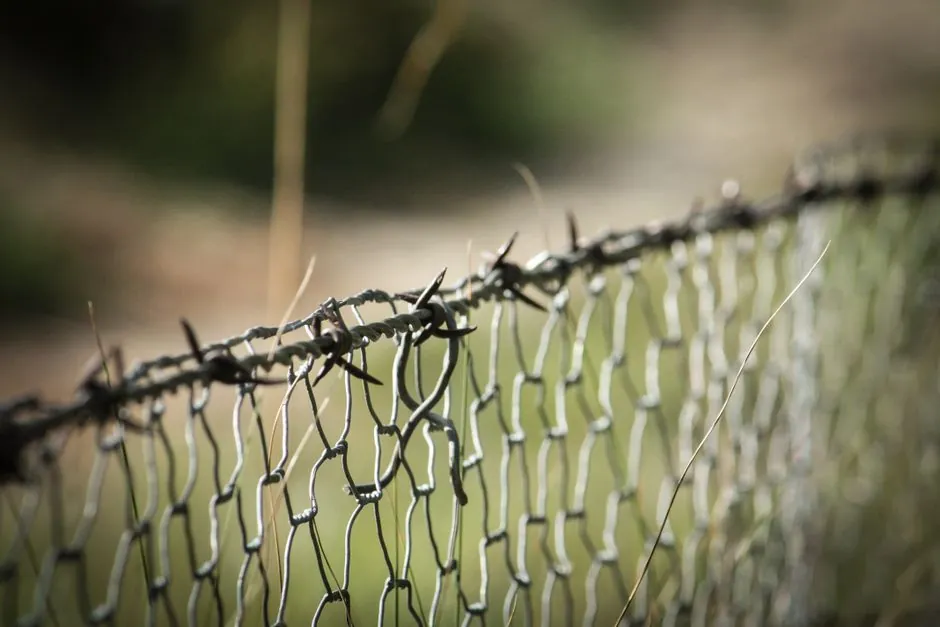
Schools procure welded mesh in three distinct sub-applications: perimeter fencing, playground equipment guarding, and concrete reinforcement in slabs and masonry walls; each sub-application demands a different wire-opening-coating combination, not a single shared spec.
Reference product families from current Chinese manufacturers (Metech Welded Mesh, Anping Molonggang Spot Welding Equipment) cover the full spread of galvanized welded mesh, powder-coated panels, stainless steel wire mesh, 358 anti-climb panels, and concrete reinforcing mesh that the school segment actually buys [S1][S2][S3].
Wire Diameter and Material Grade
Wire diameter for school perimeter fencing commonly runs 3.0-6.0 mm, with 4.0 mm as the most-specified mid-range for primary-school boundary fences and 5.0-6.0 mm reserved for secondary-school and sports-ground high-risk zones [S1].
Low-carbon cold-drawn wire (Q195/Q235 class) is the default feed stock for welded mesh used in school concrete slabs and light fencing, while playground guarding that sees impact or vandalism risk moves to higher-tensile options [S2]. Material selection must follow the steel mesh grade logic that links wire chemistry to weld-shear performance, not to a single catalogue "strength class."
Mesh Opening and Aperture Geometry
School perimeter mesh openings typically sit in the 50x50 mm to 100x100 mm band for general boundary fencing, with 50x200 mm rectangular opening used where visibility through the fence is prioritized for CCTV coverage of the playground [S1].
Anti-climb 358 mesh (76.2x12.7 mm aperture) is specified where pupil containment and climb resistance matter more than budget, because the dense 12.7 mm vertical opening defeats finger-and-toe foothold, which is exactly the failure mode schools pay to prevent [S1]. Stainless steel variants in 304/316L are available from current manufacturers where coastal humidity or swimming-pool chlorine exposure accelerates zinc loss on carbon steel wire [S3].
Coating System and Corrosion Life
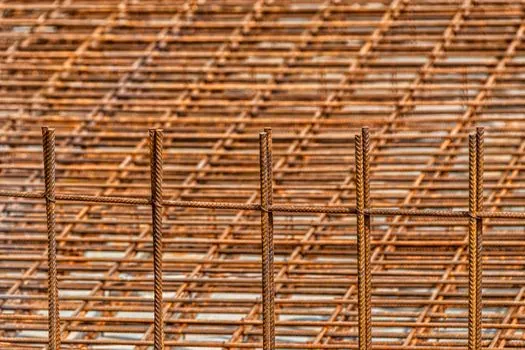
Three coating routes dominate school procurement: hot-dip galvanized (HDG) after welding for general boundary fencing, PVC/powder coating over galvanized wire for coloured playground fencing, and bare black wire for embedded concrete reinforcement where the alkaline matrix protects the steel [S1][S2][S3].
HDG coating mass for school-grade welded mesh typically falls in the 60-275 g/m² range depending on exposure class, with heavier coats reserved for coastal schools and swimming-pool enclosures where the chlorinated atmosphere strips zinc rapidly [S1]. Vinyl/PVC over galvanized gives a typical 0.5-1.0 mm polymer overlay and is the default finish where the school architect specifies a RAL colour (commonly RAL 6005 green or RAL 9005 black) [S1]. The durability ranking for a coastal school site, from longest to shortest service life, runs 316L stainless > HDG 275 g/m² > HDG 60 g/m² > PVC-over-galvanized > black wire in concrete.
Comparison of Main School-Use Mesh Types
Four mesh configurations cover roughly 90% of school procurement, and they line up against decision criteria as follows: (a) galvanized 4.0 mm wire at 50x100 mm opening, the default primary-school perimeter fence, scores low on cost and high on availability but mid on climb resistance; (b) 358 anti-climb at 4.0 mm wire, 76.2x12.7 mm opening, scores high on climb resistance and mid on cost, and is the right pick for secondary perimeters; (c) PVC-coated 4.0 mm wire at 50x200 mm, the playground visual-fence option, scores high on aesthetics and CCTV visibility, mid on cost, but low on climb resistance; (d) concrete reinforcing mesh in A393/A252 class (10 mm wire at 200 mm centres) is the right pick for school hall slabs and is not interchangeable with fencing mesh [S1][S2].
Wire chemistry matters more than the panel finish for embedded concrete reinforcement, and this is where alloy steel rebar couplers and silicon steel are NOT relevant; the correct reference is carbon steel wire to BS 4483 or equivalent [S1][S2].
Manufacturing Process and Weld Quality
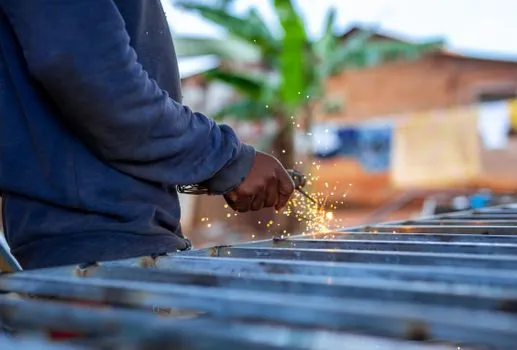
Automatic welded mesh panel machines from current Chinese suppliers (Anping Molonggang and similar Liaocheng, Shandong-based vendors) deliver panel output at stated production speeds in the 30-70 strokes/min range depending on wire diameter, with CNC panel machines handling 3-6 mm wire at up to 200 m²/h [S2]. Schools buying through project tenders should ask for the manufacturer's weld-shear test certificate per batch, not just a generic ISO 9001 claim, because weld-shear is where the cheap panel fails first.
Standards, Codes, and Verification
No single global standard governs school welded mesh; instead procurement has to satisfy several layered documents: BS 1722-2 for fence fabric, BS 4483 for concrete reinforcing mesh, EN 10223-4 for steel fabric fencing, and the local playground safety code (EN 1176 in Europe, ASTM F1487 in the US) for guarding around equipment [S1].
Galvanizing is typically certified to EN 10244-2 (zinc coating on steel wire), with class A (60 g/m²) the minimum for inland schools and class D (275 g/m²) for coastal sites [S1]. Buyer-side verification should request: (1) wire diameter tolerance ±0.05 mm or ±2.5% whichever is greater, (2) zinc coating mass test report per batch, (3) weld-shear pull test on a sampled panel, and (4) a signed declaration of wire grade (Q195/Q235 or 304/316L). The data point most often missing on a delivered school mesh is the actual weld-shear value; a quotation that omits it should be rejected on principle.
Who Welded Mesh Is, and Is Not, For in a School
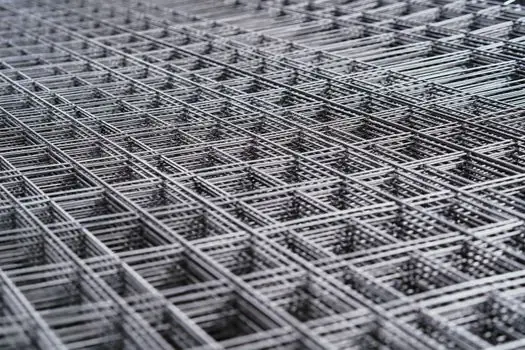
Welded mesh is the right material for: school perimeter fencing 1.0-2.4 m high, sports-field rebound fencing, window guards on ground-floor classrooms, partitioning of bike stores and bin enclosures, and as concrete slab reinforcement in school halls and corridors [S1][S2].
Welded mesh is the wrong material where: the application needs ballistic resistance (use steel plate), the fence must absorb vehicle impact (use a crash-rated cable barrier), the mesh is exposed to swimming-pool chlorine without specifying 316L (use 316L or solid PVC panels), or the school is in a highly corrosive marine zone and a HDG-only spec was allowed (escalate to 316L). Welded Steel Mesh Selection for Commercial Buildings covers the parallel spec logic for the office-buildings segment that shares many of the same contractors.
Procurement Signals and Failure Modes to Watch
Two failure modes show up repeatedly in school mesh deliveries: weld pop at the cross-over under impact load (signals underspecified weld current or insufficient weld-shear testing), and zinc undercut at the weld nugget where galvanizing was applied before welding and then partially burned off [S1][S2].
A useful procurement signal is the supplier's stated wire diameter tolerance and whether they galvanize-before-weld (GBW) or galvanize-after-weld (GAW); GAW panels cost more but last 2-3x longer in coastal school sites because the weld nugget is fully protected [S1]. The mesh belt conveyor reference page explains the related conveyor-mesh spec logic that occasionally overlaps with industrial-spec welded mesh buyers ask for by mistake. Welded Steel Mesh Selection for Cleanroom Walls and Ceilings is the parallel school-adjacent segment where surface-finish and cleanability requirements are stricter.