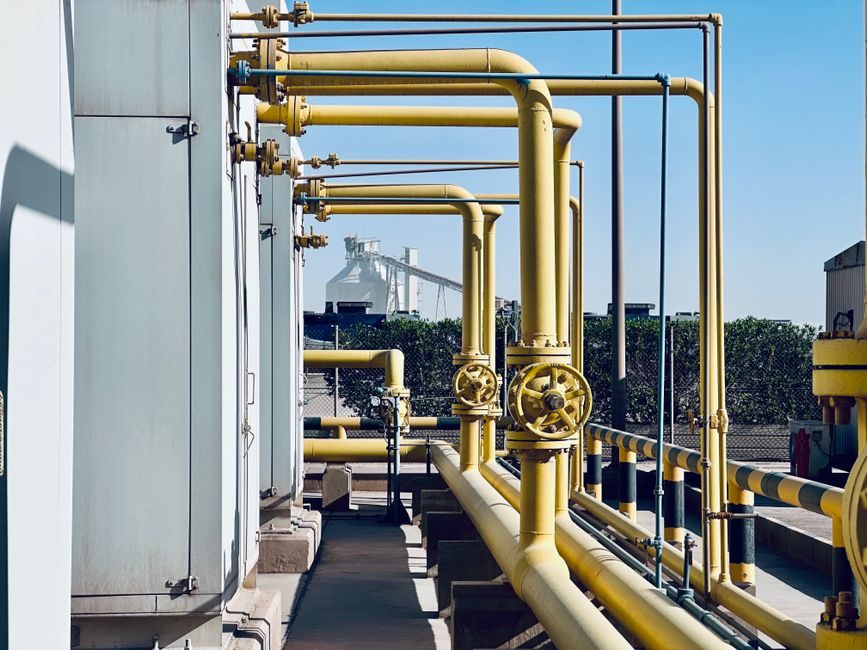
Chemical-plant gas detection separates into two parallel engineering decisions: pick the sensor technology that physically responds to the target gas at process concentration, and pick the housing/certification that survives the classified area [S3][S6].
For toxic gases such as NH3, H2S, CO and Cl2, electrochemical cells deliver the ppm-level resolution operators need; the Teledyne MultiTox DG-TT7-E and DGi series accepts a swappable intrinsically-safe cartridge for toxic or O2 monitoring, configurable via HART or a wireless TLU [S1]. For flammables, catalytic bead and IR remain the two reference technologies, with NDIR preferred where catalyst poisoning is a risk.
Match the Sensor Class to the Target Gas
Electrochemical sensors are accurate for toxic gases but drift with temperature, so housing rating matters as much as the cell itself; the MGS selection guide treats sensor-to-gas compatibility as the first hard gate before any range or price discussion [S3]. For ammonia service, fixed NH3 detectors ship in user-selectable spans of 0-50, 0-100, 0-200, 0-500, 0-1000, 0-2000 and 0-5000 ppm, with 4-20 mA and RS485 outputs and integrated sound/light alarms at the sensor head [S2]. For benzene (C6H6) the same fixed-detector family covers 0-10 ppm through 0-10000 ppm to handle both worker-exposure (TLV-band) and process-leak scenarios from the same platform [S2]. A CO toxic detector line ships dual-range at 0-300 ppm (part 47-510) and 0-1000 ppm (47-512), with a 3-year cell life and configurable pre-alarm and Alarm 1 setpoints defaulting to 30 and 100 ppm respectively [S5].
Cross-sensitivity is the most common failure mode: a cell calibrated for H2S will respond to NO2, and an uncorrected PID will over-read on methanol — always validate the cell against the actual plant gas matrix, not just the named target [S3]. For flammable hydrocarbons, infrared point detectors avoid the catalytic-bead poisoning seen in silicone or leaded atmospheres; for hydrogen service specifically, lighter-than-air behaviour dictates ceiling-level mounting, which is the opposite of chlorine or benzene placement [S3].
Certification, Outputs and Safety-Architecture Integration
European chemical plants typically require ATEX 2014/34/EU certification matched to the zone classification, with IECEx accepted in most export markets; Sensitron's compliance note treats detector certification as inseparable from enclosure and installation method [S6]. A representative portable spec sheet quotes II 2G Ex ia IIC T4 Ga with IP66 at -20 to +50 °C operating range, ≤±1% F.S. accuracy, ≤10 s response, and a 100 h pump-off / 12 h pump-on runtime, with USB data download [S4].
Detector-to-DCS integration runs through 4-20 mA analog, RS485 Modbus, or HART on the same loop; the Teledyne DG series supports both wireless TLU and hard-wired HART configuration so the same head can be commissioned, calibrated, and ranged without declassifying the area [S1]. Multi-drop RS485 lets one cable carry dozens of addressable heads back to a safety PLC, which is the wiring topology most retrofit projects on existing chemical assets end up choosing [S2]. Det-Tronics frames these as life-safety gas detection rather than process instrumentation — meaning they must be independent of the basic process control system and SIL-rated to the site safety integrity level [S7].
Honeywell's gas-book groups chemical-plant hazards into three families: flammable (methane, pentane, hydrogen), toxic (H2S, CO, NH3, Cl2) and asphyxiant (oxygen depletion/enrichment) — and recommends the detector mix follow that three-axis taxonomy rather than a per-equipment list [S8].
Comparison: Sensor Class vs Decision Criteria
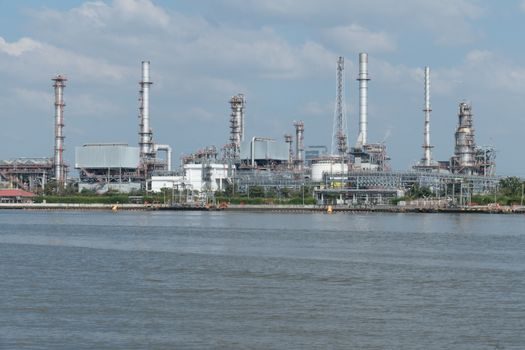
The four practical sensor classes line up against the criteria that drive a chemical-plant purchase:
Electrochemical cells score high on ppm-level toxic accuracy and low cost per point but require a 3-year replacement cycle and temperature compensation; catalytic bead wins on upfront cost for LEL flammables but degrades in silicone, leaded or halogenated atmospheres; NDIR is poison-immune and stable for hydrocarbons but cannot see H2; PID covers low-ppm VOCs but needs frequent lamp cleaning and is not selective without filtering [S3][S7].
On installation cost the picture inverts: a single NDIR point detector costs more than a catalytic bead, but the avoided false-alarm trips and recalibration labour in a harsh chemical service typically pay that back inside one turnaround cycle [S7]. For toxic-gas life-safety, electrochemical is essentially the only field-proven option at the ppm resolution safety PLCs expect [S1][S5].
Where Detectors Go Wrong in the Field
The most frequent specification error is buying on price rather than on gas-matrix compatibility, which then produces either no response to the actual leak gas or chronic false alarms from a cross-sensitive interferent [S3]. Placement is the second failure: heavier-than-air gases (Cl2, benzene vapour) must be sampled near the floor, lighter-than-air gases (H2, NH3 in warm leaks, CH4) at breathing zone or ceiling, with at least one detector per potential leak source — valves, flanges, pumps, storage tanks [S3]. Skipping the calibration schedule, or specifying uncertified equipment inside a classified area, are the two findings that consistently show up in incident post-mortems [S3][S6].
For broader process-monitoring context beyond the gas head itself, temperature monitoring device selection covers the complementary thermal side of leak detection, and air quality monitor vs dust particle meter maps the perimeter-monitoring counterparts. For adjacent flow-control hardware used in the same service, the diaphragm valve sizing and selection guide covers the valves these detectors are often specified to protect.
Reference Numbers to Lock Into the Spec

Standard cell life is 3 years for the CO electrochemical cartridge in the Zeta ZS-CO/300 and ZS-CO/1000, with replacement sensor part numbers CY-DTX-NT-CO-PL300 and CY-DTX-NT-CO-PL1000 respectively [S5]. Typical portable enclosure ratings quoted for ATEX/IECEx chemical-plant work are II 2G Ex ia IIC T4 Ga and IP66 over -20 to +50 °C, with ≤±1% F.S. zero/span drift per year [S4]. Fixed NH3 service commonly spans 0-50 to 0-5000 ppm from a single head, while benzene service spans 0-10 to 0-10000 ppm from the same GD300 mechanical platform [S2]. Honeywell's hazard taxonomy and the Det-Tronics life-safety white paper are the two reference documents most EPCs attach to the datasheet submittal package [S7][S8].
Pre-Purchase Checklist for the EPC
Before signing the PO, the EPC should confirm the sensor is rated for the named target gas at the required TLV or LEL fraction, that the cell is certified for the zone classification (ATEX 2014/34/EU and/or IECEx), and that the head speaks a protocol the existing safety PLC can read — 4-20 mA, HART, or RS485 Modbus are the three options most panels in 2026 still accept natively [S1][S2][S6]. The fixed-installation rule of one detector per potential leak source (valve, flange, pump seal, storage-tank vent) should be carried into the layout drawing, not left to the constructor [S3].
Two trackable signals to watch: IECEx scheme refinements for hydrogen-specific detectors now that electrolyser projects are coming online at chemical sites, and a gradual shift of NH3 and Cl2 detectors onto addressable RS485 buses instead of point-to-point 4-20 mA loops, which reduces conduit cost on greenfield units [S2][S8].
The underlying component specifications are covered under chemical anchor, chemical reagent, and gas detector.