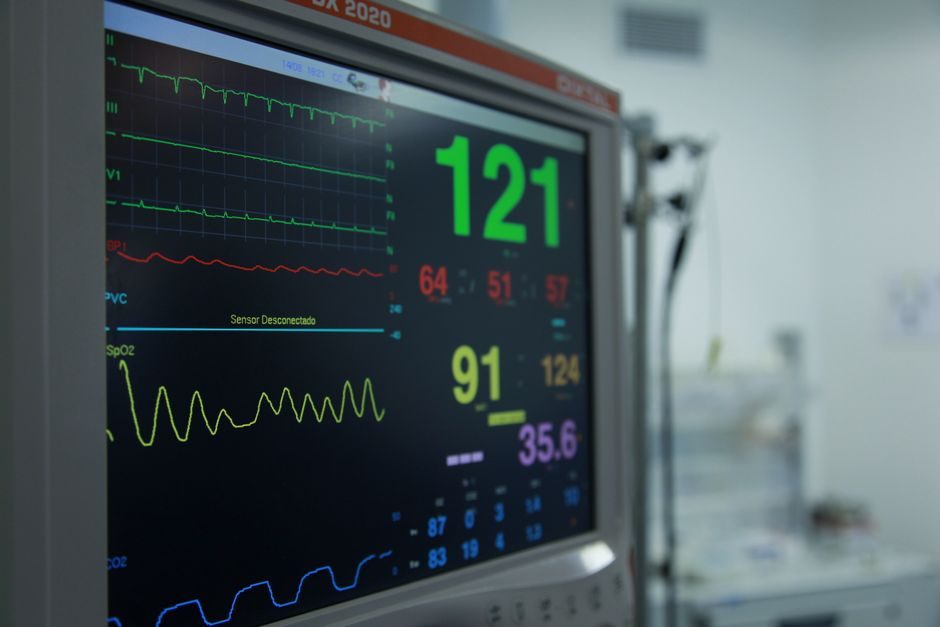
Industrial temperature monitoring devices now ship in four distinct architecture classes — wired analog (4-20 mA / RTD), wired digital (Modbus RS-485 / CAN), wireless telemetry (BLE / cellular / satellite), and SF6 gas-density compensated units — and selection hinges on which physical quantity, output protocol, and enclosure rating the application actually demands [S1][S3].
On the DirectIndustry catalogue as of 2026-07-29, temperature monitoring devices span 31 manufacturers and 42 active product lines, ranging from SF6 gas-density relays for HV switchgear to BLE/CAN engine telemetry for off-road mobile equipment [S2]. That breadth means a spec matrix, not a brand list, is the only defensible first step.
Sensor class: what physical variable is being measured
A temperature monitoring device in the industrial category is most often a hybrid instrument that reads temperature PLUS one or more secondary parameters, and the secondary parameter drives the spec sheet more than the temperature element does [S1][S3][S5].
For pure thermal duty on tanks, pumps, or machines, BLE-class engine telemetry exposes Modbus RTU master/slave, CANbus, RS-485, and two digital I/O relays with threshold-triggered outputs — a useful baseline when the asset already speaks CAN [S1]. For SF6-insulated switchgear, density-monitor models such as the ZMJ100PR and ZMJ100P integrate a temperature compensator so the displayed density is corrected against thermal drift, and use AISI 304 / AISI 316 stainless wetted parts for sealed-tank service [S3][S5]. For mobile cold-chain or warehouse mapping, multi-sensor loggers (humidity + temperature) running on fixed or in-vehicle mounts serve the duty without process-control outputs [S4].
Selection criteria matrix for 2026 buyers
Before shortlisting, score each candidate on six criteria: sensor class, output protocol, ingress rating, power, mounting, and the secondary parameter it carries — exactly the structure a Pugh / decision matrix forces you to apply [S6].
Comparing the three most-purchased architectures side-by-side against typical decision criteria: wired analog 4-20 mA + RTD scores high on noise immunity and PLC compatibility but low on data richness; wired digital Modbus RS-485 + CANbus scores high on channel count and SCADA integration, with 16-bit and 32-bit register, coil, float, and packed-digital read/write support per Cattron's Messenger BLE spec sheet [S1]; wireless BLE / cellular / satellite scores high on remote-asset coverage and pre-configured CAN engine message reporting, but trades wiring simplicity for gateway dependence [S1]. The ZMJ100PR and ZMJ100P density monitors, in contrast, win the comparison on SF6-specific criteria — anti-electromagnetic-interference electronics, RS-485 bus interface for system expansion, and up to four switch contacts configurable as overpressure alarm, dual alarm, or double locking — but are the wrong tool for a free process-temperature loop [S3][S5].
Output protocols: HART, Modbus, CANbus, BLE, and where each fits
Modbus RTU remains the workhorse serial protocol for multi-vendor SCADA integration, and modern engine-telemetry devices act as independent Modbus master and slave over two serial ports simultaneously, supporting register, coil, float, and packed-digital reads and writes in 16-bit and 32-bit widths [S1].
CANbus is the default on diesel engines and mobile machinery, and engine-telemetry devices pre-configure standard CAN engine messages including daily fuel rate and min/max parameter values, with diagnostics filtered to suppress intermittent-fault flooding [S1]. BLE and cellular or satellite modems add coverage where cable runs are impractical, with the iOS / Android RemoteIQ Messenger app used for local configuration [S1]. For SF6 gas-density service, RS-485 with a defined bus interface is the protocol of record because it supports system expansion across many substation nodes, with the temperature compensator ensuring pressure-derived density stays accurate across ambient swings [S3].
Enclosure rating, materials, and field mounting
Ingress protection is non-negotiable for outdoor or washdown duty: the ZMJ100P density monitor is rated IP65 with a hermetically sealed stainless-steel case and stainless connecting tubes specified to AISI 304 / AISI 316, and is suitable for both indoor and outdoor installation [S5].
Wetted material choice follows the process medium: AISI 316 is the safer pick for SF6 service with trace decomposition products, while AISI 304 is acceptable for less aggressive sealed-tank gas monitoring [S3]. For vehicle or warehouse mobile logging, the housing class drops to a continuous-data-logger form factor that does not carry an IP rating but accepts fixed-location or in-vehicle mounting, with humidity tracked alongside temperature to validate cold-chain compliance [S4]. Buyers should treat the published IP code as the floor, not the ceiling — a device rated IP65 will not survive a steam-cleaned food bay that demands IP69K.
Specialty duty: SF6 gas density, medical IT insulation, and high-voltage transformer
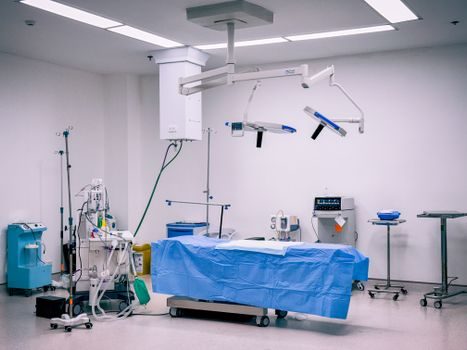
SF6 gas-insulated switchgear (GIS), pole-mounted switch, transformer, mutual inductor, and gas-insulated busbar systems all require density monitors with temperature compensation so that the displayed value is independent of altitude and external impact [S3][S5].
For medical IT systems, an insulation-monitoring device such as the Bender ISOMETER isoMED427 combines load and transformer temperature monitoring with electrical-insulation monitoring per IEC 60364-7-710, and supports locating current injector for insulation-fault location per IEC 61557-8 and IEC 61557-9 [S7]. This is a different device class — the temperature channel exists to protect the IT transformer, not to log a process variable — and substituting a general-purpose temperature monitor here is a code-compliance failure. Similarly, engine-telemetry devices are not interchangeable with medical-IT insulation monitors even though both carry the word "monitor" in their marketing copy [S1][S7].
Software, alerts, and remote-access layer
Cloud dashboards and remote alert paths now ship on most serious temperature monitoring devices, with at least one supplier combining a SmartSense Z sensor and gateway pair for remote access and compliance-grade alerts in regulated Australian cold-chain applications [S8].
On the engine-telemetry side, the RemoteIQ cloud surfaces daily fuel rate, min/max engine parameters, and configurable threshold alarms that drive two output relays automatically — manual override of those relays is supported but discouraged in production [S1]. Open-source board-level monitors (e.g. the GitHub bransgithub/Temperature-Monitor project, with 50 commits on its main branch) target a different audience — they read NI System Configuration device drivers and warn on a user-defined temperature limit, but are lab / bench tools, not industrial-grade monitors with relays or SCADA output [S9]. Buyers specifying for plant use should treat GitHub-class projects as reference, not as a procurement shortlist candidate.
Who should NOT pick the mainstream wired-analog option

If the asset is mobile, remote, or only intermittently attended — gensets, irrigation pumps, rail, construction plant, refrigerated trucks — a wired 4-20 mA loop is the wrong tool because cable damage, cable theft, and trenching cost dominate total installed cost [S1][S4].
If the process medium is SF6 in HV service, a generic RTD transmitter is the wrong tool because it does not compensate density readings for temperature and does not expose the overpressure / dual-alarm / double-locking contact logic that substation protection schemes require [S3][S5]. If the room is a medical-IT space per IEC 60364-7-710, a general-purpose temperature monitor is the wrong tool because the load-current and insulation-fault channels mandated by IEC 61557-8 and IEC 61557-9 are missing [S7]. The selection shortcut: read the standard first, then the sensor.
Limits, failure modes, and what the spec sheet leaves out
BLE / cellular / satellite engine telemetry depends on gateway coverage, and the one-year limited warranty on at least one mainstream engine-telemetry line is a hard service-life boundary, not a marketing footnote [S1].
SF6 density monitors assume a hermetic gas system; if the monitored tank develops a leak, the density reading will track that leak as if it were a temperature event unless the temperature compensator is correctly referenced, and the AISI 304 vs AISI 316 choice only matters if the wetted seal is intact to begin with [S3][S5]. Cold-chain loggers without IP ratings will fail in condensate-prone transport, and any device relying on CANbus needs the bus speed (multiple CANbus speeds are supported in modern engine telemetry, but legacy single-speed gateways will silently drop frames) to be matched at commissioning [S1][S4]. Cross-check the temperature sensor element class, the temperature monitor alarm topology, and the condition monitoring system tier before signing the PO.
Trackable next signals: catalog refresh on DirectIndustry for new ZMJ-series variants from Lanso and a third-party lab test of AISI 316 vs AISI 304 wetted-part drift under IEC 62271-203 thermal cycling for SF6 density monitors; the Cattron Messenger BLE roadmap is also expected to surface at InnoTrans 2026 in Berlin, Hall 27 Stand 500, 22-25 Sep 2026 [S1]. For buyers mapping temperature monitoring to a wider industrial-instrument stack, the same spec-first logic that drives the air quality monitor selection map applies, and the motor protection relay vs microcomputer protection relay decision map shows the same Pugh-matrix discipline on the electrical-protection side.