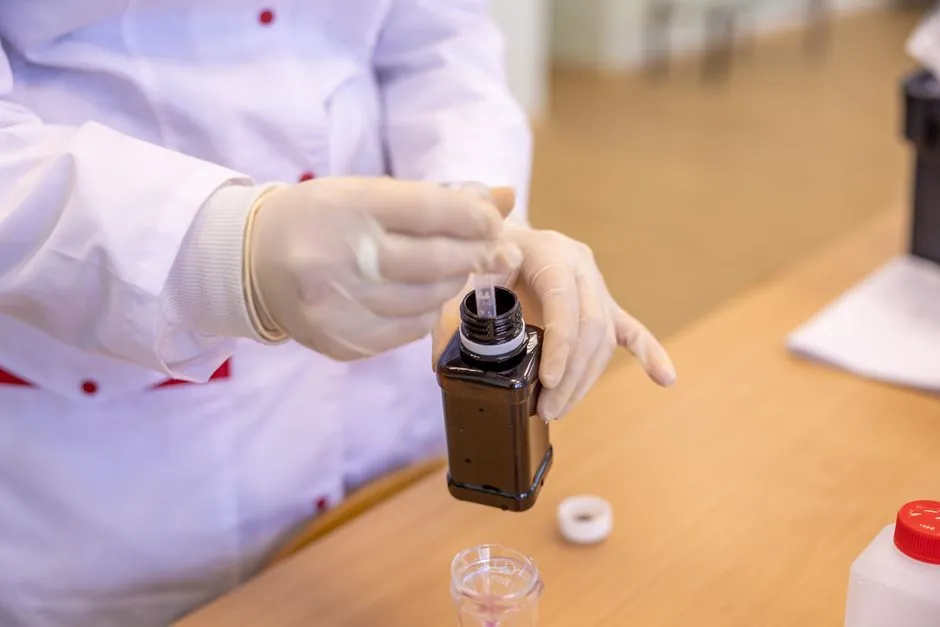
For medical devices, reagent and material selection is no longer a procurement question; it is a chemical-characterization workflow gated by ISO 10993-18, ISO 10993-1, and EU MDR substance-of-concern rules, and the chemistry dossier must be complete before biological testing begins [S1][S4].
Regulators and notified bodies now treat the chemistry file as the entry point: extractables and leachables under exaggerated and clinical-use conditions must be identified, quantified, and toxicologically assessed, with PFAS, CMRs, phthalates, and Bisphenol A explicitly screened, before biocompatibility claims are accepted [S3][S4].
Scope: which chemical reagents and which devices
Chemical reagent selection for medical devices covers three reagent families that enter the device lifecycle: (1) raw-polymer and additive reagents such as plasticizers, stabilizers, colorants, residual monomers, and catalysts; (2) process reagents such as cleaning solvents, mold-release agents, crosslinkers, and EtO/H2O2 sterilant residuals; (3) service reagents that contact the device during clinical use, including disinfectants, antiseptics, and bodily fluids [S2][S4][S5].
Device risk bands run from low-risk Class I items (disinfectants, medical spatulas, simple disposables) to high-risk Class III implants and cardiac pacemakers, and the reagent dossier depth scales with that band, not with the supplier's brand [S3]. A chemistry-first approach forces lower-risk devices to be re-evaluated whenever a cleaning agent, colorant, or sterilization route changes, because extractable and leachable profiles shift with every formulation change [S1][S6].
Decision Criteria That Drive Reagent Choice
Five criteria govern medical-grade reagent selection: biocompatibility per ISO 10993 series, chemical resistance to disinfectants and bodily fluids, sterilization compatibility (EtO, gamma, steam, H2O2), full traceability and supplier documentation, and regulatory file readiness for FDA 510(k), EU MDR, and MDSAP submissions [S2][S6].
Within ISO 10993, ISO 10993-18 sets the chemical characterization test plan, ISO 10993-1 frames the biological evaluation plan, and ISO 10993-17 establishes the allowable limit for leachable substances, while USP Class VI and USP <87>/<88> are still referenced for plastics in many legacy files [S1][S2]. A reagent that passes USP Class VI is not automatically ISO 10993-18 compliant; the modern pathway demands analytical chemistry data, not just legacy biological reactivity data [S1].
Comparison: Reagent Families Against the Same Four Gates

Lining the main reagent families up against biocompatibility, chemical resistance, sterilization compatibility, and regulatory cost, polymer/additive reagents score high on regulatory familiarity but trigger long E&L work, while process reagents score high on chemical resistance but generate residual-solvent tests that can stall release [S4][S5].
Service reagents (disinfectants such as 70% IPA, sodium hypochlorite, quaternary ammonium, and accelerated H2O2) are the easiest to source but carry the highest post-market risk: a formulation change by the disinfectant supplier is enough to invalidate a corrosion or extractable claim on a previously cleared device [S2][S6]. The practical rule is that process and service reagents need a formal re-qualification trigger in the QMS, while raw-material reagents need a chemistry dossier that travels with each lot.
Real Use Cases: Implant, Diagnostic, and Reprocessable Device
For an implantable polymer such as PEEK or UHMWPE, the reagent dossier must characterize residual monomers, polymerization catalysts, processing solvents, and any antioxidants, then run exaggerated extraction in polar, semi-polar, and non-polar solvents per ISO 10993-18 to feed the toxicological risk assessment [S1][S4][S7].
For a reprocessable surgical instrument in stainless steel 316L or 17-4 PH, the gating reagents are the cleaning chemistries (enzymatic detergents, neutral pH cleaners) and the steam or H2O2 sterilization residuals, with surface corrosion and pitting risk assessed against the chosen disinfectant class [S2][S6]. For an IVD or lateral-flow consumable, the binder reagents, surfactants, and nitrocellulose additives dominate the extractable profile, and any change in surfactant supplier typically forces a new E&L study under ISO 10993-18 [S5][S7].
Limitations, Failure Modes, and Common Pitfalls
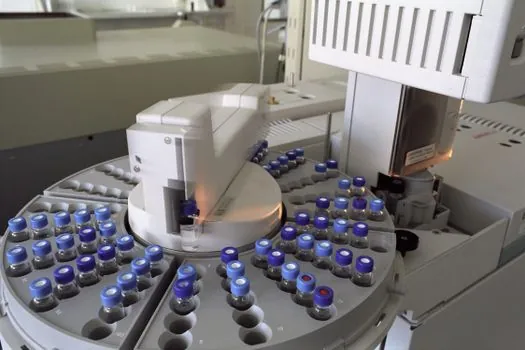
The FDA's Materials and Chemical Characterization Program explicitly flags three recurring failure modes: ambiguous clinical relevance of traditional extractable data, lack of accelerated methods to support long-term polymer stability, and weak in-vitro to in-vivo correlation for absorbable materials, all of which lead to repeat testing and submission delays [S1].
Industry-side pitfalls include using industrial-grade polymers during design verification (which invalidates downstream biocompatibility data), accepting a supplier's "USP Class VI" certificate as a substitute for an ISO 10993-18 chemistry report, and treating a single E&L study as covering all disinfectant combinations the device will meet in the field [S2][S6][S7]. Chemical characterization is not a one-shot study: every change in supplier, colorant, processing aid, or sterilization route is a new E&L question, and the analytical chemistry must be repeated, not just the biological assays [S1][S4][S5].
Standards, Sources, and What a Complete Reagent File Looks Like
A complete reagent and material file references ISO 10993-1, ISO 10993-18, ISO 10993-17, USP Class VI and USP <87>/<88>, EU MDR Annex I on substances of concern, REACH for PFAS, and FDA guidance on chemical characterization, with a toxicological risk assessment that links every identified extractable to a permitted daily exposure or a justified margin [S1][S2][S4][S5]. The FDA program page notes that ISO 10993-18 (2020 edition) remains the working standard reviewers cite when evaluating chemistry submissions, and the CHRIS subprogram is the agency's effort to build physics-based exposure models that replace worst-case assumptions with patient-realistic dose estimates [S1].
Comparable selection logic for adjacent industries is laid out in the Electronics-Grade Chemical Reagent Selection: Purity, Grade, and CEPN MRSL Logic reference, which applies the same purity-and-grade approach to electronics rather than medical devices, while Industrial Gas Selection for Energy Equipment: 2026 Spec Gates shows how the spec-gate pattern transfers to a different regulated industry. The reagent logic is also conceptually adjacent to a chemical reagent encyclopedia entry, which frames reagent families and purity grades common across industrial purchasing. Track two signals through Q4 2026: FDA OSEL publications from the CHRIS subprogram, and any final EU PFAS restriction listing under REACH that would force a chemistry re-screen of legacy medical-device dossiers.
The underlying component specifications are covered under chemical anchor, and chemical material.