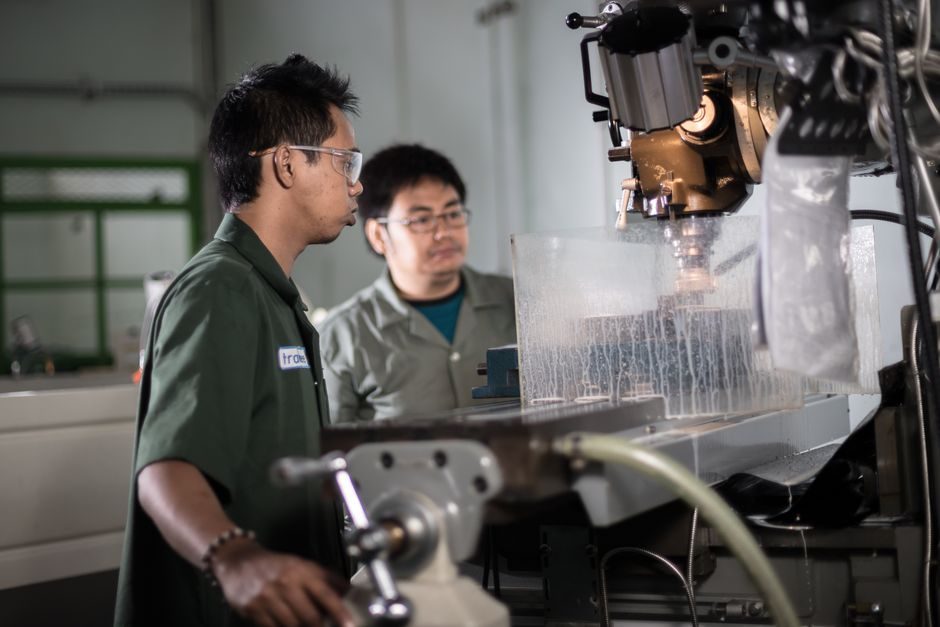
China captured 21.6% of global machine-tool exports in 2025, displacing Germany (16.7%) from the top slot for the first time, per a 2026-04-25 industry analysis [S9].
That single data point reframes the 2026 capacity conversation: Japan and Germany still dominate high-end CNC machine tool design, but China now ships more units by value across all tiers, while India-based contract manufacturers and Chinese provincial clusters absorb retrofit and mid-range demand [S2][S3][S6].
Production Capacity by Country: Where the Tonnage Actually Lives
Three blocs carry 2026 CNC machine tool production capacity. China leads on unit volume and export share, anchored by regional clusters in Guangdong (Dongguan/DaLang), Shandong (Jinan, where the 1993-founded Zhenghua line runs), and Zhejiang (Kaida Machine Tool, operating since 1952 with 60+ years of lathe and machining-center output) [S4][S6][S7]. The 2025 export figure of 21.6% global share versus Germany's 16.7% reflects that physical footprint plus state-level projects like Siping City's ultra-high-end CNC equipment build-out, flagged as a 2025-03-23 priority investment [S3][S9].
Germany retains the second slot on export value because its builders concentrate on 5-axis machining centers, high-rigidity turning centers, and integrated automation cells — categories where the per-unit ASP runs 3-5x a Chinese mid-range lathe. The 2026-04-25 analysis cites a triple squeeze on German capacity: industrial electricity inflation post-Nord-Stream disruption, labor cost premium of 24-32% over the US and Japan, and SME attrition [S9].
Japan holds a smaller export share but the highest internal CNC penetration rate — Research and Markets' 2016 baseline put Japan above 90% CNC penetration inside its own metalworking base, with Germany and the United States above 70%, against roughly 30% for China at that time [S8]. That 2016 ratio is the reference floor still cited in 2026 retrofit planning, even as China's headline export number has overtaken Germany's.
Selection Criteria Buyers Use to Route CNC Capacity
Specifying engineers pick country-of-origin against four decision levers: required accuracy class, lot size, lead time, and total-cost envelope. Ultra-high-end (sub-µm positioning, 5-axis simultaneous, thermal-stability specs) routes almost exclusively to Germany, Japan, and a handful of Chinese ultra-high-end projects like the Siping City program [S3]. Mid-range 3-axis vertical machining centers and standard CNC lathes route to Chinese provincial suppliers such as Baofeng (Dongguan) and Kaida (Zhejiang), where standard catalog lead times run weeks rather than quarters [S6][S7].
Entry-level and retrofit demand — manual-to-CNC lathe conversion kits, PC-based CNC controllers, bench lathes — flows heavily through Indian contract manufacturers (e.g., Global Machines, Pune) and Chinese OEM/ODM factories listed on Made-in-China, which publish OEM/ODM service tiers explicitly [S2][S6]. For a deeper look at retrofit/upgrade decision logic, see our CNC retrofit and capacity sourcing primer.
Buyers should match the workpiece mix to the spindle spec rather than chase country-of-origin prestige: a high-rigidity VMC from a Tier-2 Chinese maker will outperform a German 3-axis unit on a steel bracket job, while a German or Japanese 5-axis remains the right call for aerospace structural parts where AS9100 traceability and thermal-stability data sheets are non-negotiable [S3][S9].
Country Comparison: CNC Output on Four Decision Criteria
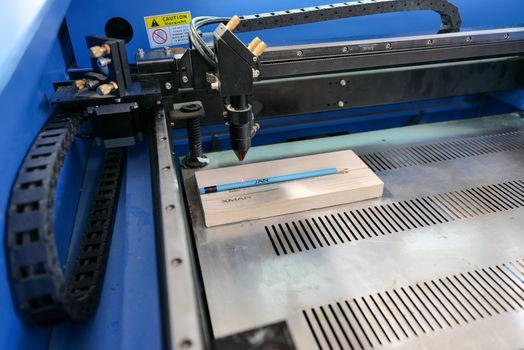
Stacking the four major producers head-to-head on the criteria procurement teams actually score against: [S1]
Export share (2025, by value): China 21.6%, Germany 16.7%, Japan mid-single-digits but with the highest unit ASP, United States/Italy/Switzerland competing in the high-end tail [S9]. Internal CNC penetration rate: Japan >90%, Germany/USA >70%, China ~30% (2016 baseline still cited in 2026 retrospectives) [S8]. Lead time for standard 3-axis VMC: Chinese provincial suppliers in the 4-8 week band, German builders in the 16-24 week band, Japanese premium builders often 20-30 weeks [S6][S7]. Per-unit cost premium for high-end: German/Japanese machines carry a 3-5x multiplier over Chinese mid-range equivalents on comparable 3-axis footprints, narrowing but not closing on 5-axis [S9].
For procurement teams whose scoring model weights cost-and-speed 60/40, Chinese mid-range capacity now sets the benchmark; for models weighting accuracy-and-traceability 70/30, Germany and Japan remain the default. The Indian and Southeast-Asian retrofit ecosystem covers the bottom rung, with OEM/ODM flexibility that lets a buyer stamp their own controller brand onto a locally assembled lathe [S2][S6].
Real Use Cases by Capacity Tier
High-end aerospace and medical implant work routes to German and Japanese 5-axis platforms, where certification paperwork and thermal compensation data are bundled with the machine. The 2025-03 Siping City project documentation explicitly targets "ultra-high-end" equipment for the kind of structural parts that historically flowed from German builders [S3].
Architectural window and door machinery — aluminum-alloy, insulating-glass, and curtain-wall production lines — is a category where Chinese specialists like Jinan Zhenghua dominate; the 1993-founded firm sells complete lines across all Chinese provinces and into overseas markets, a use case that has little overlap with German 5-axis structural-parts work [S4]. For more on the core machine and cutting machine selection logic that crosses those tiers, see the spec encyclopedia.
Standard turning, milling, and small-batch job-shop work in India and Southeast Asia is fed by Pune-based contract manufacturers shipping retrofit kits and CNC lathes to regional fabricators; these lines rarely compete for aerospace work but consistently win on price-per-installed-spindle for general machining [S2].
Limitations, Failure Modes, and Sourcing Constraints
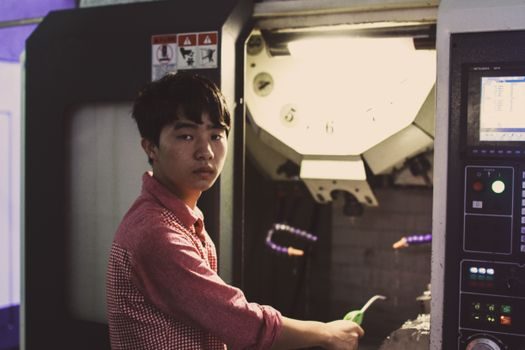
The headline export-share number hides an asymmetry: China's 21.6% is heavily weighted toward mid-range machines, while Germany's 16.7% skews to high-end. Direct comparison on a unit-count basis would inflate China's lead further; comparison on value-per-machine would narrow it. Buyers who treat "country of origin" as a single dimension miss this mix issue [S9].
German supply remains constrained by industrial electricity inflation and SME attrition flagged in the 2026-04 analysis, which translates into longer quoted lead times and a rising share of "engineering-to-order" contracts where pricing is negotiated per cell rather than per machine [S9]. Japanese premium builders face similar constraints on the high-end 5-axis side, and the US tariff regime on machine tools is a separate 2026 variable that did not appear in the supplied research.
Internal CNC penetration rates (Japan >90%, Germany/USA >70%, China ~30%) are 2016-vintage figures still circulating in 2026 reporting; the 2026 reading is almost certainly higher for China given the export trajectory, but the supplied research does not provide a verified post-2020 penetration number, so any "current rate" claim should be treated as a planning estimate rather than a hard figure [S8]. For an analogy on how country-level capacity mix shifts, our MEMS fab density tracker follows a similar capacity-share-by-country pattern in semiconductors.
Standards, Sourcing Signals, and What to Track Next
No single ISO or IEC standard governs "country-of-origin CNC capacity," but several standards shape the buy decision: ISO 230-2 for positioning accuracy and repeatability, ISO 10791 for machining-center test conditions, and the German VDI 3441 baseline for long-term thermal stability. Buyers should require the relevant test certificate per machine rather than per factory. [S2]
Trackable signals for the next quarter: (1) 2026 full-year machine-tool export data from China's General Administration of Customs, expected to confirm or extend the 21.6% 2025 share; (2) German VDW quarterly order intake, which the 2026-04 analysis flagged as the leading indicator for whether the energy-cost squeeze is easing; (3) Japanese builders' pricing actions on premium 5-axis platforms, since any sustained ASP decline would signal capacity release into export channels. The 2026-07-09 Baofeng product-page refresh — adding vertical, horizontal, double-column, and tapping-machine lines — is a small but concrete signal that Chinese mid-range suppliers are broadening their catalogs, not just chasing unit volume [S7].