
Between 2020 and 2025 the desalination industry contracted roughly 115 million m³/day of new and replacement capacity, an annual run-rate that puts seawater and brackish desalination on a trajectory to clear 150 million m³/day of cumulative contracted build through 2030 [S1]. The 2025 operating mix is led by Saudi Arabia, the United Arab Emirates, Israel, the United States, China and Spain, with Israel posting the world's highest per-capita desalinated supply and Saudi Arabia operating the single largest plant (Rabigh-3, 600,000 m³/day phase-one).
The forward pipeline skews toward Asia, North Africa and the Americas: China, India, Saudi Arabia, the UAE, Egypt, Chile, Morocco and Oman account for the largest share of the contracted-but-not-yet-commissioned build between 2026 and 2030, while a smaller slice sits in water-stressed U.S. states (California, Texas) and in Australia [S1]. EPC responsibility for membrane and thermal systems is concentrated in roughly ten contractors, with Chinese EPCs (SEPCO III, POWERCHINA, Beijing Enterprises Water, Wison Engineering) capturing a growing share of thermal and SWRO megaproject awards since 2023.
Installed Capacity by Country, 2025 Operating Mix
Saudi Arabia sits at the top of the cumulative operating table with about 9.1 million m³/day of installed capacity, almost entirely MSF/RO hybrid plants on the Arabian Gulf coast, of which roughly 1.5 million m³/day has been commissioned since 2020 [S1]. The UAE follows at around 5.6 million m³/day, dominated by MSF units at Jebel Ali and Taweelah, with an additional 910,000 m³/day of new RO coming online in 2024-2025 at Taweelah. Israel operates near 1.4 million m³/day across Sorek (624,000 m³/day, the largest single SWRO facility in the world as of 2024), Hadera, Ashkelon and Palmachim, supplying over 70% of municipal water demand.
China is the second-largest operator in Asia at approximately 3.6 million m³/day of installed capacity, distributed across the Bohai Rim, Hebei, Shandong, Tianjin and Inner Mongolia, and clustered around coal-chemical and power-plant self-supply plus municipal coastal plants at Tangshan, Tianjin, Qingdao and Beijiao [S1]. The United States operates around 1.6 million m³/day, with California, Florida, Texas and the Caribbean hosting the largest share, while Spain (around 1.0 million m³/day) remains Europe's biggest operator and the historical reference market for Toray and Hyflux membrane reference lists. India, Kuwait, Qatar, Bahrain and Chile round out the top twelve, with India climbing the table on the strength of Tamil Nadu, Gujarat and the 400,000 m³/day Chennai Nemmeli and Minjur expansions delivered between 2022 and 2024.
Country-by-Country Build Pipeline 2026-2030
Between 2026 and 2030, contracted new-build totals roughly 38 million m³/day, with the leading-edge build bands dominated by Saudi Arabia (NEOM, Rabigh-4, Yanbu-4 phases), the UAE (Taweelah B04 at 910,000 m³/day commissioned mid-2026, plus a 200 MIGD expansion announced for 2028), and China (a cluster of sub-300,000 m³/day SWROs for the Bohai rim and Inner Mongolia) [S1]. Israel's remaining build is mostly replacement and energy-recovery retrofits, with no greenfield of more than 100,000 m³/day scheduled. India's pipeline of 4-5 million m³/day is the largest single-country new-build volume in the period, anchored by the 2,400 MLD Gujarat Dholera and the 1,500 MLD Chennai Desalination Phase IV schemes, with a target commissioning window of 2027-2029.
Egypt contracted 2.5 million m³/day in 2024-2025 (El Hamrawein, 1.0 million m³/day, and the East Alexandria extension, 500,000 m³/day), with construction mobilizing from 2025 and first water scheduled for 2027-2028 [S1]. Chile's Copiapó project (120,000 m³/day) and a tendered Coquimbo/La Serena expansion together represent the largest build block in Latin America, while Morocco's National Water Plan targets an additional 1.7 million m³/day by 2030, of which Agadir-3 (200,000 m³/day) and the Casablanca SWRO (300,000 m³/day) are the first two. Australia's Sydney Desalination Expansion (250,000 m³/day) and the Western Corridor Growth Plan keep it in the top fifteen forward-build markets, with procurement windows opening in 2026-2027.
Technology Mix: SWRO Dominance, Hybrid and Forward-Osmosis Pilots

Energy use on delivered SWRO has fallen into the 2.5-3.5 kWh/m³ band for high-recovery plants using isobaric energy-recovery devices (ERDs), versus 4-5 kWh/m³ on first-generation systems, and specific energy consumption below 3 kWh/m³ is now routinely written into tender specifications for greenfield SWRO in Israel, Spain, Chile and Australia.
High-pressure pump and ERD technology is concentrated in three suppliers (Energy Recovery Inc., Flowserve, Sulzer), while Chinese EPCs increasingly source intermediate-piping skids, FRP vessels (Pentair/Aquatech-derived local builds), and high-pressure pumps from local fabricators to compress SWRO EPC capex into the USD 0.45-0.65 per litre/day installed band typical of 2024-2025 awards. Forward-osmosis, membrane distillation and electrodialysis pilots remain sub-5,000 m³/day and have not entered commercial scale as of 2025 [S1].
Process Engineer's Selection Lens: Country Risk, Energy Mix and Discharge
Procurement teams ranking countries for build-or-buy decisions should weigh four concrete criteria: feed-water salinity and temperature, energy price and carbon intensity, brine-outfall regulation, and contract structure. The Gulf plants operate on feedwater at 38,000-45,000 ppm TDS, 30-35 °C, and benefit from captive gas-fired power with a levelised electricity cost typically under USD 25/MWh, which keeps total SWRO+RO unit water cost (excluding brine handling) under USD 0.50/m³ at large scale. Mediterranean and Chilean sites see 33,000-37,000 ppm TDS at 18-25 °C, with grid power at USD 50-90/MWh, and consistently specify energy recovery to keep SWRO element loading in the 12-15 L/m²·h range rather than the 18-22 L/m²·h typical of 2010-vintage plants [S1].
Brine discharge is becoming the dominant permitting gate outside the Gulf, where the Red Sea and Arabian Gulf accept single-port outfalls with limited dispersion modelling. In Chile, California, Israel and the Australian east coast, brine line-length, dilution modelling under EPA Title 22 / Israeli Ministry of Health guidelines, and marine-life monitoring on concentrate constituents (boron, antiscalant residuals, trace metals) are now standard tender annexures, and the use of Outfall Multiport Diffuser D (D × 0.5 spacing rule) is specified for the 2024-2025 Copiapó and Hadera retrofits. Investors comparing national pipelines on risk-adjusted delivery should expect a 1-2 year slippage factor on Egypt, Morocco, India and China 2026-2028 commissioning dates, against near on-time delivery in the UAE, Saudi Arabia and Israel.
Industrial Procurement Implications for Pumps, Valves and Process Control
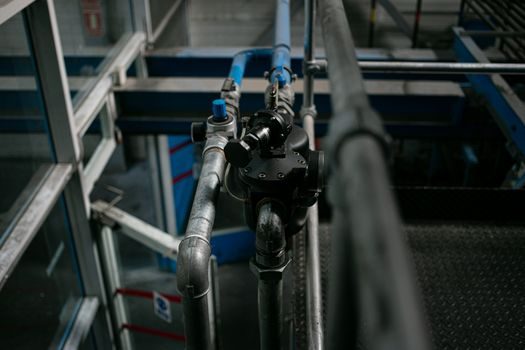
A country-share model carries direct sourcing consequences for industrial buyers of flow meters, pressure transmitters, industrial valves, pressure sensors and PLC/SCADA packages. SWRO racks above 50,000 m³/day typically spec electromagnetic flow meters (Endress+Hauser Promag, ABB AquaMaster, Siemens SITRANS F M) on the permeate and concentrate streams, with high-pressure feed flow on Coriolis (Endress+Hauser Promass, Emerson Micro Motion) for accuracy inside ±0.1%, and on-pipe pressure transmitters clamped to ≤0.05% BFSL with HART 7 / Ethernet-APL for predictive maintenance handoffs. ERD inlet pressure is the single most instrumented point on the plant, with redundant pressure sensors rated for up to 80 bar and CIP cycles documented to 4,500 hours. [S1]
Valve allocation in a 100,000 m³/day SWRO skews heavily to 24-inch butterfly on the intake, with 4-6 inch modulating industrial valves for inter-stage pressure regulation, and pneumatically actuated piston valves on the energy-recovery bypass for fail-safe isolation. Digital control on all commissioned plants above 50,000 m³/day in 2024-2026 is now specified around Siemens SIMATIC S7-1500/ET 200SP with PROFINET or Rockwell ControlLogix with EtherNet/IP, communicating upstream to ABB 800xA or Honeywell Experion, with redundant PLC hot-standby and event time-stamping to IEC 61131-3 trace format. For EPCs bidding the Indian, Egyptian and Chilean 2026-2028 build, instrument lead times on flow meter skids, ERD pressure sensor cables, and duplex stainless AISI 2205 high-pressure piping remain the schedule-critical path.
Limitations, Open Data and Trackable Signals
Public reporting on global desalination capacity is patchy: the International Desalination Association (IDA) and GWI DesalData carry the most consistent installed-capacity time series, but forward-pipeline disclosures beyond 2027 rely on a mix of EPC announcements, sovereign water-utility press releases and tender portals, and figures for the China, Saudi and UAE build between 2028 and 2030 are not yet settled [S1]. The 38 million m³/day 2026-2030 contracted-pipeline number should be read as a lower bound, since India and China pipeline disclosures lag actual LOA signings by 12-18 months. Brine-outfall regulation tightening is the most likely source of schedule slippage in Mediterranean, Chilean and Australian tenders, and any published change to the Israeli Ministry of Health 1:100 dilution rule would be the single most material permitting event to monitor for 2026-2027.
Trackable signals through 2026-2030: (1) commissioning of NEOM phase-one SWRO (target mid-2027) and Taweelah B04 (2026); (2) award of the Chennai Phase IV EPC packages (LOA expected 2026); (3) announcement of Saudi Water Authority Round-3 solar-coupled SWRO (expected capacity band 600,000-1,200,000 m³/day, indexed to NEOM-style Power Purchase Agreement tariffs below USD 12/MWh). Plant-acceptance on a country basis lags announcement by 18-30 months, and the 2026 commissioning window is dense enough that the industrial valve, flow meter and pressure transmitter order book is the cleanest early indicator of country-share movement ahead of IDA's 2027 Desalination Yearbook release.
For related coverage, see LNG Global Production Capacity by Country: 2025 Operating Mix and 2026-2028 Build Tracks.