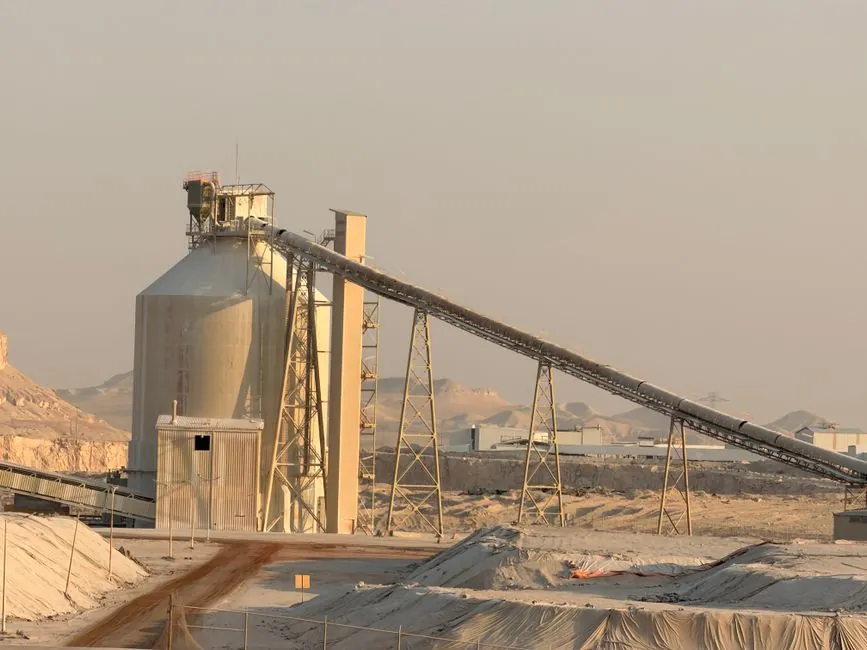
A baghouse dust detector should have sufficient sensitivity to detect small leakage events, with response time also treated as a selection criterion [S2].
The selection depends on the dust load, particle properties, probe location, temperature, humidity, and the filter-media design, with fabric filters commonly used for particles around 0.1–1 µm [S5].
Define the Leak Size You Need to Catch
Bag-leak detection is a relative measurement problem, not simply a search for the lowest available sensitivity. The EPA fabric-filter guidance is a 26-page procedure whose contents include applicability, emission-source and control-device descriptions, fabric filters, and emission sources [S1].
Use the leakage mode to set the target. A small broken seam, pinhole, or failed cleaning cycle can create a much lower mass flow than a failed compartment or major duct breach. A monitor with a low detection limit may improve visibility, but a low limit also increases sensitivity to baseline changes, probe contamination, vibration, and other disturbances. The useful specification is therefore the smallest leak signal that operators must act on, expressed as a concentration change at the selected probe location [S1][S2].
Do not confuse detector sensitivity with filter efficiency. Filter-media efficiency describes particle removal by the bag, while detector sensitivity describes the instrument's ability to reveal an abnormal dust signal downstream of the collector. Fabric-filter bags are available in woven felt, non-woven felt, natural fiber, and synthetic constructions, including polypropylene, PPS, and polyester, but the medium choice is governed first by service temperature and chemistry [S3][S5].
Match the Measurement Range to Normal Loading
The detector range must cover normal clean-side or outlet dust concentration, startup conditions, cleaning cycles, upset conditions, and the expected leakage signal without leaving the usable measurement band. One published triboelectric monitor example covers 0–500 mg/m³, while response below 1 second is identified as useful for rapid failure detection [S2].
A useful comparison separates four criteria: low-end capability, high-end capacity, response speed, and signal stability. A high-sensitivity instrument is useful only if its usable low-end performance remains dependable under the plant's normal dust and moisture conditions. An instrument that handles the high dust load but drifts near baseline is a poor early-leak detector. Conversely, an extremely sensitive unit can create nuisance alarms if it cannot distinguish a small leak from normal variation [S1][S2].
Filter-media selection should consider temperature, material, the chemistry of the dust particles, and resistance to abrasion [S3]. The media must also tolerate abrasion, the dust's chemical makeup, and the pulse-cleaning environment [S3]. A detector selected outside these conditions may fail for reasons unrelated to sensitivity, such as heat, chemical attack, or rapid fouling.
Compare Detection Methods by Failure Risk

Triboelectric technology detects extremely fine particles by measuring the electrical charge generated by dust movement in ductwork [S2]. Optical particle monitoring measures light scattering, while differential-pressure monitoring infers filter condition from resistance across the fabric. These methods answer different questions: charge-based and optical systems can quantify escaping dust, while differential pressure primarily reveals loading or blinding and does not by itself locate the leaking bag.
Dust-leakage monitoring offers exceptional sensitivity for detecting minor increases in dust loading that indicate developing bag-integrity problems [S7]. The practical comparison is therefore:
Choose the method that matches the failure mode. A dust detector selected only by its lowest detection limit may still fail if the dust has low charge, the probe accumulates particulate matter, or airflow velocity is outside the instrument's working range [S1].
Account for Dust, Airflow, and Climate
Triboelectric performance depends on particulate-matter composition and probe material, gas velocity, particle size, electrical charge, probe accumulation, particle shape, temperature, and relative humidity [S1]. Those variables make site-specific commissioning more reliable than comparing a headline sensitivity number alone.
Check the normal stack velocity and its variation during startup, shutdown, and filter cleaning. Confirm the monitor's stated operating range against site conditions, including the published example of -25°C to +55°C and IP65 enclosure protection [S2]. IP65 describes the cited enclosure's ingress protection, not proof that every internal sensing element is unaffected by condensation or dust loading.
Humidity can change dust behavior and probe response, while temperature changes can affect charge generation and electronics.
Set Baseline, Alarms, and Response Test
Commission the detector under normal operation, not during a startup upset. Record the baseline across multiple filter-cleaning cycles, establish alarm bands above the normal operating variation, and map each alarm to the corresponding baghouse compartment. The EPA procedure specifies monitor setup, signal adjustments, response testing, electronics drift checks, sensor cleaning, and monthly checks [S1].
Use a three-level operating structure: normal baseline, warning for a developing leak, and action threshold for a confirmed leakage event. The exact concentrations must come from measured stack behavior, not from a generic low, medium, or high label. Also verify that the alarm delay is shorter than the operator's response time while remaining long enough to reject short transients.
Performance depends on stable electrical noise, a clean probe, correct airflow velocity, and consistent baseline conditions [S1][S2]. The published 0–500 mg/m³ example also illustrates why both endpoints matter: the lower end supports leak visibility, while the upper end prevents overload during abnormal loading [S2].
Define Acceptance Tests Before Purchase
Write acceptance criteria around four measurable outcomes: baseline repeatability, response to a controlled leakage test, alarm activation time, and recovery after cleaning or normal filter operation. The EPA guidance includes response tests and drift checks as distinct QA activities, so a detector should not pass merely because it produces a visible needle movement [S1].
Specify the intended dust concentration range in mg/m³, the minimum actionable leakage change, the required response time, the operating temperature, humidity exposure, enclosure rating, output interface, alarm relay requirements, and probe location. The EPA document's section structure covers sensor assembly material, location, signal-processing electronics, setup, adjustment, response testing, and drift checks, giving procurement teams a concrete commissioning checklist [S1].
Keep the detector classification accurate. If the unit detects particulate leakage rather than a combustible atmosphere, it should not be presented as a safety-rated gas detector. Where risk assessment identifies a separate flammable-dust hazard, the appropriate equipment may be a combustible gas detector, selected for the specified gas, concentration range, installation requirements, and hazardous-area classification.
Match Sensitivity to the Maintenance Decision

The best baghouse dust detector sensitivity is the lowest level that remains repeatable during normal operation and produces an actionable compartment-specific alarm before visible or excessive dust release. Confirm that the instrument spans the expected concentration range, includes a response time compatible with the failure, tolerates the actual temperature and humidity, and can be maintained through probe cleaning and drift checks [S1][S2].
After installation, validate two trackable signals: the measured clean-side baseline and the change produced by a controlled leakage test. If the baseline drifts, the probe fouls, or the leakage response falls below the engineered alarm band, correct the installation before raising sensitivity further. More sensitivity without stable baseline produces more data, but not better bag-integrity decisions.