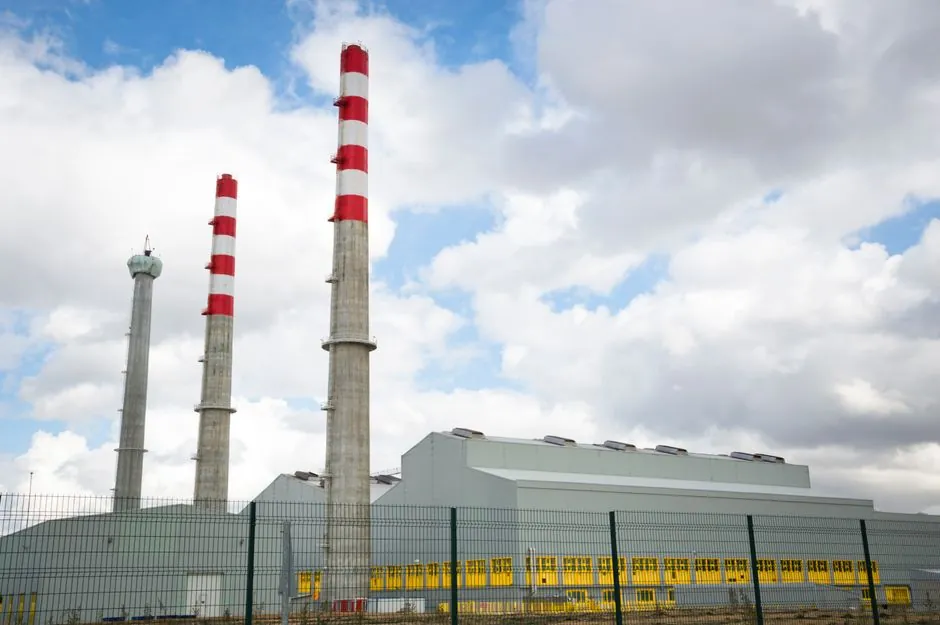
Refinery combustible-gas sensor selection depends on gas composition, measurement range, environment, and installation geometry, with catalytic bead, NDIR, and open-path infrared covering distinct applications [S2][S4].
Most refinery combustible instruments use percent-of-lower-explosive-limit, or %LEL, readings, and many are calibrated to a pentane response level [S7].
Define the Refinery Hazard and Response
A combustible gas detector should be matched to the release scenario and the decision it must support: local leak detection, area monitoring, or continuous coverage of an outdoor process zone. Methane, propane, butane, hydrogen, acetylene, and carbon monoxide can all be detected with catalytic bead sensors, while the response to a single calibration gas does not automatically guarantee accurate readings for every other combustible gas [S2].
Electrochemical sensors convert gas concentration into electrical current and are established for toxic gases such as carbon monoxide and hydrogen sulfide, rather than serving as the general-purpose LEL technology for a refinery [S1].
For fixed coverage, a fixed gas detector remains continuously stationed at a defined point, while a portable gas detector moves with personnel for spot checks, inspections, and confined-space entry [S3]. A detector type is therefore incomplete without a sampling strategy, defined alarm actions, and the location where the measurement will be made.
Compare the Main Sensor Families
Catalytic bead, NDIR, and open-path infrared detectors differ most clearly in gas coverage, response behavior, and installation range. The comparison below assumes hydrocarbon-dominated refinery hazards unless noted otherwise. [S2]
That breadth should not be treated as a substitute for the refinery hazard definition. The gas list, response factor, alarm set points, and environmental ratings still determine suitability for a specific installation.
Apply Response Factor and Calibration Controls

Most refinery instruments are calibrated to a pentane level of sensitivity, and their combustible alarms are expressed in %LEL [S7]. A methane-calibrated instrument and a pentane-calibrated instrument can therefore present different numerical readings for the same physical mixture unless the applicable response factor is applied correctly.
Lower Explosive Limit is the minimum concentration of a gas that can ignite in air when an ignition source is present; combustible detectors measure the fraction of that threshold at which alarm criteria are triggered [S4]. A detector specification should identify the calibration gas, supported target gases, response-factor method, alarm thresholds, output type, and calibration interval rather than stating only “percent LEL.”
A fixed transmitter therefore creates an electrical decision chain, not just a local reading. The gas alarm controller must be checked against the required fail state, alarm levels, output interface, and shutdown logic.
Match the Sensor to Process Conditions
Catalytic bead sensors are suitable where hydrocarbon, hydrogen, or acetylene hazards coexist with temperature or humidity fluctuations [S2]. Their practical weakness is poisoning at high flammable-gas concentrations, which makes continuous exposure above the normal operating range an important failure mode to evaluate before purchase.
For a refinery, this constraint makes lens contamination, condensation, vibration, alignment stability, and obstruction checks part of the selection rather than commissioning details. Installation architecture, including wired versus wireless fixed gas detection, can then be selected around the approved technology.
Place Detectors by Release and Ventilation Logic

A fixed detector is intended to watch one location continuously, while a portable unit follows the worker and evaluates the air at the point of entry [S3]. In a refinery, fixed point detectors are appropriate near equipment or piping where a leak can accumulate predictably, open-path devices are appropriate for outdoor process zones with line-of-sight coverage, and portables are appropriate for walkdowns, first-entry checks, and areas where no permanent sampling point represents worker exposure.
Location should follow the release geometry, ventilation pattern, detector sampling characteristics, and the consequence of delayed detection. NFPA 70 addresses electrical installations in hazardous locations and requires appropriately listed and rated equipment for Zone and Division classifications [S4]. NFPA 72 governs the interface between gas-detection equipment and fire-alarm systems, while its fuel-gas installation provisions have moved to NFPA 715 [S4]. These requirements affect equipment selection and interface design, but they do not replace a documented engineering evaluation of detector location.
Open-path systems need an unobstructed line of sight. Point systems require the target release or representative concentration to reach the sensor. Portable instruments do not provide the same area-wide warning as a fixed network. No detector architecture removes the need to define what happens at low alarm, high alarm, ventilation start, process shutdown, and instrument fault.
Verify Certification, Outputs, and Maintenance
A refinery purchase should document at least 3 practical acceptance points: the named target gas and calibration basis, the electrical certification applicable to the hazardous area, and the detector’s alarm and fault output behavior. Fixed systems commonly provide 4–20 mA or relay interfaces [S4], but the transmitter model and certification package must be confirmed rather than assumed from the sensor family.
Environmental suitability also needs a measurable basis. The detector should be durable and reliable for the installed conditions [S4]. For optical sensors, document the optical path length, minimum detectable concentration or LEL-m rating, alignment tolerance, and interference-gas list. For catalytic bead sensors, document the calibration-gas range, response factors for refinery hydrocarbons, poisoning limits, and the approved bump-test and calibration intervals.
Portable and fixed combustible gas detector choices should share a consistent alarm philosophy even though their roles differ. A portable unit can support entry control and leak finding, while fixed units provide continuous process-area surveillance. The architecture is strongest when portable instruments verify locations that fixed sensors cannot physically reach, rather than duplicating the same measurement for no defined operating benefit.
For an initial procurement decision, use this sequence: define the gas and release, select catalytic bead, point NDIR, or open-path infrared from the physical measurement principle, verify calibration and response factors, match the hazardous-area certification, and then design location, outputs, alarms, and maintenance. This ordering prevents a detector family from being chosen before the refinery hazard and response requirements are understood.