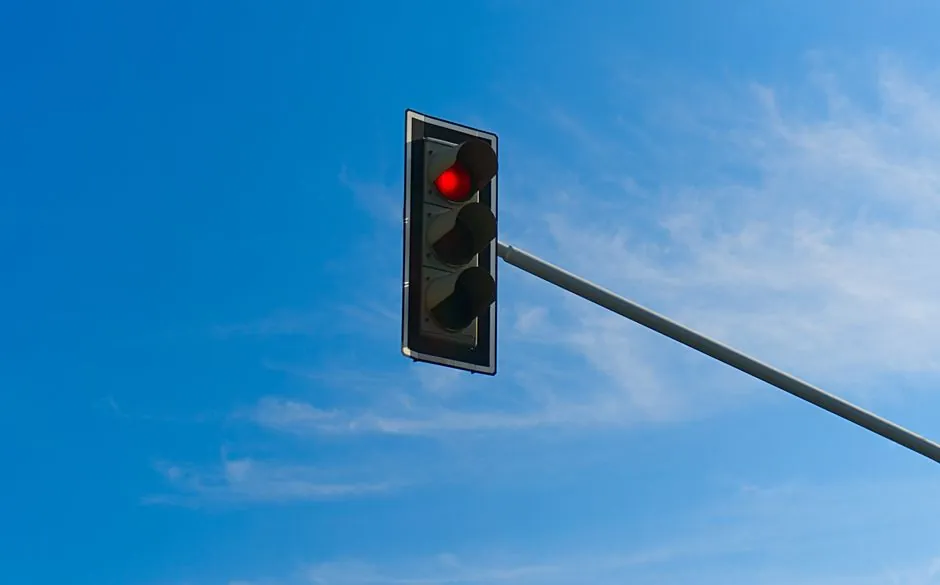
ANSI Z535 signal words form a four-level severity hierarchy: DANGER for death or serious injury that will result if the hazard is not avoided, WARNING for possible death or serious injury, CAUTION for possible minor or moderate injury, and NOTICE for important information that is not hazard-related [S2][S3].
The selection applies to U.S. workplace safety signs, labels, and tags governed by the ANSI Z535 series, with ANSI Z535.1 defining colors, ANSI Z535.3 covering safety symbols, ANSI Z535.4 covering product safety signs and labels, and ANSI Z535.5 covering temporary hazards [S3].
ANSI Z535 signal-word decision criteria
ANSI Z535.4 bases the signal word on the probable consequence if the hazardous situation is not avoided, not on how urgently the label designer wants a worker to react [S1][S2]. DANGER means the situation “will result in death or serious injury,” WARNING means it “could result in death or serious injury,” CAUTION means it “could result in minor or moderate injury,” and NOTICE conveys information that is important but not directly hazard-related [S2][S3].
Those definitions provide four concrete tests for a label review. For a DANGER decision, document a credible path to death or serious injury. For WARNING, document a credible possible serious outcome. For CAUTION, document minor or moderate injury as the possible consequence. If the message is housekeeping, security, sanitation, or general facility information, use NOTICE [S2][S5].
The safety alert symbol for a hazard is an equilateral triangle surrounding an exclamation mark. It accompanies hazard signal words but is not used with NOTICE because NOTICE does not identify a personal-injury hazard [S1][S2].
Compare the four signal words by consequence and use
DANGER is limited to extreme hazards, including unguarded high-voltage equipment and lockout points. WARNING is the usual choice for machinery hazards such as moving parts, crushing, pinching, flying debris, and arc-flash exposure, while DANGER is more appropriate when equipment is unguarded [S2][S5].
CAUTION suits hot surfaces, lifting instructions, low clearance, minor corrosive exposure, and other hazards associated with minor or moderate injury. It can also carry PPE instructions, but a PPE label connected to a credible risk of death or serious injury should be upgraded to WARNING [S2][S5].
NOTICE is not a lower version of CAUTION. It covers housekeeping rules, sanitation, security, “refer to manual” information, and messages that may concern property rather than personal injury [S2][S5]. A comparison by consequence, personal-injury relevance, and typical application is more reliable than choosing a word by familiarity.
Match the signal word to the correct color

ANSI Z535.1 assigns red to DANGER, orange to WARNING, yellow to CAUTION, blue to NOTICE, and green to safety instructions [S2]. Red therefore represents the most severe consequence level, orange the next, yellow a lower injury level, and blue a non-hazard information category.
Color must reinforce, not replace, the wording. A sign that says DANGER in orange, or WARNING in yellow, breaks the visual coding that lets workers distinguish severity at a glance [S2][S6]. The standard color system also prevents one facility from inventing a local meaning for red, yellow, or blue that conflicts with labels elsewhere in the same workplace [S2].
Where a sign uses multiple message categories, separate safety instructions can appear in a dedicated panel with a green header [S5]. The signal-word hierarchy still governs the hazard portion, so a green instruction panel does not make a serious hazard a CAUTION.
Apply the hierarchy to real facility hazards
An unguarded high-energy machine with a credible path to fatal or serious crushing injury calls for DANGER, not WARNING, when the hazard is not avoided [S2][S5]. A guarded machine presenting moving-part, pinch, flying-debris, or arc-flash risks generally fits WARNING because the consequence is possible rather than certain [S5].
A hot surface that can cause a minor or moderate burn normally fits CAUTION, as do low-clearance, lifting, and minor-corrosion warnings [S5]. A housekeeping instruction to keep the access route clear fits NOTICE because it communicates an operational rule rather than identifying an injury hazard [S2][S5].
Lockout or tagout points are cited as DANGER applications because exposure can lead to severe or fatal consequences [S5]. Confined-space entrances are also identified as common DANGER use cases [S5]. These examples still require assessment of the actual energy source, exposure path, safeguards, and foreseeable human error at the specific site.
Danger is for extreme hazards, not every urgent message
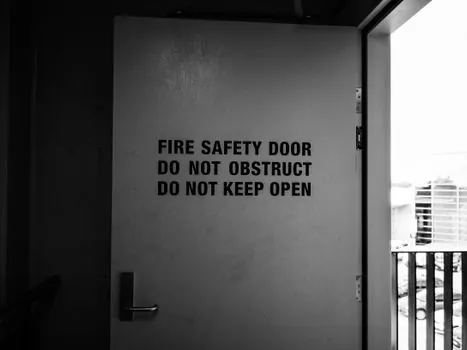
Overusing DANGER weakens the response it is intended to command. ANSI Z535.4 restricts DANGER to the most extreme situations, so using it for routine moving-part warnings, low-clearance notices, or general housekeeping messages collapses the four-level hierarchy [S1][S5].
The practical failure mode is not cosmetic. Workers who regularly see DANGER for moderate risks may interpret it as an emphasis device rather than a defined statement that exposure will cause death or serious injury [S2]. A defensible program instead reserves DANGER for hazards that satisfy the standard’s consequence language and uses WARNING where serious injury is possible but not inevitable [S2][S5].
Material and environmental conditions can also affect readability. ANSI Z535.4 covers product safety signs and labeling, while ANSI Z535.5 covers safety tags and barricade tapes for temporary hazards [S3]. Select the appropriate sign format for the application rather than adapting a permanent label without checking its intended use.
Build an auditable label-selection process
Start the review by recording four facts for each label: the hazard source, the exposed person or task, the credible consequence if exposure is not avoided, and the safeguards already present. The consequence then drives the signal word, the signal word drives the color, and the hazard type determines the symbol and message format [S1][S2][S3].
Include the major message, not just the header. A safety sign or label should state the hazard and the relevant consequence or required action, and the safety alert symbol improves recognition where text alone may be less effective for workers with different first languages [S2][S9]. A PPE instruction should identify the required protection rather than merely saying “be careful.”
Inspect label condition as part of the same process. A faded label that no longer allows workers to distinguish the signal word, color, or instruction has lost its communication function even if the correct artwork was originally purchased [S2]. Track the label location, hazard basis, selected word, color, symbol, major message, and inspection status in a register, then revisit the decision when equipment guards, work methods, or exposure conditions change.
Standards scope and implementation limits
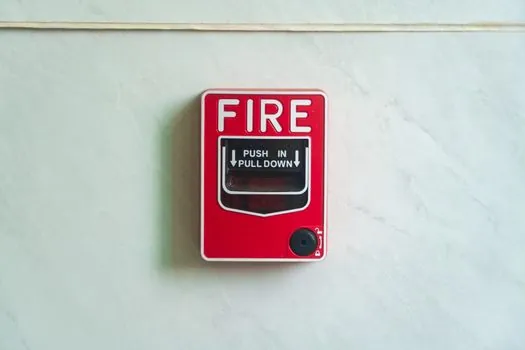
ANSI Z535 is a voluntary consensus series administered by NEMA, while OSHA uses 29 CFR 1910.145 for safety signs and tags and references ANSI Z535 in enforcement practice [S2][S3]. The series assigns distinct subject areas to seven parts: Z535.1 for safety colors, Z535.2 for environmental and facility signs, Z535.3 for safety symbols, Z535.4 for product safety signs and labels, Z535.5 for safety tags and barricade tapes, Z535.6 for product safety information, and Z535.7 for digital and electronic media [S3].
The signal-word hierarchy addresses hazard communication, not container labeling or piping identification. GHS governs chemical-container information, while ANSI pipe-marking standards identify contents or hazards carried by pipes; those systems are related but do not determine the correct ANSI Z535 workplace signal word [S2].
Use the applicable edition and jurisdiction when finalizing artwork, because ANSI Z535.4-2023 is the product safety sign and label standard cited by ANSI, and the broader series includes 2022 and 2023 editions for its other parts [S1][S3]. The color and signal-word logic is clearer than trying to infer seriousness from a label supplier’s product category.
The next control point is a documented hazard register: for every high-consequence label, confirm the specific injury scenario, selected signal word, red, orange, yellow, or blue color, alert symbol, major message, and label condition, then audit at least those attributes after guard or process changes.