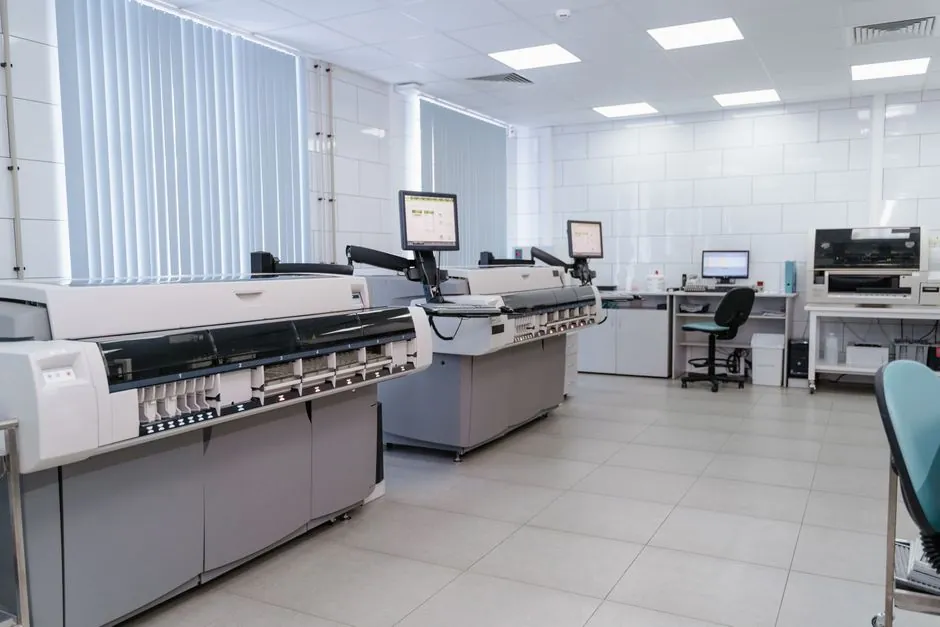
Food and beverage laboratories should size a gas chromatograph around the analyte class rather than the brand: volatile aroma profiling favors headspace sampling with FID, trace pesticide and contaminant work needs an MS or triple-quadrupole detector, and authenticity testing often needs GC×GC for higher peak capacity [S4][S5].
For routine QC of flavors, fragrances, and contaminants, a 30 m × 0.25 mm i.d. × 0.25 µm film capillary column is the workhorse, generating peak capacities in the 400-600 range and fully resolving roughly 80-100 analytes per run; more demanding separations cross into comprehensive two-dimensional GC (GC×GC) territory [S4]. Process-grade or online food and beverage analyzers are typically built around FID or TCD detectors with multi-stream sampling, distinct from the laboratory benchtop workflow [S3].
Detector and Inlet Selection by Analyte
FID remains the default detector for food flavor, fermentation, and beverage alcohol profiling because of its linear response to hydrocarbons and its tolerance of the high water and ethanol backgrounds common in food matrices [S1][S2]. For trace contaminants such as pesticides, veterinary drug residues, and allergens, MS detection is the more selective choice, and targeted quantitation usually benefits from MS/MS to suppress matrix interferences [S4].
Sample introduction drives most food-and-beverage method performance: headspace sampling handles volatiles above the matrix, SPME concentrates semi-volatiles such as off-flavor compounds, and on-column or programmable temperature vaporizer (PTV) inlets cover broader-boiling analytes including triglycerides and sterols [S5]. Shimadzu lists the core GC system blocks (injector, column, detector, autosampler) as the components that determine whether a method will hold up under routine QC load [S1].
Capillary Column and Carrier Gas Tradeoffs
The standard food-analysis column geometry is 30 m × 0.25 mm × 0.25 µm, which balances resolution, run time, and carrier-gas consumption for the 80-100 peak target; shortening to 15 m shortens cycle time at the cost of resolution, while going to 60 m extends separation for complex essential-oil and terpene work but lengthens run times and raises helium or hydrogen consumption [S4].
Carrier-gas choice matters for both speed and safety in food labs: helium remains the default for FID and MS work because of its inertness and predictable van Deemter curves, while hydrogen delivers faster analyses on modern 0.18 mm i.d. columns but requires leak-tight plumbing and active monitoring to keep below flammability thresholds. Shimadzu's GC instrument line notes helium and nitrogen as the typical mobile-phase options for inert-carrier separations, and the column stationary phase (5% phenyl-methylpolysiloxane versus polyethylene glycol versus specialty cyanopropyl phases) is what actually defines selectivity for a given food analyte class [S1].
Sample Throughput, Autosampling, and Software
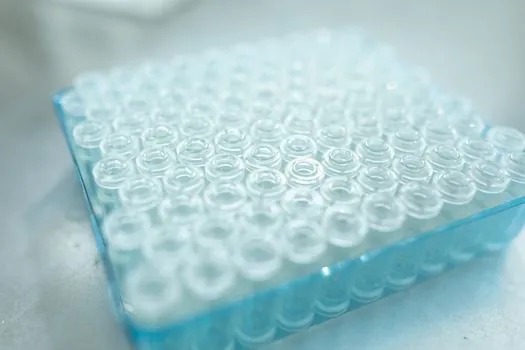
For QC labs running hundreds of samples per day, autosampler capacity and overlap-capable injection drive real throughput more than raw detector speed: Agilent markets high sample throughput plus what it calls "Instrument Intelligence" for diagnostics and self-checking, and Shimadzu frames reduced downtime and tool-free maintenance as the productivity gains for its GC-2060 platform [S1][S2].
Data systems should quantitate against multi-level calibration, track retention-time drift with reference standards, and flag column bleed or detector flame-out before a sequence fails. Food authenticity methods in particular rely on chromatographic fingerprinting plus chemometric comparison, so the software stack needs to export both raw chromatograms and aligned peak tables for statistical processing rather than just print a single report [S4].
Comparison: FID vs MS vs MS/MS for Food Work
For the common food-and-beverage decision matrix, the three practical detector options line up as follows against four criteria drawn from the published method literature: (1) sensitivity, with MS/MS setting the floor for sub-ppb pesticide residues, single-quad MS covering low-ppb volatiles, and FID limited to roughly low-ppm organics; (2) selectivity, where MS/MS adds a second fragmentation dimension and unit-resolution MS already gives library-matchable spectra, while FID has none; (3) capital and operating cost, with FID the lowest, single-quad MS the middle step, and MS/MS the highest both in purchase and in service-contract terms; and (4) suitability for routine flavor profiling versus trace-contaminant work, where FID is the QC workhorse for alcohol, ester, and terpene assays, single-quad MS handles most untargeted volatile and aroma work, and MS/MS is the correct choice for regulated pesticide and veterinary drug residue panels [S4][S5].
Process vs Laboratory GC for Beverage Plants
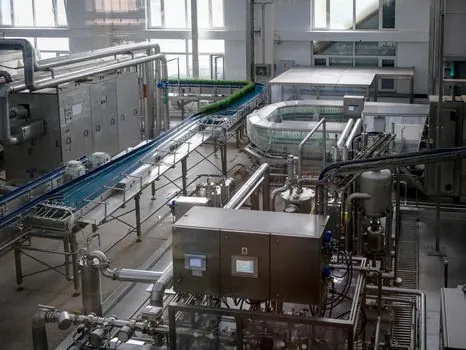
Online or process GC serves a different purpose: instruments such as the AMETEK Mocon PetroAlert 9100 monitor specific hydrocarbon impurities on a continuous basis in surface logging and beverage-CO2 streams, not as benchtop QC tools [S6]. For beverage plants considering at-line analysis, the same FID-column-autosampler building blocks apply, but the housing, multi-stream valve, and communication protocol (typically Modbus, FOUNDATION Fieldbus, or Ethernet) are the variables that change, not the analytical chemistry [S3].
Limitations and Common Failure Modes
One-dimensional GC on a 30 m × 0.25 mm × 0.25 µm column resolves 80-100 peaks before co-elution starts to erode accuracy, so any method that targets more than that in a single run needs GC×GC or heart-cutting rather than more of the same column [S4]. FID cannot distinguish two compounds co-eluting from the column, which is why regulatory residue methods default to MS, and why aroma fingerprinting for geographical-origin claims still uses MS spectra even when the chromatographic separation is already adequate [S4].
Headspace and SPME sampling are sensitive to matrix water and salt content, so method transfers between product types (wine to fruit juice, for example) usually require revalidation of the extraction step, not just the GC program [S5]. Laboratory safety around hydrogen carrier lines, flammable detector gases, and solvent waste should follow the same lab-safety controls as any chemical-handling area, including emergency stops on autosamplers and gas-shutoff tied to a properly selected safety relay chain sized for the actual load and Performance Level demanded by the risk assessment. For organic solvent vapor or refrigerant releases in walk-in cold rooms adjacent to GC benches, a toxic gas detection network built to the same zoning logic as a chemical plant, not a generic office, will catch a leak before it reaches the chromatograph's housekeeping air intakes.
Sourcing, Standards, and Vendor Landscape
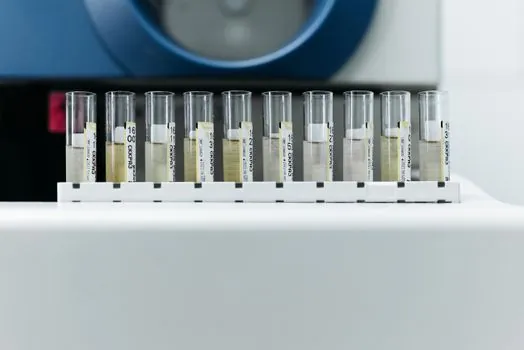
Major GC vendors active in the food and beverage segment include Shimadzu (Nexis GC-2060, Brevis GC-2050), Agilent (Intuvo 9000, 8890 GC Systems), Thermo Fisher Scientific, PerkinElmer, and Scion Instruments, with SRI Instruments Europe also serving smaller labs and method-development work [S1][S2][S5][S7]. In the online and process-GC tier, ABB, Emerson, Honeywell, Yokogawa, Siemens, and Thermo Fisher dominate deployment, with Siemens explicitly named for food and beverage process analytics alongside petrochemical and pharmaceutical [S3].
Procurement should match the regulated method, not the headline specification: pesticide residue work references the relevant EU and Codex maximum residue level methods, flavor authenticity work is governed by industry standards for the specific product category, and any GC system used for food contact-migration testing must run the certified reference standards the method specifies. Reference the core gas chromatograph technology overview for instrument architecture, and the related gas analyzer entry for process-stream continuous monitoring, since "GC" in a QC lab and "GC" in a process plant refer to overlapping but distinct instrument classes. Watch for the next two procurement signals: vendors releasing application notes on pesticide residue methods tied to updated EU MRL revisions, and any new GC×GC benchtop offering priced below current triple-quadrupole systems, which would shift the trade-off curve described in the comparison above.
For component-level specifications, see construction machinery and equipment.