
For routine analyte work, a UV-Vis bench unit covering 190-1100 nm with a 1 nm slit width, such as the Agilent 8453 profiled by NJIT's York Center, is the default workhorse [S4].
Biotech labs, water QC benches, and teaching suites all measure the same thing (transmittance or absorbance as a function of wavelength) but they buy very different hardware [S4][S5].
Match Wavelength Band to the Analyte Before Anything Else
UV-only units cover 190-400 nm and are the right tool for nucleic acids and proteins; visible-only units cover 400-700 nm and are tuned for dyes, colour, and clinical chemistry; UV-Vis covers 190-1100 nm and handles both [S2]. For a nucleic-acid or protein workflow, 260 nm and 280 nm absorbance ratios are the standard reads, and these only resolve cleanly on a UV-capable instrument [S2]. Near-infrared work, used for some food and polymer assays, requires a separate NIR detector path and is not covered by a standard UV-Vis bench unit [S5]. The wrong band is the most common reason a new spectrophotometer disappoints: a visible-only unit flat-lines at 260 nm, while a UV-only unit wastes budget on deuterium-lamp cost for dye work that only needs tungsten-halogen output [S4].
For readers cross-shopping this category against adjacent process instruments, the same selection logic (band first, resolution second, optics third) shows up in this BOM key components spec-first map, where the measurement principle is decided before the part number.
Single-Beam vs Dual-Beam: Pick by Drift Tolerance, Not Hype
Single-beam spectrophotometers route light along one path, one sample at a time, which keeps cost and bench footprint low but exposes the reading to lamp ageing and warm-up drift [S2]. Dual-beam instruments split the beam into a sample path and a reference path that is read on every cycle, which suppresses drift during long kinetics runs and improves baseline stability for low-absorbance samples [S2]. For teaching labs and short absorbance-versus-concentration assays, single-beam is usually enough; for pharmaceutical release or any QC method that runs more than an hour continuously, dual-beam pays for itself in fewer re-blanks [S2].
A related design choice is array-detector versus scanning monochromator: the Agilent 8453 uses a diode-array architecture that captures the full 190-1100 nm spectrum simultaneously, removing the scan-time penalty that single-beam scanning units carry [S4].
Resolution, Stray Light, and Photometric Accuracy Thresholds
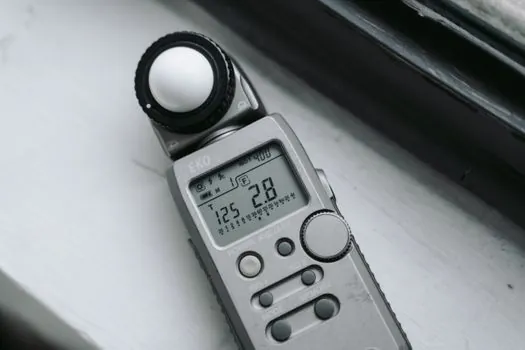
Optical resolution of 1 nm or better is the practical floor for resolving sharp absorption peaks and for any Beer's-law concentration work above A = 1.0 [S2][S4]. Stray light (light reaching the detector at wavelengths outside the set band) is the hidden spec: at high absorbance, stray light sets the upper limit of useful range, and ASTM E387-style photometric accuracy tests at 1.0 AU or above are the standard check [S2]. Photometric repeatability under 0.002 AU at 1.0 AU and wavelength accuracy of plus or minus 0.5 nm are typical spec-sheet numbers for a research-grade UV-Vis; teaching-grade units often quote 2 nm wavelength accuracy and 0.005 AU repeatability, which is fine for student unknowns but too loose for regulated QC [S2]. Resolution and sensitivity usually scale together with price, so labs that only need dye concentrations at A < 0.5 can save substantially by skipping research-grade optics [S5].
Light Source Lifetime and Lamp Choice
Deuterium arc lamps cover the UV region well and have a half-life of roughly 1,000 hours (the time for output to fall to half its initial value), while tungsten-halogen lamps cover the visible range and last closer to 10,000 hours [S4]. Most UV-Vis units combine both with a mirror switch around 350 nm, which means the deuterium lamp is the consumable that drives annual operating cost [S4]. For a visible-only workload, skipping the deuterium lamp entirely eliminates the largest service item and the longest warm-up cycle [S2][S4]. Lamp replacement, cuvette inventory, and annual calibration against certified reference standards should be line-itemed alongside the instrument purchase, not after it [S2].
Cuvette Material, Path Length, and Sample Volume
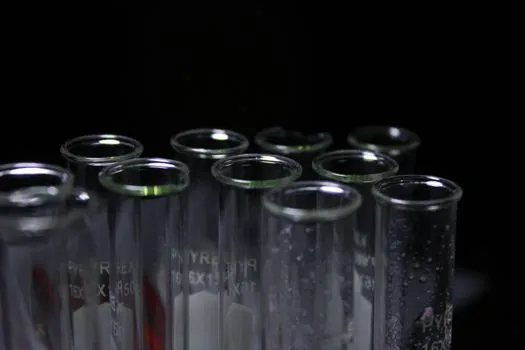
Cuvette material is set by the lowest wavelength in the method: fused quartz transmits down to 190 nm (some grades to 170 nm) and is the only choice for UV work; glass cells are usable above 320 nm; polystyrene and methacrylate disposable cells are cheapest but absorb strongly below 300 nm and are not solvent-resistant [S4]. Standard 10 mm path-length rectangular cells with 3.0 ml volume are the routine default; semimicro cells at 1.5 ml and micro cells at 0.3-0.5 ml cover low-volume samples without changing the path length [S4]. For process or QC sipper workflows, a flow cell with 10 mm path and roughly 80 microlitre volume keeps the same optical geometry as a standard cuvette and avoids remapping the method [S4]. Solvent choice rides on the same constraint: water is the cleanest blank, but nonpolar analytes need a UV-transparent organic solvent matched to the cuvette material's chemical resistance [S4].
Throughput, Automation, and Connectivity
High-throughput labs should spec an automatic cell changer, a sipper, or a multi-well plate reader before they spec the detector; these accessories gate how many samples clear per hour more than raw optical performance does [S2][S5]. Modern instruments ship with USB and Bluetooth as standard, plus Ethernet or Wi-Fi on higher-end units, and the data pipeline (LIMS CSV, OPC UA, or proprietary driver) should be confirmed before the unit lands, not after [S2][S5]. Pre-loaded method files for water testing (COD, nitrate, chlorine), DNA/protein quantification at 260/280 nm, and colour scales (CIELAB, APHA, Hazen) cut training time and reduce method-transcription errors [S2]. Calibration procedures that run without a service call (automatic wavelength calibration with an internal holmium oxide or didymium filter) save a day of downtime per quarter on regulated benches [S5].
When a UV-Vis Is the Wrong Tool, and What to Pick Instead
If the analyte fluoresces (tryptophan, GFP, quinine, many dyes at low concentration), a UV-Vis unit sees only the absorption leg and loses sensitivity; a fluorescence spectrophotometer with separate excitation and emission monochromators and an emission scan to 700 nm or beyond is the right pick [S1][S5]. If the sample is a solid, a film, or a turbid liquid, a bench UV-Vis cuvette geometry under-reads badly and an integrating-sphere UV-Vis or a handheld colour-meter with a 0-degree/45-degree geometry is closer to the truth [S3]. For pure colour quality control on paints, plastics, and food, an appearance-style colorimeter with d/8 geometry and a 10 nm reporting interval is the standard spec, not a research UV-Vis. If the work needs no wavelength resolution at all (simple turbidity, pH indicator, single-wavelength assay), a dedicated photometer or a filter-based colorimeter is cheaper and more rugged than a full UV-Vis. A good working rule, adapted from the Vernier teaching-tier logic: visible dyes and introductory Beer plots point at a visible-only or dual-range visible unit; organic, biochemistry, and protein work points at full UV-Vis; fluorophores and emission samples point at a fluorescence or fluorescence/UV-Vis combination [S1]. Buyers comparing across instrument categories can also weigh the industrial code reader spec map for adjacent sensor-selection discipline, or the dissolved oxygen meter selection guide for another spec-first example of band-plus-body-plus-output thinking.
Sourcing Signals and Shortlist Logic for 2026
Three trackable signals will sharpen any shortlist in the next quarter: (1) deuterium-lamp pricing, which is the single largest service cost on a UV-Vis bench and which has moved with rare-earth and noble-gas supply, (2) connectivity standardisation around Ethernet and OPC UA on new mid-range units, which is replacing proprietary USB-only data pipelines, and (3) the spread of dual-certified units that combine a UV-Vis optical bench with a fluorescence module in one chassis, trimming bench space for biotech cores [S1][S2][S5]. A defensible shortlist starts with the wavelength band, locks in 1 nm or better resolution, demands a fused-quartz 10 mm cuvette path or a verified flow cell, requires USB plus at least one network interface, and only then compares lamp warranty terms, footprint, and price.
Spec-level background on the components involved: spectrophotometer, pressure transmitter, and flow meter.