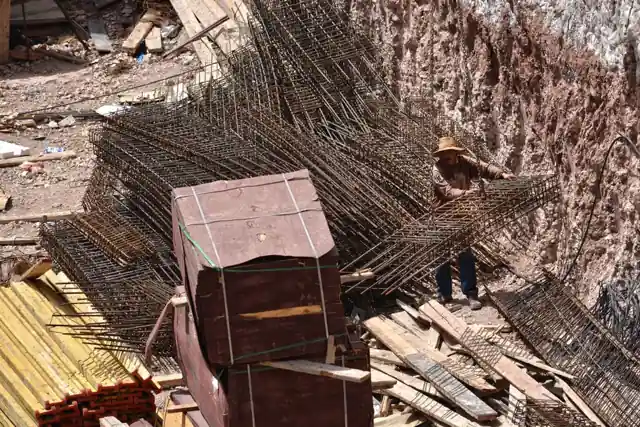
For typical landscaping builds (retaining walls, pergola footings, paved-area edge beams, gabion cages) the rebar diameter usually sits in the 10-25mm range, with the odd 32mm dowel in heavier grade beams, which puts a 14-32mm thread-rolling machine in the sweet spot for a single-machine setup [S3].
Threaded rebar with mechanical couplers replaces lap splicing and on-site welding, removes the open flame from landscaping sites, and keeps rebar congestion in tight beam-column pockets manageable, three reasons landscape contractors now spec threading rather than lap or weld [S1][S4].
Thread Rolling vs Chaser Cutting: Which One Fits Landscaping
Thread rolling plastically flows the steel through three rollers to form the thread, producing no chips, higher fatigue strength, and a smoother surface; chaser cutting removes material with toothed dies, generates swarf, and slightly lowers thread strength because it severs the metal grain [S2]. For landscape rebar where joint fatigue, weather exposure, and visible finish all matter, rolling is the stronger default, and the chaser remains useful for repair work or for one-off threads on already-extruded bar [S2]. A practical landscape shop will often keep a small chaser for site fixes and a rolling machine as the daily driver.
Spec Map: Diameter, Power, and Thread Length
Most rebar threading machines in the landscaping-relevant class cover a 14-40mm diameter range at roughly 5.5kW (7.5hp) main motor, the same output class as the Jamshedji CDRG45 (5.5kW, 415V, 62 RPM main shaft, 480kg machine mass, 120mm thread rolling length) [S1][S3]. Thread rolling wheels must be matched to bar diameter: φ78.2mm wheels suit 16-28mm rebar at 2.5mm pitch, φ69.4mm wheels suit 28-32mm at 3.0mm pitch, and φ59mm wheels suit 32-42mm at 3.5mm pitch [S3]. Pick the wheel set first, then the machine: mismatched pitch is the most common reason a "correct" machine still produces a loose or over-tight coupler fit. rebar selection upstream then drives which rolling wheel you actually need on site.
Coupler Compatibility and Thread Profile

A threaded rebar joint is only as good as the rebar coupler it lands in, and standard parallel threads (metric ISO coarse patterns typical for rebar couplers) need accurate pitch and root depth, which is precisely what a calibrated rolling machine delivers [S2][S3]. A chaser-cut thread typically achieves looser pitch tolerance and a rougher flank, so the same coupler can feel "sloppy" on a cut thread versus a rolled thread even when both nominally meet the same designation [S2]. For landscape work exposed to wet-freeze-thaw cycles, the smoother rolled surface also gives the grout sleeve or epoxy-coated coupler a better sealing interface.
Site Practicalities: Power, Weight, and Workflow
Landscape sites rarely have three-phase 415V on tap, so a 5.5kW-class machine usually needs a generator (a 7-10kVA genset handles the inrush comfortably) or a smaller single-phase portable threader for light 10-16mm bars [S1]. Heavier workshop-style units around 480kg are essentially stationary, the practical answer is a small workshop rolling machine for production threading plus a portable chaser for site service, instead of trying to drag a 480kg box onto a finished lawn. Coupling this workflow with a rebar cutter for blank length and a rebar bender for shape keeps the prep line clean.
Common Failure Modes and What to Reject
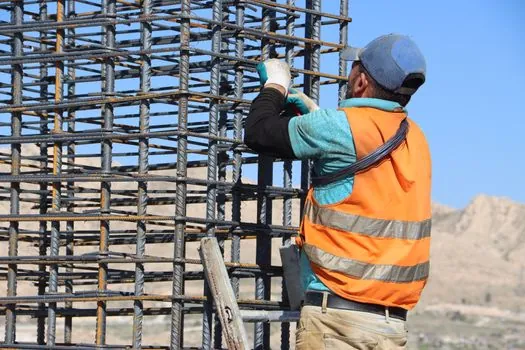
The three failure modes that show up on real landscape jobs are loose couplers (wrong wheel pitch, typically 2.5mm vs 3.0mm mix-up across 16-32mm bar), stripped threads (over-rolled on soft Grade 250 rebar, which is common in landscaping), and burned-out motors (single-phase supply undersized for a 5.5kW three-phase motor) [S3]. Reject any machine quote that does not state the rolling wheel diameters, the motor kW, and the main-shaft RPM, those three numbers define whether the unit will actually hold a coupler spec on your bar. For sites where a rolling machine is overkill, a handheld electric pipe threader in the 2300W class with 1/2"-2" dies is a legitimate alternative for non-structural landscape work [S5].
Buying Checklist Before You Sign
Confirm: diameter range covers at least 14-32mm (your landscape mix), main motor at or above 5.5kW, thread rolling length ≥100mm for full-coupler engagement, matching rolling wheels shipped in the quote, a reducer ratio around 1:17 with main shaft near 60 RPM (the proven CDRG45 envelope), and a stated machine mass so you can plan the genset and trolley path [S1][S3]. If you want one related cross-check on the prep side, the Rebar Straightener Spec Map for Interior Finishing Crews covers the upstream straightening step that has to land clean before any threader will produce a concentric thread.
Trackable signals over the next quarter: rolling-wheel kit availability for the 16-28mm and 28-32mm bands, and any new single-phase 3-4kW rolling machine launches aimed at the landscape/light-structural segment, both will reshape the buying decision for small contractors.