
Concrete crews picking a rebar bender should start from four numbers, not brand names: bar size, bar grade, bend count per shift, and the minimum bend radius the local code enforces [S3].
For residential slab, footing, and foundation work, bar size tops out around #6 (3/4 in) or #7 (7/8 in); for commercial columns, shear walls, and mat foundations, #8 (1 in) and larger is common, which is where the tool-class decision actually matters [S3][S4].
Manual Bench Benders and Hickey Bars: When Leverage Beats a Plug
Manual rebar benders rely on mechanical leverage, not hydraulic pressure, and most standard models are rated to bend up to #5 (16 mm) Grade 60 rebar through a full 0 to 180 degree range, with bench-mount cam-shaft units weighing near 60 lb and using a roughly 2.5 in roller to set the bend profile [S1].
A long-handled hickey bar with a slotted, sometimes heat-treated Chrome Vanadium head is the field fallback for bending rebar that is already set in formwork or cast into a previous lift, where the worker needs to work one-handed in tight spaces and the tool has no moving parts to fail [S1][S4].
Manual benders stay attractive on remote or low-power sites because they cost a fraction of an electric unit and need no generator, but published guidance notes that many portable and handheld benders do not meet the minimum bend radius required by ACI 318 Chapter 7, which is 6 times the nominal bar diameter (6 db) for #3 (3/8 in) through #8 (1 in) bar [S4].
Electric and Hydraulic Benders: Throughput and Bar-Size Ceiling
Electric rebar benders are widely used for reinforced concrete work and handle a broad size and grade range on standard 120 V or 220 V site power, with portable units under 200 lb that two workers can carry to the pour and larger bench units near 400 lb that need a skid steer and belong in a shop [S2][S5].
Hydraulic rebar benders cover the widest diameter window of the three common classes, with manufacturer literature listing 4 mm up to 60 mm capacity, which is the practical ceiling for one-person operation on most jobsites [S5].
One operator on a powered bender commonly replaces two people bending by hand, and homebuilders using combined cut and bend units report throughput of roughly five times the manual rate on identical stirrup runs, which is the throughput case for buying versus renting on repeat work [S2].
Automatic and CNC Benders: Production Runs and Code-Compliant Repeatability
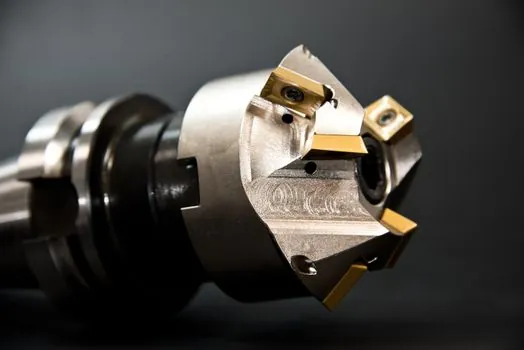
Automatic rebar benders use numerical control to switch between programmed bend angles, which solves the repeatability problem on stirrups, column ties, and seismic hooks where every leg has to land within a tight tolerance [S2][S5].
On a power bender, a reference stop lets the operator register the bar against a fixed shoulder and reproduce the same bend dimension on every piece, a result that is hard to hit by hand bending even with a careful crew [S2].
For pre-fabricated or production-shop work, this is the workflow that gets the ACI 318 6 db radius and the leg-length dimensions right on the first piece, instead of after a rework loop.
Tool Class Compared on the Four Numbers That Matter
Bar size capacity tracks power source: manual hickey and bench units cap near #5 (16 mm), portable electric units run through #6 (3/4 in) and #7 (7/8 in), and shop hydraulic or CNC units cover #8 (1 in) up to about 60 mm [S1][S3][S5].
Throughput per worker-hour is roughly 1x for manual bending, 2x for a powered bender versus hand work, and 4 to 5x for a dedicated cut-and-bend station in the hands of a trained operator, based on contractor data published in trade press [S2].
On code compliance, ACI 318 Chapter 7 sets the floor at 6 db for #3 through #8 bar, and ICF Builder Magazine has flagged that many portable handheld benders do not meet that minimum radius, which is the single most common spec failure on residential ICF and slab work [S4].
Portability scales inversely with capacity: hickey bars are one-person carry, bench-mount manual benders are around 60 lb and need a board, portable electric benders sit under 200 lb for two-person carry, and shop hydraulic or CNC units run near 400 lb and require a skid steer or forklift to move [S1][S2][S5].
Who a Manual Bender Is For, and Who It Is Not
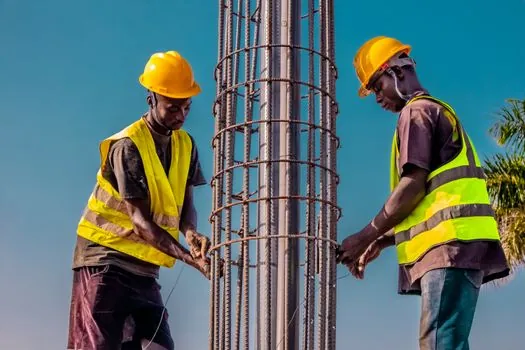
A manual bender fits a crew that bends under 20 pieces per day, stays at #5 or smaller, and works on sites without reliable power or with tight access around existing formwork and cast-in-place dowels [S1][S4].
It is the wrong tool when the spec calls for #6 (3/4 in) or larger bar, when the bend count climbs past about 50 identical stirrups per pour, or when the engineer has to certify ACI 318 Chapter 7 radius compliance and the crew cannot prove it with the chosen tool [S3][S4].
For more on matching stud-welder output to concrete anchoring specs, this stud welder selection for concrete piece lays out the same size-versus-process trade-off for shear-connector work.
Procurement and Standards Anchors
Bar grade defaults to Grade 60 (420 MPa) on modern U.S. builds, and the size designations above (#3 through #8) follow the imperial numbering used by ACI 318; metric equivalents run 10 mm (#3) up to 25 mm (#8) [S1][S4].
Bend-radius compliance is the non-negotiable spec: 6 db for #3 through #8 under ACI 318 Chapter 7, with field bending of partially embedded bar only allowed where the engineer of record signs off on the rework [S4].
For buyers weighing a rebar cutter and bender combo against a fabricator delivery, the trade-off is two to three days of lead time plus per-pound upcharge on prefab bar versus the capital cost of a portable bender that the crew can stage anywhere on site [S2].
Failure Modes Crews Actually Hit
The most common failure on manual benders is the under-radius hook that does not satisfy 6 db, which shows up as a hairline crack at the inside of the bend during the first load cycle and forces a tear-out [S4].
Powered benders fail more often from worn bending pins and mis-calibrated angle stops, which produce stirrup legs that drift out of tolerance across a long run; the fix is a five-minute pin-and-stop check at shift start, not a service call [S2].
Safety incidents concentrate on pipe-over-hickey field bending, where a slipped bar can strike the operator's leg; the published advice is to retire the pipe-on-bend shortcut in favor of a purpose bender matched to the bar size [S4].
For a parallel look at how spec discipline plays out on steel substrates, this sander selection for steel construction guide walks through the same match-the-tool-to-the-spec logic on a different process.
Track the next revision of ACI 318 Chapter 7 and any state-level amendments to the 6 db radius rule, and watch the 2026 contractor surveys from trade outlets for updated throughput ratios on cordless versus corded rebar benders, since those two data points drive most procurement decisions on the tool class above.
The underlying component specifications are covered under aerial work platform, and aerial work truck.