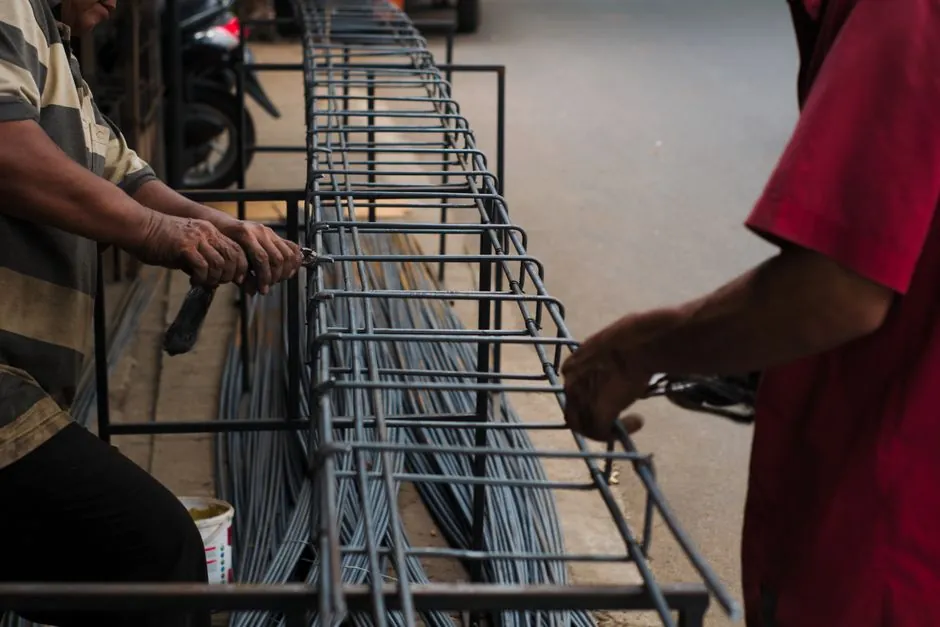
Interior finishing jobs that involve rebar (column ties, lacing bars, embedded anchor dowels, slab-edge trim) usually arrive with bars that are bent, coiled, or have been stockpiled off-site in 6-14 mm sizes, and a properly sized rebar straightener is what turns that stock into dimensionally consistent dowels ready for embed.
Roller-type bench straighteners in the ET-6-10 to ET-6-14 class run 4-5 kW motors, straighten 6-14 mm rebar through 5 holes with 20 passes per cycle, and cut finished lengths in the 500-2000 mm range, weighing 570-730 kg in a roughly 1100-1220 mm footprint [S1]. For finishers who only need occasional correction of 20 mm (3/4") bar, a portable hydro-electric RD8-20 weighing 18.5 lb and powered by a DeWalt 18 V battery handles up to #6 / 20 mm rebar with a 90-degree rotating head for confined-space work [S2].
Match the machine class to the rebar you actually run
The first selection gate is rebar diameter and form: round bar vs threaded/deformed bar, with round bar generally easier to feed and deformed bar requiring the higher-pressure roller geometry of the larger ET models [S3]. Choosing a machine whose diameter range brackets your stock with margin (e.g. an 8-16 mm rated unit for 10-12 mm rebar) avoids future retooling when the next job's bar size shifts [S3].
For an interior finishing crew, the realistic rebar population is light: 6-14 mm round or deformed bar in short cut lengths, not the 14-25 mm heavy structural stock that the ET-14-25 model with its 6 holes and 15 kW motor is built to feed [S1]. A 4-5 kW bench unit covers the bulk of finish-trade rebar without paying for capacity that will never be used.
Roller geometry, passes, and what straightness number to expect
ET-series machines from the Shuliy catalogue straighten through 5 or 6 holes with 20 passes per cycle, meaning each bar is corrected 20 times as it traverses the roller stack, which is what produces the "smooth, uniform surface without deformation" and "accurate cutting length (commonly 500-2000 mm)" that the OEM lists as the machine's output [S1]. The straightening wheels are specified as alloy steel with high wear resistance, which is the relevant material detail for a finisher comparing options [S3].
Roller material, roller material thickness, motor, bearing, and gearbox quality are the four sub-components that determine service life on a steel bar straightening machine, and Shuliy explicitly cites "thickened materials" for long-term use as the differentiator against lower-cost builds [S3]. For a finishing contractor running the machine a few hours per week, that translates to checking wheel hardness and bearing brand rather than chasing the highest kW rating.
Power source: bench 380 V vs portable 18 V battery
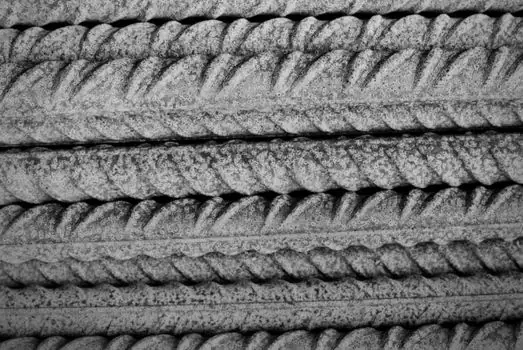
Voltage is a hard gate, not a preference. European, Middle Eastern, and African sites run 380 V 50 Hz; parts of Asia run 220 V or 380 V at 50 Hz; the Americas run 220 V 60 Hz, and a mismatch will either trip breakers or destroy the motor before the first bar feeds in [S3]. Bench ET units ship in 380 V 50 Hz configurations for most export markets [S1][S3].
When the work is at the end of a long corridor, inside a finished ceiling cavity, or in a stairwell where dragging a 570-980 kg machine is impossible, the hydro-electric RD8-20 runs off a DeWalt 18 V battery, weighs 18.5 lb, and straightens up to 20 mm rebar with a double-acting cylinder and 90-degree head rotation for tight access [S2]. It is slower than a bench roller machine, but it goes where the bench unit cannot.
Comparison: ET bench roller units vs RD8-20 portable
The decision matrix for an interior finisher lines up cleanly on four criteria:
Capacity / diameter range: ET-6-10 covers 6-10 mm, ET-6-14 covers 6-14 mm, ET-8-16 covers 8-16 mm, ET-14-25 covers 14-25 mm [S1]; the RD8-20 portable covers up to 20 mm (#6 / 3/4") [S2].
Power and weight: ET-6-10 is 4 kW at 570 kg; ET-6-14 and ET-8-16 are 5 kW at 730-750 kg; ET-14-25 is 15 kW at 980 kg [S1]; the RD8-20 is battery-powered at 18.5 lb [S2].
Footprint and mobility: ET units occupy 1100-1550 mm in length and 720-890 mm in width, fixed-floor installations [S1]; the RD8-20 is hand-carried into confined spaces where bench rollers physically cannot go [S2].
Output format: ET units cut automatically to 500-2000 mm in a continuous straighten-measure-cut cycle [S1]; the RD8-20 is a straightener only and pairs with separate cutting tools for length control [S2].
Cutting length, automation, and downstream fit
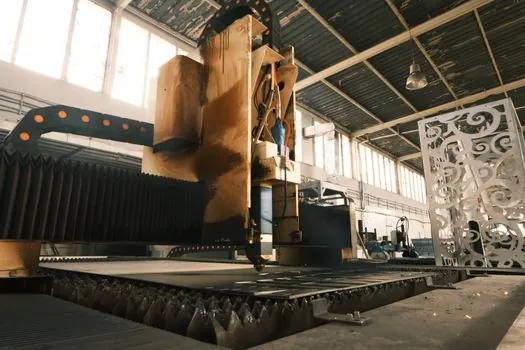
Automatic length cutting in the 500-2000 mm window is built into the ET-series, with cut length set at the control panel and the bar auto-fed through rollers into the cutting unit [S1]. A separate rebar cutter is not required on these bench machines, which matters for finishers batching dozens of identical dowels for column-tie or anchor-sleeve work. For the portable RD8-20, cutting is a separate downstream step, and a finisher should plan to pair it with a rebar bender or cutter on the same jobsite if multiple operations are queued [S2].
Automation level (manual feed vs auto feed, auto-shutoff, length-counter) is one of the four explicit price drivers in the buying-guide breakdown, alongside model size, diameter range, and motor power [S3]. For an interior finishing crew running 50-200 dowels per day, auto-shutoff and a clear control interface matter more than maximum throughput, because operator fatigue is the real bottleneck on a small-batch finishing run [S3].
Selection rules and failure modes to avoid
The buying guide's failure-mode list is worth quoting directly: poor-quality machines "often lead to bent results, rough surfaces, frequent downtime, and inaccurate cutting, wasting raw materials and increasing maintenance costs" [S1]. Specifying alloy-steel straightening wheels, hardened rollers, and a recognized motor/bearing brand is the minimum bar to clear that failure mode [S3].
For crews cross-allocating rebar tools with other finishing equipment, the selection logic mirrors what is used for impact drills on interior finishing work: match the tool's rated capacity to the upper end of the actual work, then check voltage and duty cycle before comparing price. A finishing contractor who treats rebar straightening the same way (capacity first, power source second, automation third) avoids the two common traps: overspecifying a 15 kW machine for 10 mm dowels, and underspecifying a portable unit for 25 mm structural bar that arrives on a resi-garage conversion.
Logistics, packaging, and after-sales for export buyers
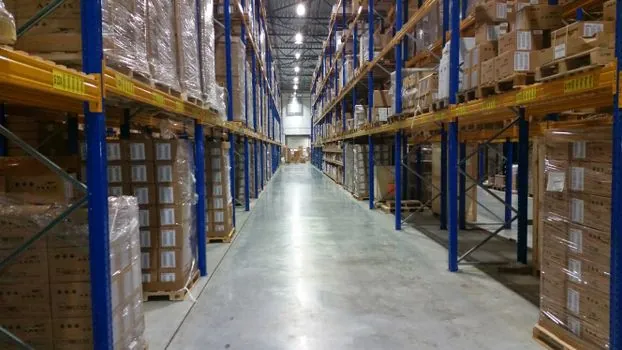
Export packaging for the ET-series uses reinforced full-frame structure, shockproof wooden crate, and equipment fixation to prevent shaking in container shipping, which is the standard the OEM commits to for overseas buyers [S3]. Voltage verification is a pre-purchase checklist item, not a post-delivery surprise: confirm 380 V 50 Hz (EU/MEA), 220 V or 380 V 50 Hz (parts of Asia), or 220 V 60 Hz (Americas) before the machine ships [S3].
After-sales support for overseas finishing contractors is centered on remote installation guidance, operational videos, sustained spare parts supply (straightening wheels, rollers, bearings, motor brushes), and prompt issue response, all of which the OEM lists as standard service items [S3]. For a portable RD8-20, the relevant spare-parts question is DeWalt 18 V battery compatibility and double-acting cylinder seal kits, since the tool is a hydraulic-electric hybrid and shares its power platform with the broader DeWalt cordless tool range [S2].
For an interior finishing contractor sourcing a straightener in September 2026, the actionable next steps are: confirm the diameter range of the bars already on the shelf, decide bench-vs-portable based on whether work happens in a fixed shop or in finished interiors, verify local voltage (380 V 50 Hz for most export markets), and budget for alloy-steel wheels plus a spare bearing set. Track the OEM's next ET-series model refresh and any voltage-configuration announcement for 220 V 60 Hz Americas builds as the two signals that would change the current sizing math.