A 2019 Springer TCO study on three FDM printers found the distribution and value of total-cost components shift sharply with machine class, while material waste reduction was identified as the single largest sustainability lever for cost control [S1].
The framework treats additive manufacturing material selection as the dominant cost variable, because powder and filament price-per-kg multiplied by utilization rate typically exceeds the amortized machine capex contribution across a 3-5 year ownership horizon [S1].
Cost Driver Stack: What Moves the AM Material TCO Curve
The Elkaseer et al. TCO model separates acquisition cost from annual operating cost and applies the Ellram purchasing framework, a method that itemizes each cost bucket before summing [S1]. Material consumption, energy, maintenance, labor, and waste-disposal streams are tracked against measured build data and vendor datasheets rather than list price.
FDM case data shows material and energy combined can exceed half of TCO on low-cost desktop units, whereas industrial systems shift more weight to depreciation, software licenses, and qualified-labor hours. Powder-bed fusion inverts the same model: Siemens Energy's Materials Solutions cites Laser Powder Bed Fusion as the enabler for serial production of turbomachinery components where powder recovery and re-use rates govern per-part cost, not machine capex [S3].
Polymer vs Metal Powder vs Filament: Criteria Comparison
Three AM process families compete on different TCO axes, and the right choice depends on which cost bucket the buyer can actually move. A direct comparison lines them up against the four decision criteria engineers most often negotiate: [S1]
LPBF / DED (metal powder, Inconel 718, Ti-6Al-4V, Scalmalloy, 316L): high capex (USD 250k-1.5M+), powder reuse cycles 5-10x before sieving discards, and per-kg metal powder in the USD 80-400 range with shielding-gas and build-chamber atmosphere as a recurring consumable [S3].
Material Utilization and Waste: The Hidden Multiplier
FDM TCO analysis found that support structures and skirt material on desktop units can push effective material yield below 70%, with the remainder entering the disposal cost bucket rather than the part-cost bucket [S1]. Industrial FDM with soluble supports and lattice optimization recovers that figure to 85-95% but trades soluble-support chemistry against post-processing labor.
LPBF powder reuse is governed by sieving, particle-size distribution drift, and oxygen pickup; the Materials Solutions process line specifies powder-batch traceability and controlled-atmosphere handling as part of its ISO 9001, AS9100, and Nadcap scope, which is the audit chain that lets buyers defend a 5-cycle reuse assumption in their TCO model [S3]. See metal powder advantages and disadvantages for the spec-level trade map that drives those reuse assumptions.
Energy, Labor, and Maintenance: The Operating-Cost Triangle
FDM TCO modeling shows energy and labor combined typically run 15-30% of the multi-year stack, but the ratio is process-specific: powder-bed systems draw 3-5 kW continuously during build, while FDM systems sit below 500 W and idle far more aggressively [S1].
Maintenance on industrial FDM follows a parts-replacement cadence tied to nozzle and build-plate cycles; on LPBF, the recoater, laser optics, and filter replacement are the budget items, with chamber-inerting gas counted as a recurring line item. Materials Solutions' full-lifecycle service scope explicitly bundles heat treatment, machining, welding, coatings, and NDT into the post-build workflow, which means the TCO buyer must decide whether those activities are in-house or contracted before benchmarking machine capex [S3].
Post-Processing and Qualification: The Hidden TCO Tail
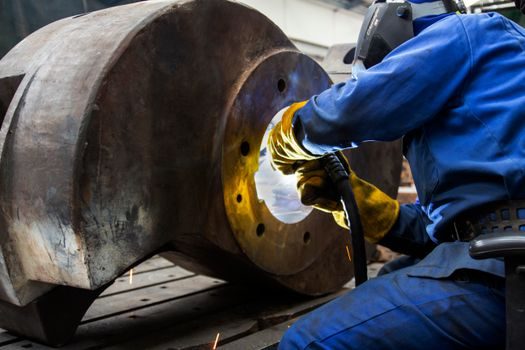
For metal AM, the post-processing chain (stress relief, HIP, machining, surface finishing, CT inspection) frequently exceeds the as-built cost in TCO terms, and it is the line most often omitted from purchase-price-only comparisons. Materials Solutions lists heat treatment, conventional and non-conventional machining, welding, coatings, and advanced NDT as bundled services alongside serial production, signaling that the qualified-part cost is a service-stack figure rather than a powder-and-machine figure [S3].
For polymer AM, post-processing shrinks to support removal, bead blasting, and dyeing, but vapor smoothing and dyeing chemistry open a new consumable cost that rarely appears in TCO templates. The Elkaseer study explicitly recommends disclosing all true costs at the time of product selection, including waste and labor components, because buyers systematically underestimate these downstream lines [S1].
Selection Criteria: Who AM Material TCO Is For, and Who It Is Not
AM material TCO modeling pays back for buyers running serial production or repeat-prototype programs where machine utilization exceeds 20-30% of available build hours. It is the wrong tool for one-off hobbyist use, where acquisition cost dominates and energy and waste lines are immaterial [S1].
It is also the wrong tool for buyers who cannot measure their own material utilization rate; the model requires measured consumption data or vendor-certified yield, not list-price-per-kg, as its primary input. For the same reason, facilities with no powder-handling or atmosphere-control infrastructure should avoid LPBF TCO comparisons and benchmark FDM or polymer SLS instead, since qualification overhead will dominate the comparison regardless of which metal system is selected [S3]. See additive manufacturing material installation for the handling and standards chain that gates LPBF entry.
Standards, Sourcing, and Specification Anchors
The Springer TCO methodology traces back to Ellram's 1995 purchasing-analysis framework and the NIST Special Publication 1176 cost-effectiveness study for additive manufacturing, both of which remain the reference anchors for AM TCO modeling in industrial procurement [S1].
On the supplier side, Materials Solutions operates under ISO 9001, AS9100, NadCap, AMS7003, ISO 14001, and ISO 45001, with Siemens Energy having acquired the firm in 2016, which is the audit chain that lets a TCO model assume serial-production part traceability rather than prototype-only data [S3]. When the TCO model is extended to copper material or magnetic material AM grades, the powder-supplier datasheet and ASTM/AMS powder specification become the binding cost-document, not the printer OEM price list.
Track next: the 2026 H2 release of any ASTM F42 or ISO/ASTM 52900 revision that reclassifies powder-reuse accounting, and any OEM disclosure of amortized machine capex per build hour, since both would let TCO templates re-rank LPBF vs FDM on equal utilization assumptions.