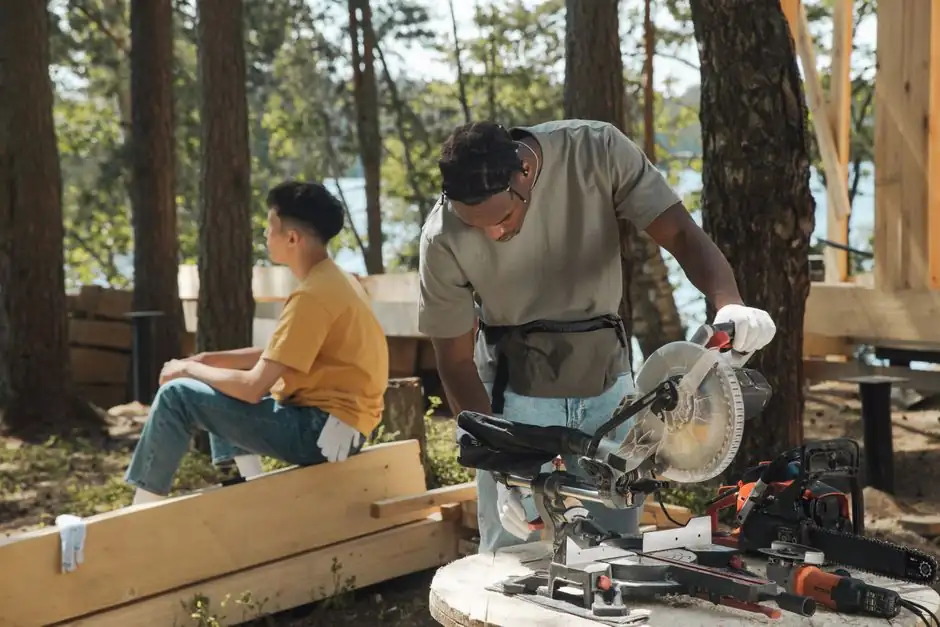
A 24T–40T blade suits fast wood ripping, 40T–80T blades support crosscutting and panel work, while aluminium and metal applications generally require 60T or more for controlled cutting [S2][S4][S5].
Tooth count is only one part of the specification: blade material, tooth grind, hook angle, gullet depth, machine power, and cut direction determine whether the blade cuts efficiently or creates an unsafe grab, overrun, or kickback condition [S1][S2].
Wood or metal: identify the application before counting teeth
Wood cutting covers solid lumber, plywood, MDF, laminated board, construction timber, and general panel products, while metal cutting includes aluminium profiles, non-ferrous metals, and tougher ferrous materials such as stainless steel or cast iron [S1][S4]. The blade construction differs with the workload. Typical wood blades use high-carbon steel or carbide-tipped steel, whereas metal blades commonly use HSS, with cobalt or cermet tips used for more demanding ferrous applications [S1].
Wood teeth usually use a positive hook angle to engage and remove fibres, while metal teeth more often use a zero or negative hook angle to reduce pulling, grabbing, and heat buildup [S1]. Aluminium applications commonly use TCG teeth, described as a trapezoidal cutting tooth followed by a flat-top raker, while general-purpose wood blades often use ATB teeth with alternating bevels [S4]. Tooth count cannot compensate for an incorrect body material or tooth grind.
This distinction applies to the circular saw blade as a complete system rather than to its edge geometry in isolation. A wood blade does not become a metal blade by adding teeth, and a metal blade is not automatically efficient for wood.
Selection matrix: count, cut speed, finish, and material
For wood, 18T–24T blades are intended for rapid ripping and rough cutting, 24T–30T for general construction work, and 30T–40T for general-purpose production where the finish must remain acceptable [S2]. A 24T rip blade uses large teeth and deep gullets to remove chips quickly, but its cut is comparatively rough [S4].
For finish-sensitive wood, 40T–60T blades provide a cleaner edge at a moderate cutting rate, while 60T–80T blades are suited to plywood, MDF, laminate, and applications where chipping and tear-out must be controlled [S2]. A dedicated wood ripping blade typically carries 24T–40T teeth, while a wood crosscut blade usually carries 60T–80T [S5].
For aluminium, the comparison shifts toward 60T or more. The higher count spreads the load across more teeth and helps limit blade grabbing, but requires more motor power and usually produces a slower cut than a low-count wood blade [S2][S4][S5]. General metal-cutting blades also favour numerous small teeth because they reduce the load on each tooth, control heat, and limit burr formation [S1].
Fine tooth counts for panels and aluminium
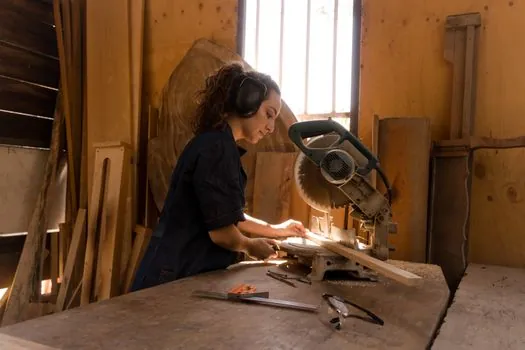
Plywood, MDF, laminate, and aluminium profiles are the strongest case for 60T–80T blades, with 80T or more used for precision and thin-material cutting [S2]. In woodworking, a 40T–60T blade is the general-purpose compromise, while 60T–100T or more is used for aluminium and specialty fine finishing [S4].
Panel products require attention to tear-out, not merely tooth count. TCG teeth are widely used for MDF, laminates, chipboard, hardwood, plastics, solid-surface products, and non-ferrous metals because their raker sequence limits sawdust and tear-out [S5]. ATB blades use alternating top bevels of 10–20 degrees and are general-purpose wood blades, with stronger crosscut capability [S5].
For a woodworking catalogue, a 40T–50T general-purpose blade can cover crosscutting wood and plywood, while a 40T–80T range accommodates crosscutting, fine panel work, and aluminium-oriented selections [S2][S6]. The machine must be matched to the load: a higher tooth count requires a more powerful saw because the motor must drive more cutting edges through the workpiece [S5].
Ripping, crosscutting, and grain direction
Ripping along the grain removes relatively large chips and therefore benefits from fewer, larger teeth with deeper gullets. A conventional wood ripping blade is normally 24T–40T, compared with 60T–80T for crosscutting against the grain [S5]. A 24T ATB construction blade is intended for framing and dimensional timber work, where speed and chip evacuation matter more than a fine furniture edge [S4].
Crosscutting requires the blade to support the cut rather than pull the workpiece into the blade. More teeth create smaller bites and generally leave a cleaner edge, but they also increase resistance and motor demand [S2][S5]. For solid wood ripping, fewer teeth with larger gullets remain the more practical choice; fine-tooth blades are directed toward aluminium, MDF, plywood, and laminated boards [S2].
ATBR, or Alternate Top Bevel with Raker, repeats four ATB teeth with one flat-top raker tooth and can handle both ripping and crosscutting [S5]. Flat Top Grind, or FTG, uses flat-top teeth for efficient ripping and is also suitable for producing grooves [S5]. These grinds offer a better match than using tooth count as a substitute for geometry.
Heat, grab risk, and blade body compatibility
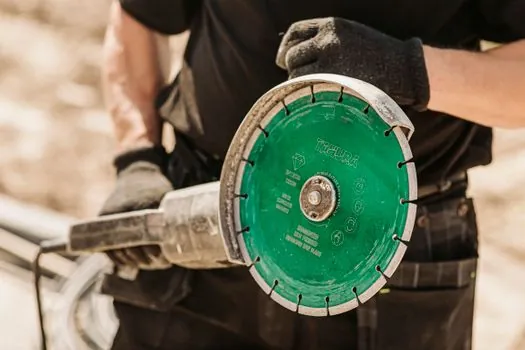
A metal blade needs greater heat resistance than a common wood blade because friction at the cutting edge raises temperature [S1]. HSS is used for metal cutting because it retains hardness at elevated temperatures, while cobalt and cermet increase wear resistance for stainless steel and cast iron [S1]. Zero or negative hook geometry limits self-feeding and overheating, while a positive wood-cutting hook helps pull material into the blade [S1].
Using a wood blade on aluminium can cause severe grabbing or kickback, and a metal blade used for wood can be inefficient because its finer geometry does not clear wood chips as effectively [S4]. The risk is not represented by tooth count alone. Correct fit to the machine, adequate guarding, secure workholding, appropriate feed rate, and the correct blade body remain necessary operating controls.
For aluminium and metal, the 60T-plus recommendation applies to blade geometry and workholding only when the body and grind are approved for that material. It should not be applied to abrasive discs, reciprocating blades, or blade designs with different cutting speeds and chip spaces.
Buying specification and production use cases
Specify at least five fields in a purchase request: material, cut direction, required finish, tooth count, and tooth grind. Add machine power, blade diameter, arbor, maximum rpm, kerf, workpiece thickness, and expected duty cycle for industrial procurement. The cutting machine or saw specification must permit the selected blade's operating speed and tooth count, because a 60T–80T blade is not automatically suitable for every low-power saw [S2][S5].
Furniture and cabinet production should favour 40T–60T for mixed work and 60T–80T where panel tear-out is critical. Framing and construction timber can use 18T–30T where fast ripping and rough sizing dominate. Aluminium profile fabrication calls for 60T or more with a non-ferrous-compatible grind and adequate machine power [S2][S4].
For contract cutting, the economical choice is the lowest tooth count that still meets the finish, chip, feed-rate, and safety requirements. Changing from 24T to 60T does not merely change finish: it changes chip size, gullet demand, motor load, heat behavior, and expected blade life [S1][S2][S5].
For a traceable purchasing decision, record the tooth count and grind together, then test the blade against the actual material and cut direction. Reject any wood or metal selection where the requested count conflicts with the body, hook angle, or machine capacity, and verify that the blade designation covers the workpiece before the cut begins.