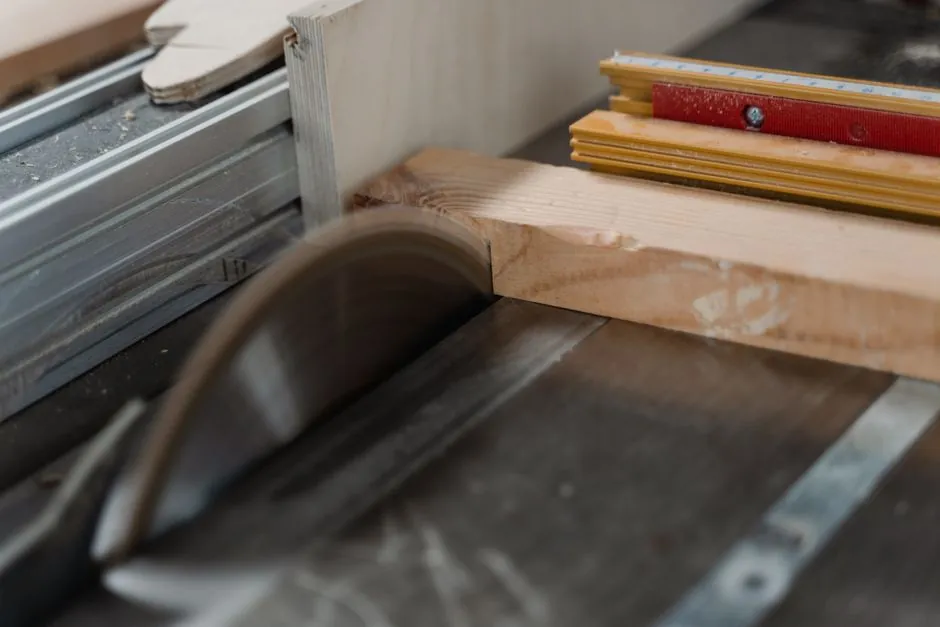
Flat-top-grind carbide teeth suit fast wood ripping, while alternate-top-bevel teeth cut across grain with reduced tear-out.
The choice is defined by fiber direction: FTG acts as a chisel in ripping, whereas alternating 15-degree bevels slice fibers during crosscutting [S2][S4][S5].
Grind geometry and cutting action
FTG teeth have a flat cutting surface across the top and remove material in a chisel-like action, which supports continuous removal of long wood fibers and heavy cutting loads [S4].
ATB teeth alternate their top bevel from left to right, with the standard bevel angle at approximately 15 degrees. The opposed points create a knife-like scoring action that severs fibers and improves the finish of crosscuts [S2][S4].
Typical ATB bevels are described as being between 10 and 15 degrees, while a High-ATB format uses an angle above 20 degrees for brittle materials such as melamine and plastic laminate [S2][S3]. These angles are useful when comparing tooth geometry, but the machine, workpiece, and required finish still determine the appropriate format.
FTG and ATG compared by cutting task
On feed rate, a dedicated FTG rip blade is the stronger choice for fast, efficient cuts along the grain, including solid wood, thick stock, and high-production work [S2][S4].
On surface quality, ATB is better suited to crosscutting hardwood, softwood, plywood, veneer, hardboard, fiberboard, and particle board because the alternating bevels limit chipping and splintering [S2][S5].
On edge durability, FTG provides a strong, straight cutting edge that is relatively easy to maintain, while ATB creates sharper points that are harder to sharpen and can wear or chip more quickly [S2].
On chip removal, flat teeth are used in rip blades because they help clear debris from the kerf. ATB geometry is generally associated with effective chip removal, but its pointed cutting action remains more demanding to restore [S5].
The practical decision is straightforward: use FTG when the cut runs parallel to the grain and production throughput matters; use ATB when the cut crosses the grain or the upper surface must resist splintering [S4][S5].
Material and finish requirements
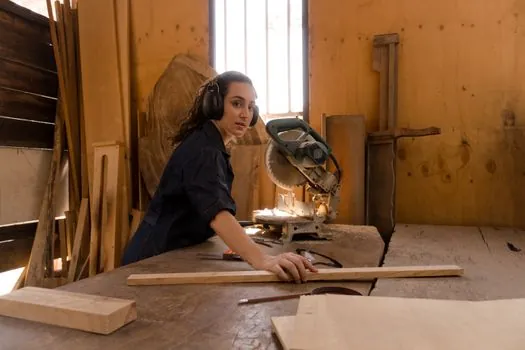
ATB is the standard geometry for general-purpose, crosscutting, plywood, and melamine applications, and its alternating left- and right-pointing tips are specifically intended to minimize tear-out in wood and veneered plywood [S5].
High-ATB is the more specialized option for melamine, veneer plywood, and laminated panels where edge quality takes priority over abrasive-material durability [S2][S4]. Its steeper bevel produces a finer slicing action than standard ATB, but that refinement can reduce tooth life in abrasive material [S4].
FTG is not a universal chip-control solution. Its flat teeth are optimized for ripping, but a flat-top design can require greater force and is more likely to chip or leave tear-out as the blade exits the cut [S2].
For brittle panels where neither ordinary ATB nor FTG is the best fit, a triple-chip-grind blade uses a beveled lead tooth, a square-top raker, and multiple working teeth to divide the chip and reduce panel edge chipping [S2][S5].
Blade capacity, tooth count, and sharpening
FTG rip blades commonly use 24 to 30 teeth with deep gullets for waste removal, while table-saw crosscut blades generally use 60 to 80 teeth and plywood applications use an 80-tooth design [S5]. Tooth count is separate from grind: ATB or FTG defines the cutting-edge form, while count and gullet depth influence feed rate and chip capacity.
Hook angle changes how aggressively a blade enters the workpiece. A high positive hook angle of 5 to 20 degrees suits general table-saw crosscutting and ripping, while angles up to 30 degrees are used for melamine-coated particleboard and veneered plywood [S5].
Combination blades mix four ATB teeth with one lower, narrower raker tooth. The raker removes the V-shaped material left in the center by the beveled teeth, helping produce a smooth cut and keep the blade running straight [S2].
ATB and combination blades are difficult to sharpen without specialized equipment, and their pointed teeth are more susceptible to chipping and rapid wear than the more durable FTG profile [S2]. This affects lifecycle cost even when the ATB blade gives the better finished edge.
Matching the saw and preserving safe operation

Blade diameter must match the saw, with common table-saw sizes at 10 inches, portable circular-saw sizes at 6-1/2 or 7-1/4 inches, and miter or radial-arm saws commonly using 10 or 12 inches [S5]. A larger blade must never be substituted for a smaller one.
Arbor and bore sizes also have to match the machine. Common blade bores include 5/8 inch, 1 inch, and 30 mm, with 30 mm serving as the dominant bore on many machines; a 30 mm blade can use a reducing bushing on a smaller arbor [S1].
Kerf is the width of material removed by the blade. Common kerfs extend from just under 2 mm to 3 mm, and a narrower blade may require a matching narrower riving knife so the workpiece does not bind [S1]. Heavy-duty stationary table saws commonly use 1/8-inch kerf, while portable saws generally use thinner blades, often around 3/32 inch or less [S5].
Before specifying a carbide-tooth circular saw, confirm diameter, bore, kerf, riving knife clearance, and whether the saw requires pinholes. A correct grind cannot compensate for incorrect blade fit or inadequate riving-knife clearance [S1][S5].
Selection rules by operating condition
Choose FTG when the operation is longitudinal ripping of solid wood, especially with thick stock, a high-production table saw, or a feed-rate target that outranks a splinter-free crosscut face. The flat top provides a durable cutting edge and supports aggressive material removal [S2][S4].
Choose standard ATB for crosscutting solid wood, plywood, veneer, and engineered board when a clean exit edge is more important than maximum rip production. The approximately 15-degree alternating bevel is a proven balance of cut quality and versatility [S2][S5].
Choose High-ATB above 20 degrees for brittle laminated products, and use a triple-chip-grind configuration for melamine-coated particleboard or countertop material when panel chipping must be controlled [S2][S5].
Track the blade’s feed pressure, surface finish, tooth-chip damage, and time spent restoring the edge. A rising feed force on an FTG rip blade, or recurring exit tear-out on an ATB crosscut, points to the wrong grind for the job rather than a need for harder carbide.