
Clean agents such as FK-5-1-12 and FM-200 are fast-acting, non-conductive, residue-free, and compliant with NFPA 2001, which is why they have been specified for decades to protect UPS battery rooms [S1]. A growing body of incident data, however, shows that the same agents do not reliably interrupt lithium-ion thermal runaway, because the cell supplies its own oxygen and continues to react internally long after room oxygen is displaced [S4][S5].
The implication for a 2026 specifier is direct: a clean agent flood can be a layer, but not the layer. Under NFPA 855, the standard for stationary energy storage systems, the prescriptive threshold for in-scope lithium-ion systems is 20 kWh aggregate stored energy, with a 50 kWh per-cabinet ceiling and a 600 kWh per fire area cap in occupied buildings [S5]. Once those numbers are crossed, the room is a stationary ESS, and clean agents are treated as secondary at best.
Why clean agents alone do not stop thermal runaway
Thermal runaway is an exothermic, self-sustaining reaction inside the cell: once a cell reaches the runaway state, the cell generates heat at a rate several times higher than the rate at which heat dissipates, according to UL Research Institutes material referenced in industry case studies [S4]. Room-level oxygen reduction cannot reach the reacting cell stack, and standard sprinkler heads often cannot penetrate a battery pack casing to cool the internal reaction either, which is why both approaches are described as insufficient in current technical writing on the hazard [S2].
Clean agents such as FM-200 and FK-5-1-12 are explicitly characterised in current installer guidance as not adequate as the primary protection for a lithium-ion battery room; they are positioned as one part of a package that has to include detection, ventilation, and a suppression method that actually addresses the cell chemistry [S5]. A practising fire engineer writing in the Fire Protection Association journal documents a real case in which a clean agent system was correctly specified under the governing standard and still failed to extinguish or control a battery room fire, an outcome the author attributes to skipping a fire engineering analysis [S4].
Where clean agents still fit: data centres and UPS rooms
Inside the white space of a data centre, clean agents remain attractive: non-conductive, no residue, no collateral damage to servers, and fast enough to protect adjacent IT loads from a small event [S1][S6]. The point of friction is the dedicated lithium-ion UPS room adjacent to that white space, which under FM Global Data Sheet 5-32 is treated as an ESS once distributed battery-backup units cross roughly 20 kWh per rack, and protected to the lithium-ion ESS data sheet 5-33 [S5].
For occupied buildings, NFPA 855 (2020/2023 editions) caps lithium-ion energy at 600 kWh per fire area and demands 2-hour separation between fire areas, with a 3 ft (0.9 m) spacing between units and walls that can be reduced only with UL 9540A large-scale fire test data [S5]. In that envelope, clean agent hardware is useful for protecting the surrounding electrical infrastructure once a fire is detected, but it is not the agent that controls the source. Early-warning off-gas detection, such as sensors targeting the electrolyte vapour released in the minutes before thermal runaway, is what lets a system act before the cell stack ignites [S1][S2].
Clean agents vs water-mist vs condensed aerosol: a 2026 spec comparison
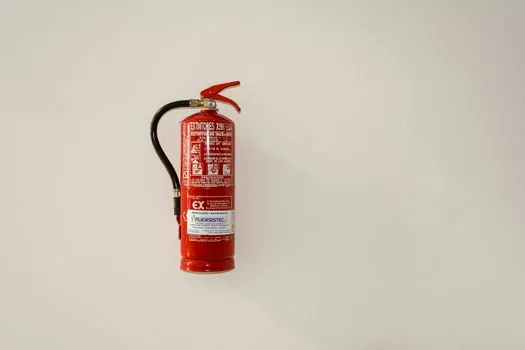
Three suppression families compete for the primary role in a lithium-ion battery room, and the specifier's job is to weigh them on the criteria the hazard actually stresses. On a clean-agent flood (FK-5-1-12, FM-200, Novec 1230), the strengths are electronics safety, no residue, and fast room-level knockdown, but it does not cool the cell, cannot prevent propagation to adjacent cells, and has been shown in case work to fail to control a runaway event [S1][S4][S5]. On high-flow water-mist, the strengths are genuine cooling of the cell stack and demonstrated ability to prevent fire spread, with the trade-off being water damage to nearby equipment and the need for sustained flow rather than a single discharge [S1][S2].
On condensed aerosol systems (Stat-X, FirePro), the published technical record is more than 100 suppression tests on Li-Ion cells, using potassium carbonate (K2CO3) as the active agent that interrupts flame chemistry at the radical level; these units are compact, can be placed inside enclosures, and avoid both the water-damage and the displacement-of-oxygen approach of clean agents [S3]. For most 2026 battery-room designs, the practical outcome is layered: off-gas detection plus aerosol or water-mist on the cell level, with clean agent coverage of the surrounding electrical space and a gas detection interface tied to the building flow meter and pressure transmitter network that confirms discharge.
Standards, editions, and the 2026 direction
NFPA 855 is the controlling standard, and it has three editions in circulation: 2020, 2023, and 2026 (the 2026 edition was released in September 2025) [S5]. The legally binding edition is the one the local Authority Having Jurisdiction has adopted, typically via the International Fire Code: IFC 2021 references NFPA 855-2020, while IFC 2024 references NFPA 855-2023, and adoption varies by jurisdiction [S5].
Two structural shifts matter for a clean-agent question. First, the 2026 edition reportedly changes the threshold and explosion-control approach, moving further toward an analysis-and-testing regime rather than the prescriptive stored-energy tables, so a specifier carrying a 2020-era design into 2026 permitting should revalidate against the 2026 text and the local AHJ [S5]. Second, when a project exceeds the prescriptive limits or cannot meet them, NFPA 855 mandates a Hazard Mitigation Analysis (HMA), an engineered study of thermal runaway, fire, explosion, and toxic-gas failure modes, which is exactly the document the clean-agent failure cases were missing [S4][S5].
Detection and ventilation are non-negotiable
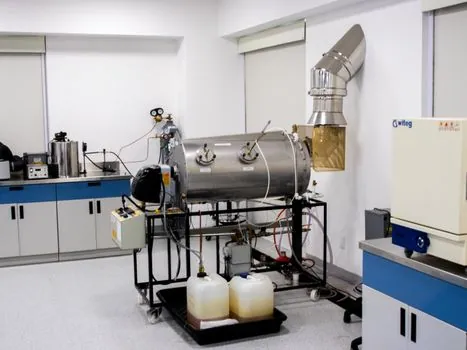
Off-gas detection is the earliest line of defence, and it is also the trigger that lets any of the suppression options do useful work. Modern systems monitor for electrolyte vapour species released during the minutes before a cell goes into runaway, and couple that to industrial valve-controlled mechanical exhaust that prevents flammable gas accumulation [S1][S2]. In a sealed room, a lithium-ion fire can build to an explosive concentration, and neither a clean agent flood nor a handheld extinguisher can arrest that condition once it develops, which is why NFPA 855 ties gas detection, ventilation, and explosion control into the same package as suppression [S5].
For unmanned or hermetic spaces, inert gas systems (N2, IG-55, IG-541) are still in scope: they remove oxygen from the fire triangle and are a valid choice where the on-site storage of large inert gas volumes is acceptable, with the trade-off being asphyxiation risk for any personnel who re-enter before purge [S1]. The general rule of thumb across current guidance is that the detection-to-suppression loop is what saves the room, not any single agent poured in at the moment of ignition [S2][S5].
Verdict: are clean agent systems effective on lithium-ion battery rooms?
Effective as a single line of defence, no. Effective as one layer of a code-compliant, detection-first, aerosol-or-water-mist-led system, yes. The current installer and engineering literature is consistent on this: a clean agent flood cannot be relied on to extinguish or control a lithium-ion thermal runaway event, the controlling standard NFPA 855 treats it as supplemental, and the projects that have failed in case work all skipped the fire engineering analysis that would have changed the specification [S4][S5]. For a 2026 build, the specification should lead with off-gas detection, water-mist or condensed aerosol at the cell level, explosion control per the 2026 NFPA 855 text adopted locally, and a clean agent envelope sized to the surrounding electrical room under NFPA 2001 [S1][S3][S5].
Trackable signals to watch: AHJ adoption of the NFPA 855-2026 edition in major U.S. data-centre markets through 2026, and the first published UL 9540A large-scale fire test results that allow the 3 ft spacing and 50 kWh per-cabinet ceilings to be relaxed on a project-specific basis [S5]. For industrial BESS enclosures outside the data-centre envelope, condensed-aerosol test records from FirePro (100+ Li-Ion suppression tests) and peer-reviewed comparative data on three extinguishing agents (Ubaldi, 2024) remain the most cited engineering references when arguing the layered case in front of an AHJ [S3][S7].
This topic is covered further in Why skid steer loaders turn inside their own length: differential drive explained.