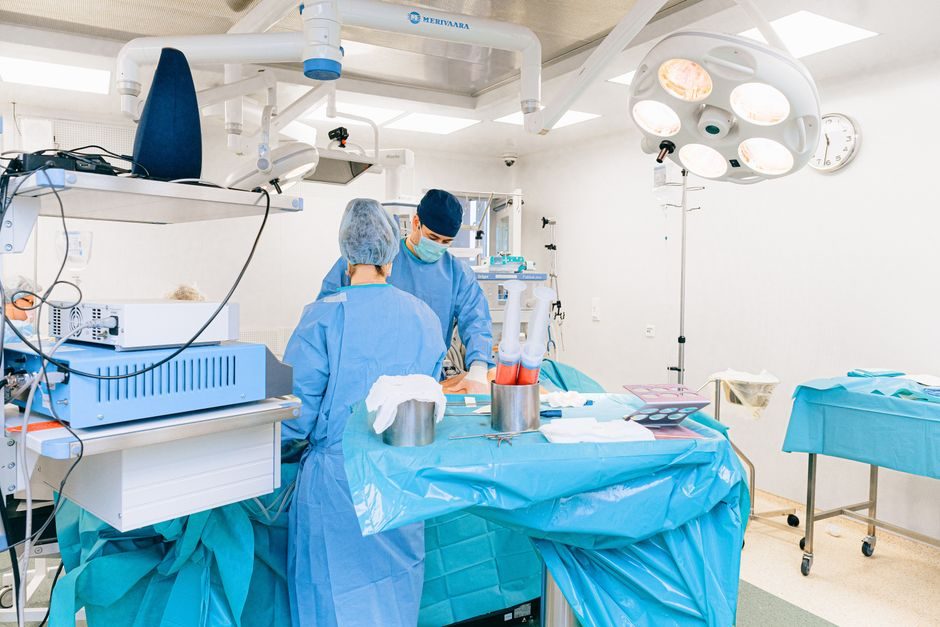
A complete ISO Class 7 modular cleanroom in 2026 typically falls in the $40,000–$150,000 bracket for a 10×10 ft (100 ft²) softwall envelope, with the same envelope upgraded to ISO Class 4 hardwall turnkey landing between $250,000 and $450,000 once HEPA fan-filter units, hardwall panels, and HVAC are priced in [S2][S3]. Cleanroom cost is governed by three variables: ISO cleanliness class (ISO 14644-1), floor area in ft² or m², and whether the supplier delivers a shell-only (CZT III softwall), structural hardwall (CZT I), or full turnkey package (HVAC, electrical, fire protection, monitoring) [S2].
Hardwall modular builds in the CZT I family from established US installers are usually installed in weeks, while softwall CZT III rooms are typically commissioned in days, and that labour-and-installation delta shows up as a 15–30% spread between competing quotations on identical drawings [S2]. Turnkey Chinese suppliers shipping out of Guangzhou now offer modular envelopes in the same ISO 4–8 range with documented delivery slots to Southeast Asia, complicating direct price comparison because freight, duty, and site commissioning must be netted against the factory FOB number [S3].
ISO Class, Air Changes and HEPA Count: the Three Numbers That Set the Floor
ISO Class 4 (Fed-Std-209E Class 10) environments require roughly 540 air changes per hour with ceiling-mounted HEPA fan filter units, while ISO Class 7 (Class 10,000) drops to 30–60 ACH and can use a mix of HEPA terminal filters and less aggressive blower horsepower [S2]. The class step is the single largest cost driver because each step up in cleanliness forces more FFUs per m², heavier motor duty, and stricter duct leakage classes — a class jump from ISO 7 to ISO 5 typically doubles the air-handling budget on the same floor area.
Modular hardwall panels in the CZT I product line are offered in a range of wall finishes and air flow designs (laminar vertical-flow or turbulent mixed-flow) and are engineered for ISO Class 4 down to ISO Class 8 work, with individual wall sections also sold as room dividers for retrofitting an existing white room [S2]. For pharmaceutical and biopharma work, supplementary stainless steel pass box and air-shower vestibules are routinely priced as separate line items and can add 8–12% to the turnkey number. The relative cleanliness achieved also reshapes monitoring spend: ISO Class 5 and tighter environments demand continuous particle counters with non-viable sampling, and cleanroom management consultants typically charge a 5–10% premium to certify and audit to a tighter class [S4].
Softwall, Hardwall, Turnkey: Three Procurement Tiers Compared
The three procurement tiers map directly to three price bands, and the decision usually comes down to process risk, retrofit constraints, and capital availability rather than aesthetics. Softwall CZT III rooms sit at the low end of the cost stack and are suited to static-sensitive, low outgassing processes, often used in electronics assembly and contract packaging [S2].
For a 100–200 ft² ISO 7 envelope, observed 2026 pricing clusters as follows: softwall CZT III shell $40,000–$90,000; hardwall CZT I modular envelope $90,000–$180,000; full turnkey (HVAC, electrical, process utilities, fire protection, monitoring) $200,000–$450,000 depending on class and air-handling redundancy [S2][S3]. The cleanroom.net supply catalog addresses the same three tiers from the consumables side, listing partition and lining systems, glazed systems, and ceiling systems as separate purchase lines, so a self-builder can buy wall sections and ceiling grids directly while contracting the FFUs separately [S6].
Turnkey Chinese suppliers serving Southeast Asia quote 30–60 days factory lead time plus 14–21 days sea freight to Malaysia, Indonesia, Vietnam, the Philippines, Thailand, or Singapore, with site erection and commissioning adding another two to four weeks on top [S3]. This cadence is comparable to what US modular builders deliver, and the choice between them is often driven by who certifies to GMP, FDA, and ISO standards on paper, not on the build schedule [S3].
Where the Money Goes: HVAC, FFUs, Panels, Monitoring
HVAC and air handling account for 35–45% of a turnkey cleanroom budget, followed by HEPA fan filter units at 15–20%, wall and ceiling panels at 10–15%, electrical and lighting at 8–10%, and monitoring and certification at 5–8% [S2][S3]. The remaining 5–10% covers flooring (raised-access or conductive vinyl), pass boxes, air showers, and process utilities. CleanZones, LLC lists horizontal and vertical laminar-flow workstations as standalone products, indicating that buyers can stage a clean environment piece-by-piece rather than commission a single envelope, which is the same strategy implied in the cleanroom.net consumables catalog [S5][S6].
Monitoring budgets are the easiest line to underestimate: ISO 5+ environments require continuous non-viable particle counters, viable active air samplers, and surface particle counters, and SentrySciences publishes product lines for aerosol particle counters, remote active air samplers, microbial air samplers, and surface particle counters that map directly to a 21 CFR Part 11 / EU GMP Annex 1 monitoring spec [S1]. Budget roughly $25,000–$60,000 for the monitoring stack on a 100 ft² ISO 5 suite, with another $8,000–$15,000/year for calibration and consumables [S1]. Cleanroom management consultants such as Cleanroom Management Associates (in business since 1976) charge separately for benchmarking, training, and auditing, and that recurring cost is often the line item that gets dropped on the first budget pass and re-added at validation [S4].
What the 2026 Market Looks Like for Buyers
Three structural shifts are visible in 2026 supplier positioning. First, modular hardwall envelopes have widened in scope: established US builders now list the CZT I family in finishes designed for ISO 4 down to ISO 8, and a turnkey cleanroom typically includes HVAC, electrical, process utilities, fire protection, and monitoring as one delivered package [S2]. Second, Chinese modular turnkey suppliers have moved up the value chain, with Guangzhou-based builders holding multiple patents and ISO certification, actively quoting into Malaysia, Indonesia, Vietnam, and the Philippines through local partners and offering an integrated equipment line that includes pass boxes, air showers, cargo showers, and clean booths as factory options [S3].
Third, monitoring and contamination-control software has become a product line in its own right, with machine-learning image analysis used to fingerprint subvisible particles and protein aggregates in biologic drug substance, and to detect statistical shifts in heterogeneous particle populations — functionality that did not exist as a packaged product line a decade ago [S1]. Buyers writing 2026 RFQs should require: (1) a written ISO 14644-1 class certification with particle count data; (2) a clear HVAC redundancy statement (N+1 or N+2); (3) a pass-box and air-shower schedule with dimensions; and (4) a separate monitoring line that names the particle counter model, calibration interval, and software validation package [S1][S4].
Constraints, Failure Modes and Sourcing Pitfalls
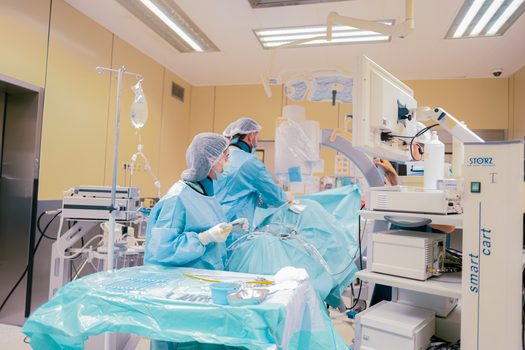
The most common budget blowout on a cleanroom project is the upgrade from ISO 7 to ISO 5 mid-build, because the air-handling redundancy and FFU count both step up non-linearly once the class tightens. Second, duct leakage and room-pressure cascade are routinely under-scoped: a 15 Pa pressure cascade between an ISO 7 and ISO 8 corridor requires balancing dampers and magnehelic gauges that are easy to omit on a turnkey RFQ but impossible to add cheaply after commissioning. Third, monitoring validation against EU GMP Annex 1 and 21 CFR Part 11 is a separate workstream and should not be lumped into the construction PO; the audit gap between "the room is built" and "the room is qualified" routinely runs 6–10 weeks [S4].
Buyers sourcing from overseas should expect a 4–8 week factory lead time plus 14–21 days sea transit to Southeast Asia, with installation and commissioning adding another two to four weeks, and should pre-agree who owns the IQ/OQ documentation in the contract [S3]. Self-builders using the cleanroom.net catalog of partition, lining, glazed, and ceiling systems must separately source FFUs and balance the air handling, and they take on the validation liability themselves — a cost trade-off that is rarely quantified until the first particle count fails [S6]. For related budgeting context, the wire mesh panel cost guide and the frame scaffolding breakdown cover the structural commodities that often sit underneath a cleanroom shell and can be cross-checked against enclosure pricing.
Track the next pricing node: monitor the second-half 2026 refresh of cleanroom management consultants' GMP Annex 1 audit fees, which typically move with pharmaceutical capex cycles, and watch for any new EU GMP Annex 1 enforcement letters that force a monitor-upgrade wave in older ISO 5 suites [S1][S4].
For component-level specifications, see linear guide, and crossed roller guide.