
Anping County (Hengshui, Hebei) remains the dominant supply cluster for welded wire mesh panels, with the Made-in-China.com index showing construction-grade hot-dipped and powder-coated galvanized welded mesh panels at US$4.00-22.00 per piece, FOB, and separate galvanized hexagonal gabion cloth at US$0.98-2.80 per square meter on the same index [S10][S3]. Multiple Anping manufacturers (Anyida, Zhuoda, Yuzhongwang, Juyun, Web Wire Mesh) and a Hebei-based export mill (Wanzhi Steel) are publishing stock and custom pricing concurrently, which is unusual for July — typically a slow quotation month — and points to active destocking rather than price firmness [S2][S3][S5][S6][S7][S9].
Panel price is not a single number: the same term "wire mesh panel" covers welded galvanized fence panels, stainless steel test sieve panels, architectural woven cladding panels, and wedge-wire screen panels. The cost spread between a stock galvanized fence panel and a stainless architectural panel exceeds 10x, so specifying by material and weave pattern matters more than negotiating percentage points on a quote [S1][S10].
What "wire mesh panel" actually means in 2026 procurement
Wire mesh panel is a flat, rigid sheet product made by welding or weaving wire into a regular opening pattern and cutting or framing to a rectangular geometry, distinct from rolls of mesh cloth and from chain-link fencing fabric [S1][S4]. The 2026-07-10 Web Wire Mesh material taxonomy splits the category into seven metallic families — stainless steel, copper, brass, phosphor bronze, aluminum, nickel, and Monel — with weave variants (plain, twill, plain Dutch, twilled Dutch) and crimp variants (plain, intermediate, lock, flat top, slot hole) layered on top [S1]. For architectural and decorative use, the same supplier separates cable-and-rod combination mesh, S-type spiral mesh curtain, D-type metallic cloth curtain, and X-type cable mesh as a distinct panel sub-category [S1].
Procurement taxonomies on the B2B index differ: Made-in-China groups welded mesh panel, gabion basket, and chain-link fencing under a single "security fencing" parent, with welded mesh sub-classified into galvanized, PVC-coated, and mild-steel variants, so the same factory list crosses civilian, agricultural, and light-industrial buyers [S3]. For buyers comparing quotes, the safest reduction is to four decision buckets: welded galvanized fence panel, stainless steel woven/architectural panel, wedge-wire screen panel, and hexagonal galvanized gabion cloth — and to ask the mill which bucket a given line item sits in [S3][S4][S9].
Price benchmarks by panel type (July 2026, FOB China)
Stock construction-grade welded wire mesh fencing panels list at US$4.00-22.00 per piece, with "competitive" and "best seller" sub-listings on the same index page pointing to the same 18-dollar spread, indicating discount tiers are volume rather than spec-driven [S10]. Galvanized or PVC-coated welded woven hexagonal mesh gabion and gabion boxes list at US$10.00-30.00 per piece (Min. Order 100 pieces) on the Zhuoda storefront, while a separate hexagonal mesh 80x100 listing for gabion baskets is priced at US$0.98-2.80 per square meter [S3]. The 18x to 30x ratio between per-piece and per-square-meter pricing is structural: a gabion box is a heavy fabricated assembly, whereas gabion cloth is sold by area to industrial buyers cutting their own baskets [S3][S10].
Stainless steel and architectural panels sit in a higher tier and are rarely published as fixed-list pricing on the wholesale index — Anping Web Wire Mesh (ISO 9001) lists stainless steel wire mesh, red copper wire mesh, wedge wire screen panel, crimped wire mesh, and knitted wire mesh as its main products, with the wedge-wire screen panel and architectural woven mesh categories handled as RFQ-only on its Made-in-China showroom [S9]. Wanzhi Steel (founded 2011) markets galvanized wire, welded wire mesh, diamond mesh, reinforcing mesh, hexagonal mesh, and PVC-coated mesh as its global catalog, again without public list pricing for the non-galvanized tiers [S6]. For specifiers, the working assumption is: published FOB list prices exist for galvanized welded and hexagonal gabion products, while stainless and architectural panels require quote-by-spec [S6][S9][S10].
What drives the price: material, coating, opening, and order size

Material grade is the dominant cost driver. Carbon steel wire is the cheapest substrate, stainless steel 304/316 typically multiplies the per-kg cost by 3x-5x, and specialty alloys such as Monel, nickel, and phosphor bronze carry further premiums; the Web Wire Mesh material catalogue explicitly enumerates Monel, nickel, phosphor bronze, brass, copper, and aluminum alongside stainless as stocked families [S1]. Coating adds the second cost layer: hot-dip galvanizing (zinc immersion), electro-galvanizing, and PVC powder coating are each priced separately, with hot-dip plus powder-coated commanding the highest published list on the welded mesh panel index [S10]. Wanzhi Steel confirms "woven and welded wire meshes made of galvanized steel" as its standard offering, with PVC-coated mesh as a separate stocked line, mirroring the coating-tier structure used by Anping mills [S6].
Opening size and wire diameter are inversely priced: finer openings require finer wire, more weaving or welding time per square meter, and tighter QC, so a 1 mm opening stainless panel costs more per square meter than a 10 mm opening galvanized panel at the same wire gauge class [S1][S4]. Order size is the third driver — the Zhuoda gabion basket line carries a 100-piece minimum order, and the per-square-meter hexagonal cloth line is structured for bulk industrial buyers, not retail [S3]. Comparing the perforated metal sheet pricing logic published earlier on SourceBySpec, the same four drivers (substrate, coating, opening geometry, and order volume) govern both perforated and woven/welded mesh, which is why cross-referencing that guide is useful when a spec calls for either finish [S10].
Manufacturer landscape and supplier selection in 2026
The Anping supplier cluster is dense: Anyida Hardware Mesh (registered 2009, business scope covering chemicals, construction, metallurgy, mineral & energy, textile) and Zhuoda Hardware Mesh (established 2007-09-12, 15 employees, Diamond Member since 2016, audited supplier) sell overlapping welded and woven mesh lines through the Made-in-China B2B index [S2][S3]. Yuzhongwang Hardware Wire Mesh (founded 1993, ISO 9000 certified) lists wire mesh, test sieve, wire mesh fence, barbed wire, and welded wire mesh as its main products — a useful indicator that test-sieve panels (typically stainless, high opening precision) are a stable sub-line within the cluster [S5]. Juyun Wire Mesh Products (ISO 10012 certified) and Anping Web Wire Mesh (ISO 9001 certified) round out the cluster with barbed wire, razor wire, stainless mesh, red copper mesh, wedge wire, and knitted mesh lines [S7][S9].
Outside the Anping cluster, Wanzhi Steel (Hebei, founded 2011) markets itself as a one-stop export house covering wire, mesh, coils, sheets, pipes, tubes, and bars — a wider product spread than the Anping mills, which is useful for buyers who want a single PO across substrate and finished mesh [S6]. Winner Welded Mesh Factory publishes on china.cn with custom design and "cost-effective solutions" framing, suggesting it competes on engineering support rather than list price [S8]. The practical supplier filter for a 2026 buyer: pick a Diamond Member audited Anping mill for stock galvanized welded/hexagonal product, pick a specialist (Yuzhongwang for test sieves, Web Wire Mesh for stainless architectural, Juyun for barbed/razor adjuncts) for specialty panels, and consider Wanzhi or Winner for mixed-PO consolidated shipments [S2][S3][S5][S6][S7][S8][S9].
Standards, weave codes, and what to put on the PO
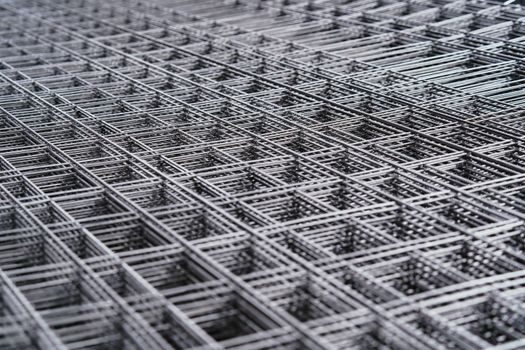
No single international standard governs "wire mesh panel" as a category — the relevant specifications are mesh count (wires per inch or opening in mm), wire diameter (SWG or mm), material grade (e.g. SS304, SS316, Q235 carbon steel, Monel 400), and weave/weld type (plain weave, twill weave, Dutch weave, crimped, welded, knitted) [S1][S4]. For galvanized products, the relevant spec is zinc coating mass (typically g/m²) and the hot-dip versus electro-galvanize process; for stainless panels, the relevant spec is alloy grade plus weave type, and for architectural woven mesh, the relevant spec is panel dimension, edge treatment, and framing [S1][S4][S6].
The Web Wire Mesh product catalogue enumerates plain weave, twilled weave, plain Dutch weave, and twilled Dutch weave as the four stainless weave variants, and plain crimp, intermediate crimp, lock crimp, flat top crimp, and slot hole crimp as the five crimp variants — this is the level of weave vocabulary a 2026 specifier should be using in the RFQ, not a generic "welded mesh" callout [S1]. For buyers sourcing welded galvanized fence panels, the equivalent vocabulary is mesh opening (mm), wire diameter (mm), panel size (mm), zinc coating (g/m²), and post/frame treatment, with PVC coating as an optional add-on tier [S4][S6][S10]. A well-formed PO therefore reads: "Welded galvanized mesh panel, 50x50 mm opening, 4 mm wire diameter, 2400x1200 mm panel, hot-dip galvanized to 60 g/m², PVC coated green, MOQ 100 panels, FOB Tianjin" — not "wire mesh panel" [S10].
Lead time, MOQ, and sourcing risk to track into Q4 2026
Minimum order quantities on the B2B index are explicit: 100 pieces for the Zhuoda gabion box line, with the per-square-meter hexagonal cloth line implying larger area orders (typically full rolls of 30 m or 50 m at 1-2 m width) [S3]. Made-in-China's average response time for the Zhuoda storefront is ≤2.57 hours, which is a useful proxy for RFQ turnaround during a buy cycle [S3]. Lead time for stock galvanized welded panels from Anping to a North American or EU port is typically 15-30 days for a 20GP/40HQ mixed container; custom stainless architectural panels run 30-45 days because of the longer weaving and inspection cycle [S3][S4][S6].
Trackable signals into the second half of 2026: (1) whether the US$4.00-22.00 per-piece spread on the welded panel index tightens or widens as Chinese mills move past mid-summer destocking; (2) whether Anping mills shift MOQ floors as galvanized wire feedstock pricing reacts to Q3 raw-material moves; (3) whether architectural and test-sieve panel RFQ response times lengthen, which would indicate capacity reallocation toward higher-volume galvanized lines. For adjacent cost context, the deep groove ball bearing price guide and the parts washer sourcing benchmarks on SourceBySpec use the same per-piece and per-unit FOB convention, so cost comparability across mechanical commodity categories is straightforward when planning a 2026 procurement basket [S3][S5][S10].
For an internal cost reference, also see the steel mesh encyclopedia entry and the wire rod material reference, which sit alongside this guide in the SourceBySpec reference set and cover the substrate and raw-feedstock side of the same supply chain.
For component-level specifications, see linear guide.