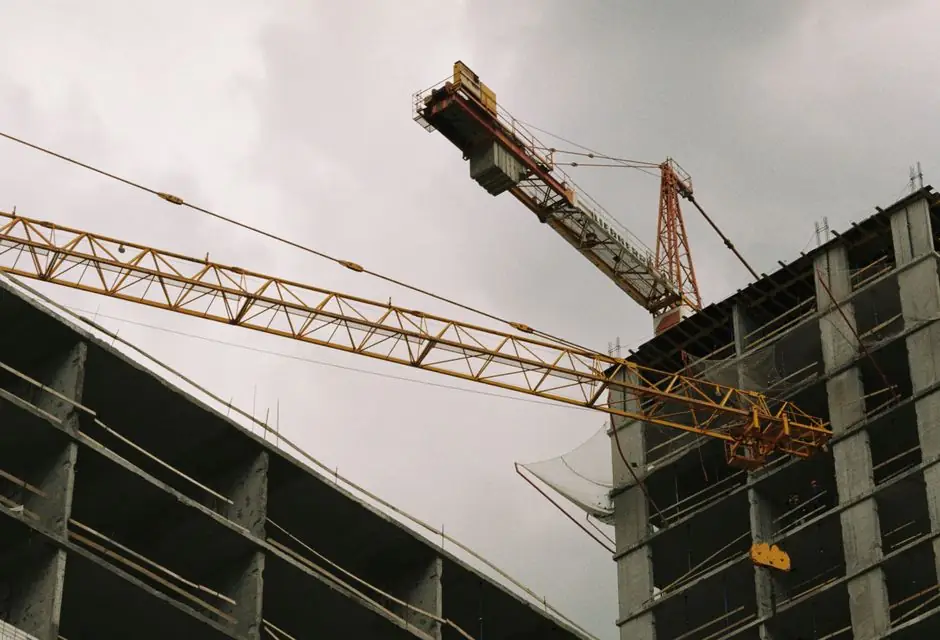
The climbing bracket KLK 230 can be used to build working platforms with a width of 2.30 m, while Hünnebeck states that its self-climbing formwork has a maximum vertical load capacity of 150 kN per bracket.
Anchor spacing is a system-specific design variable, not a universal dimension: load, platform width, formwork height, concrete pressure, wind exposure, anchor arrangement and the selected climbing system govern the final span [S1][S3][S5][S7].
Working Platform Width Is Not Anchor Span
A bracket assembly may support a platform 2.30 m wide, but that platform width does not establish the permitted distance between structural anchors [S1]. The MEVA KLK 230 can be used to build working platforms with a width of 2.30 m.
These dimensions describe usable platform width, not an equivalent vertical or horizontal anchor spacing. Such operating clearances must be considered alongside platform geometry, but they do not replace the structural calculation.
Hünnebeck states that its self-climbing formwork has a maximum vertical load capacity of 150 kN per bracket. The influence width is a load-distribution parameter and should not be read as blanket permission to place anchors 8.50 m apart.
Documented Anchor Spacing by System
This is the largest explicit spacing value in the reviewed material, and it belongs to a self-climbing hydraulic system with a stated vertical capacity of 150 kN per bracket for climbing and static conditions [S5].
That 400 mm dimension is a vertical positioning relationship, not an anchor-to-anchor span, so it must not be substituted for bracket spacing.
PERI CB 160 requires a maximum bracket spacing of 1.00 m when the intended mounting procedure cannot be executed; correction requires reassembly of the platform [S7]. This conditional value is materially tighter than the 4.75 m self-climbing figure and demonstrates why a spacing number cannot be transferred between systems without the manufacturer’s instructions [S5][S7].
Selection Criteria for Bracket Span
Bracket spacing should be selected against four controls: vertical load, horizontal load, anchorage capacity and construction sequence. The first control is documented directly: Hünnebeck rates its self-climbing bracket for a maximum vertical load of 150 kN, including both climbing and static conditions [S5]. PERI states that loads from fresh concrete pressure pass through the brackets into the previous concreting section by way of climbing anchors [S2].
Horizontal load is governed partly by wind. That dependence matters: a long span that works for a sheltered structure cannot be assumed valid for an exposed wall or a different platform configuration.
Construction sequence is the third control. Alsina identifies the C-160 Climbing System as a system for formwork to 4 m. Anchor location therefore changes between the starter stage and subsequent lifts.
System Comparison by Span and Operating Role
For a direct comparison, Hünnebeck combines up to 4.75 m bracket spacing with a 4 m formwork height and 150 kN vertical capacity per bracket [S5]. PERI CB 160 documents a conditional maximum spacing of 1.00 m when its normal mounting procedure is unavailable [S7]. The Doka 150F publication includes sections on loading data and structural design.
The comparison is not a ranking of quality. It shows how bracket span, platform width and conditional assembly limits describe different engineering functions. The climbing formwork category documentation should therefore be treated as system context, not as a substitute for the selected supplier’s structural plan.
Anchor Arrangement and Load Path
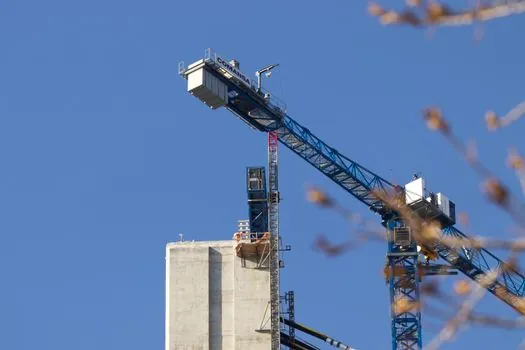
Climbing brackets and working platforms remain anchored to the concrete during operation, establishing a direct load path from the platform and formwork into the previously cast structure [S6]. PERI describes the same arrangement for single-sided, untied wall formwork: fresh-concrete pressure is transferred through climbing brackets and anchors into the preceding concreting section [S2].
Anchorage is therefore not an isolated connection checked only for vertical weight. It must accommodate the system’s operating actions, including concrete pressure, platform loading, wind, climbing movement and construction tolerances [S1][S3][S5]. For single-sided formwork, the absence of wall ties makes bracket and anchor behavior more decisive than in a tied system [S2].
PERI describes the SCS Climbing System as a bracket system for single-sided and two-sided climbing formwork operations. This staged load path must be represented in erection and lifting plans rather than reduced to a final-lift span.
Applications and Exclusions
Long spans are relevant to systems intended for self-climbing or efficient reuse across repeated lifts, including hydraulic self-climbing equipment rated for 150 kN per bracket [S5]. PERI identifies dams, locks, cooling towers, bunkers, strongroom vaults, pier heads and tunnels as application areas for the SCS system, with brackets also suitable for anchored wall formwork up to 6.00 m high [S2].
A documented span is not suitable for an untested wall geometry, arbitrary platform load or different anchor class. Hünnebeck also specifies an influence width of 8.50 m per bracket, while its bracket spacing can be adapted to building geometry [S5]. Geometry adaptation is a system-design feature, not permission to stretch the anchor spacing beyond the published configuration.
Working access must be treated as a separate design package. A suspended platform reference such as suspended platform concerns a different access arrangement and should not be used to infer climbing-bracket capacity. The governing documents remain the system instructions, project-specific structural design and site hazard assessment.
Procurement and Verification Checklist
Specify the formwork height, platform width, wall geometry, expected loading and exposure before requesting a bracket span. The minimum published platform widths include 1.90 m for SCS 190, 2.30 m for KLK 230 and 2.50 m for SCS 250 [S1][S2]. The corresponding structural arrangement, not platform width, determines the anchor layout.
Require the supplier to identify every anchor type, spacing, edge distance, load limit and installation condition. Ask how the design changes between the starter brace frame and later climbing cycles, whether semi-automatic anchoring applies, and what correction is required if the intended mounting sequence cannot be executed [S2][S4][S7].
Track two specific signals before approval: the final calculated span, including wind assumptions, and the compatible anchor installation dimensions from the selected system instructions. If the plan exceeds the documented 4.75 m case [S5] or relies on the CB 160 mounting correction condition [S7], require a revised engineering basis rather than field interpolation.