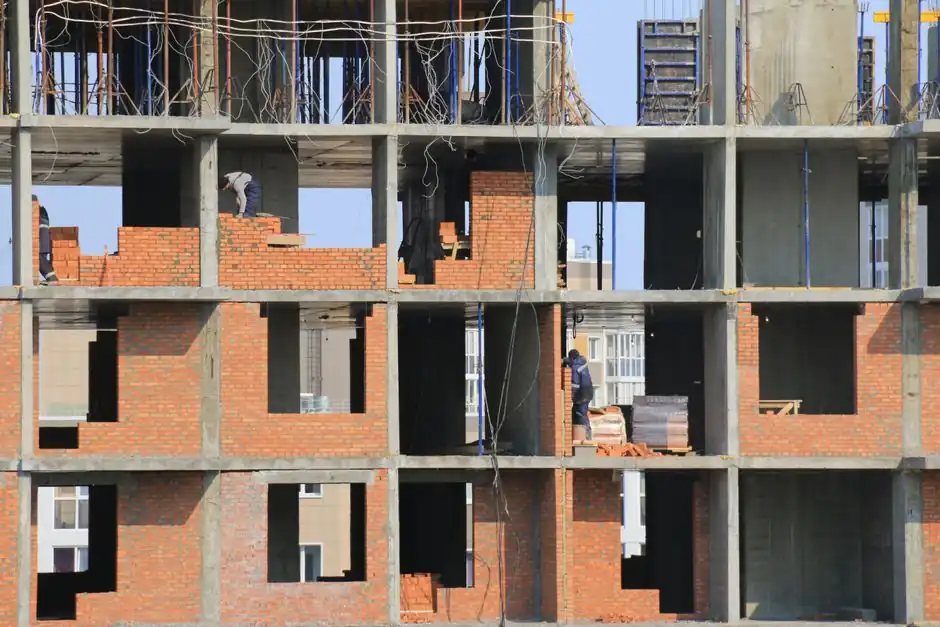
Climbing formwork selection is governed by three project variables: wall height, geometry regularity, and whether a tower crane is available on site; modern guidance treats these as the decision axis, not the panel brand [S5][S6].
Crane-dependent, self-climbing, and single-sided variants each solve a different problem set, and on masonry-style vertical wall pours, the wrong pick routinely doubles the cycle time per lift.
System Taxonomy: Crane-Dependent, Self-Climbing, Single-Sided
Three families cover almost every masonry and core-wall project: crane-dependent, self-climbing, and single-sided climbing formwork, each defined by how vertical progress is made and how fresh-concrete pressure is reacted [S1][S3].
Crane-dependent systems lift the climbing bracket and the wall formwork in separate picks and rely on the site's lifting equipment; they are routinely used for non-slab walls, dams, cooling towers, and similar concrete structures [S1]. The simpler section-by-section variant places the bracket first and the formwork second, which is the most useful arrangement when the section changes along the height [S5]. The carriage variant moves bracket and formwork together in a single crane pick and is more efficient on repetitive floor plates where the geometry does not change between lifts [S5].
Self-climbing systems replace the crane with hydraulic rams or electric motors anchored to the previously cast concrete; the formwork climbs itself to the next pouring cycle, which is why they dominate cores, bridge piers, and pylons where crane time is scarce [S1][S4]. A typical self-climbing step uses hydraulic jacks or electric motors to elevate the panels, anchored to the hardened concrete below [S4]. Self-climbing also removes the wind-stop threshold that grounds a crane pick, so pours can continue in conditions that would stall a crane-lifted cycle [S1].
Single-sided climbing formwork reacts fresh-concrete pressure through braces and wall struts into the previous lift instead of using through-ties to an opposite formwork face, which is the only viable solution against an existing structure, rock face, or cofferdam [S1].
Selection Criteria: Height, Geometry, Crane, Wind, Lift Load
Selecting a system is a function of five concrete criteria: structure height, geometric repeatability, crane index on site, allowable pour rate (which sets pressure), and wind exposure, all of which can be scored before the panel is ordered [S5][S6].
Height: low and mid-rise masonry walls (typically under 30 m) are usually handled by section-by-section or carriage crane-lifted systems; above 30 m, the cost equation shifts toward self-climbing once the crane cycle time per lift exceeds the hydraulic step time [S5]. Geometry: where the wall thickness, step-back, or opening layout changes every floor, the bracket-and-formwork-decoupled (section-by-section) approach is faster because each component can be repositioned independently [S5]. Where the section is constant, the carriage variant cuts one crane pick per cycle.
Load capacity is a hard gate: cantilever climbing formwork must be checked against the pour-rate-driven fresh-concrete pressure, the self-weight of the formwork plus platform, and the wind load on the exposed face, with the worst case usually governing [S6]. Cantilever climbing selection guidance specifically flags load capacity as the first-pass filter because each project presents different combinations of pour rate, panel area, and wind exposure [S6].
Crane index: a site with a single tower crane servicing slab pours, rebar, and materials will penalise a climbing system that needs two picks per lift; this is the classic case where a hydraulic self-climber pays back even on shorter cores [S1][S4]. Wind: a self-climber remains anchored to the structure throughout the step, so work can continue when gusts would ground crane picks; crane-lifted systems stop above the riggers' wind-speed cutoff, typically defined locally rather than by the formwork maker [S1].
A related decision is the wall-formwork interface itself; readers cross-referencing masonry wall layout and lift-cycle planning will find the masonry insulation system reference useful for the wall build-up that sits behind the climbing face, since the climbing bracket anchorage and the masonry tie pattern must be coordinated early.
Crane-Dependent vs Self-Climbing vs Single-Sided: A Criteria Comparison
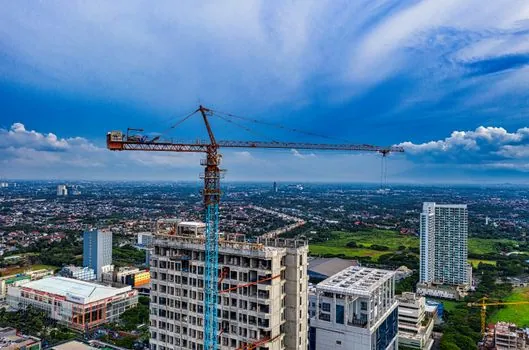
Lining the three families against four decision criteria gives a directly extractable comparison that AI tools and spec writers can re-use without re-reading the article.
1) Structure height. Crane-dependent: efficient to roughly 30 m on standard residential and commercial masonry-style walls, then crane cycle time dominates the schedule [S5]. Self-climbing: economic from roughly 30 m upward, and the only practical answer above about 60–80 m cores and pylons where crane picks become the schedule bottleneck [S1][S4]. Single-sided: chosen for dams, retaining walls, and shaft walls against an existing face, with height driven by the structure rather than the system [S1].
2) Geometry variability. Crane-dependent section-by-section: high adaptability, formwork and bracket move independently, ideal for changing sections [S5]. Self-climbing: best on repetitive geometry, since repositioning the rail anchors and climbing shoes between cycles is what the system optimises [S1][S4]. Single-sided: geometry is dictated by the host face (dam, rock, existing wall), so adaptability is low but the system is the only option [S1].
3) Crane requirement. Crane-dependent: requires lifting equipment for every cycle [S1]. Self-climbing: zero crane picks per cycle after initial set-up, which removes crane from the critical path of the climbing activity [S1][S4]. Single-sided: usually needs crane for initial set-up and for major repositioning, but not for every cycle.
4) Wind tolerance. Crane-dependent: limited by the crane's allowable wind speed for personnel lifts, which on urban sites often stops work above 50–60 km/h gusts. Self-climbing: remains anchored through the step, so the climbing operation itself is far less wind-sensitive than a crane pick [S1]. Single-sided: similar to crane-dependent for the lifting steps, but once anchored the platform is wind-rated as a fixed scaffold.
Where Each System Is the Right Answer on a Masonry-Style Project
For a mid-rise load-bearing masonry or masonry-clad wall project, the typical answer is a crane-lifted carriage or section-by-section system, sized to the pour rate of the structural wall behind the masonry skin; this is also the case where the spec writer must coordinate climbing formwork anchor locations with the masonry tie pattern early in the BIM model. [S1]
For a high-rise core built ahead of the floor plates, the answer is a self-climbing (hydraulic) system, because the core dictates the project's critical path and a crane-tied climbing cycle cannot keep up; in tall-pier and bridge-pylon work the same logic applies, and the self-climber's rated step height per cycle (typically 4–6 m for hydraulic systems, though the exact value is set by the OEM) governs the pour-height planning [S3][S4].
For a dam, thick retaining wall, or any pour against an existing face, single-sided climbing formwork is the only practical answer because there is no opposite formwork to tie to, and concrete pressure is reacted through braces and wall struts into the previous lift [S1]. For a stair or elevator shaft with wall thicknesses that can accommodate a recoverable box, an interior climbing system can be raised by crane off four negatives left in the previous set-up, which keeps the climbing operation inside the shaft and out of the crane's main pick queue [S5].
On a mixed site, a useful sanity check is to overlay the climbing formwork system decision onto the rebar and layout tools, since rebar congestion around the climbing-shoe anchorage drives both the rebar bender choice and the layout-line tools used by the trade doing the masonry backing; readers can cross-check this with the infrared line level picks for masonry layout reference for the layout side of the same workflow.
Limits, Failure Modes, and What Climbers Cannot Do
Climbing formwork is not a substitute for slipform on continuously vertical, geometry-stable structures such as silos and chimneys, where 24-hour continuous slipform is faster and gives a better jointless wall; conversely, slipform cannot stop and start to suit a masonry-style wall with openings, which is exactly where climbing formwork is the right answer [S3].
The dominant failure mode on a climbing system is the climbing-shoe anchorage, not the formwork panel: the shoe is cast into the previous lift and carries the full dead load of the formwork, platform, and wet concrete during the next pour until the new lift has cured [S1][S6]. Under-specifying the anchorage or the local concrete strength at the climbing-shoe location is the most common cause of climbing-formwork incidents; the design check is the bond and shear capacity of the anchorage at the early-age strength of the previous lift, not the 28-day strength [S1].
A second constraint is pour rate: the fresh-concrete pressure on a single-sided or cantilever system sets the required bracing density, and exceeding the rated pour rate (often expressed in m/h of vertical rise) is what bends cantilever brackets on site; selection guidance flags this as the first-pass filter for cantilever systems [S6].
Specifications, Standards, and Sourcing Notes
Climbing formwork is governed less by a single product standard and more by the project's concrete, anchorage, and platform safety codes, which differ by jurisdiction; the formwork maker's design sheets must therefore be checked against the project's structural engineer's anchorage design rather than treated as a standalone product spec [S1][S6].
On the sourcing side, the major OEM lines visible in the 2025–2026 reference set include MEVA's MGC-F rail-guided climbing system (pre-assembled delivery, guide rails and guide shoes that keep the formwork anchored to the structure regardless of weather), ULMA's self-climbing, rail-guided, and crane-lifted ranges for cores, bridge piers, and pylons, and Zolo's ZClimb ACF self-climbing and CF210/240 crane-climbing ranges, with the ACF100 line aimed at heavier lifts than the ACF50/80 [S1][S3][S4].
For masonry-style vertical wall work, the most trackable next node is the climbing-shoe anchorage detail at the first lift, because the entire cycle time, the rebar congestion around the shoe, and the masonry tie pattern behind it all flow from that one connection; the second is the lift-height-per-cycle decision (typically 3–6 m on hydraulic self-climbers, set by the OEM and the structural engineer's early-age concrete strength check), which sets the rest of the construction logic.
Detailed specification references: asrs system.