A textile-mill clutch or brake must be sized on four co-equal parameters: dynamic torque, thermal horsepower, reflected inertia, and cycle rate, not on motor nameplate alone, per OEM selection methodology [S3].
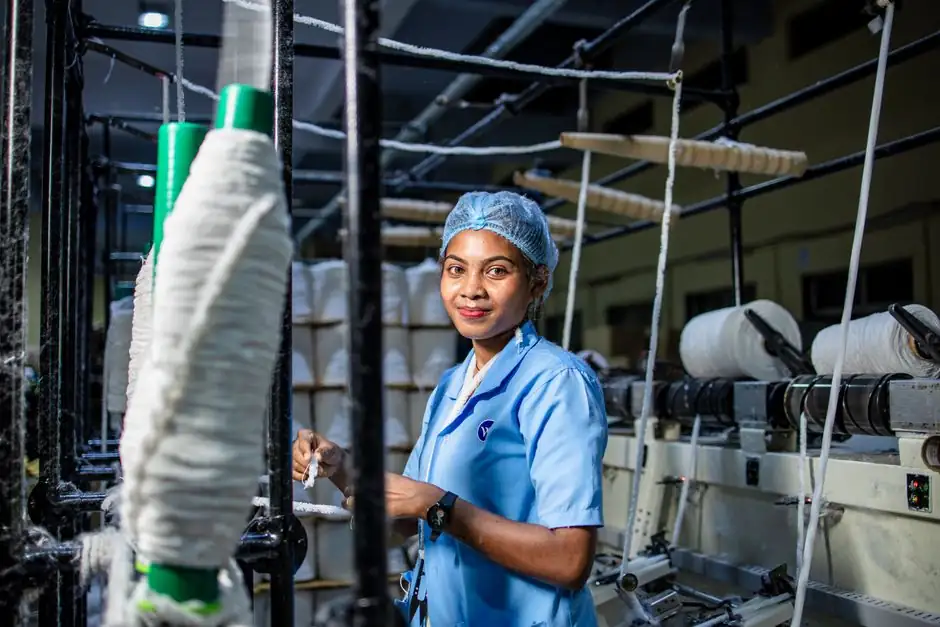
Textile machinery spans a wide kinematic range, from 1400 RPM winding spindles to slow baler rollers turning 5,000 lb cotton bales [S4][S5], so a single clutch family rarely covers an entire plant. Mills running continuous winder, draw-frame, and carding lines typically mix magnetic-powder tension units on winders with electromagnetic or oil-shear units on the higher-inertia main drives [S3][S5].
Selection Inputs Beyond Motor Horsepower
Force Control's published selection method requires four application inputs before any catalog lookup: machine type and motion, cycle rate, duty cycle (engaged vs off time), and the load-torque sign for clutch and brake separately [S3]. Cyclic inertia of every downstream component, shafts, couplings, gears, sprockets, pulleys, and flywheels, must be reflected back through the gear ratio to the clutch-brake output shaft before the dynamic torque is calculated [S3].
Load torque can add to the clutch requirement and subtract from the brake requirement, or vice versa, depending on whether the axis lifts or lowers during the cycle [S3]. A vertical conveyor lifting packages during acceleration is a textbook case where clutch torque rises and brake torque falls on the same physical load, a fact engineers routinely miss when they treat the two halves of a clutch-brake package as identical.
Why Oversizing Fails as Fast as Undersizing
Clutch brakes should be sized for the required loads and not significantly oversized, because an oversized brake adds severe shock loads to couplings, belts, and shafts downstream [S3]. On a textile card or draw frame, that translates into stretched drive belts, premature coupling failures, and broken input shafts, all classic symptoms of a brake that was "safely" oversized by 2x or more.
Thermal horsepower is the second gate. When a clutch engages, roughly half the energy accelerates the load and the other half is converted to heat in the clutch; when a brake stops the load, all the rotary kinetic energy is converted to heat in the brake [S3]. Mills running high-cycle indexing (printing, packaging, or jacquard) commonly fail clutches thermally before they fail them mechanically, so the catalog's thermal-horsepower curve, not its peak torque, picks the frame size.
Comparing the Three Clutch Families Used in Mills
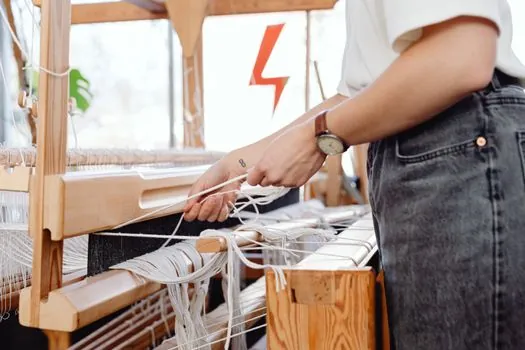
Three technologies dominate textile-mill service: magnetic-powder, electromagnetic, and oil-shear units. The electromagnetic clutch and brake family is the workhorse for OEM cotton-baler and farm-AG applications, where a Warner Electric unit was custom-engineered for a baler handling 8 ft wide, 7.5 ft diameter bales weighing up to 5,000 lb [S4]. Magnetic-powder units, sold for textile winding and tension control, cover a 6 to 400 Nm torque range, 0.6 to 40 kg load range, and 1400 RPM operating speed, with a DC24V coil and hollow-shaft options for direct spindle mounting [S5].
Oil-shear units from Force Control are specified where high cycle rates and large thermal loads would cook a dry-friction brake, since the oil film absorbs and removes heat continuously [S3]. For wind-up tension control on a creel or winder, a magnetic powder clutch running in the constant-torque region of its hysteresis curve gives the cleanest tension profile; for emergency-stop or baler service, an electromagnetic or oil-shear clutch brake gives the predictable static-torque engagement the safety case requires.
Real Duty Cycles: Winders, Cards, and Balers
Winding and tension-control spindles are continuous-duty, low-inertia applications where magnetic-powder units running at 1400 RPM with a 6 to 400 Nm torque range and 0.6 to 40 kg load range are typical selections [S5]. Carding and draw frames are cyclic, medium-inertia drives where electromagnetic clutch-brake packages are the historical fit, especially on stop-start delivery rolls.
Cotton balers represent the other end of the spectrum. The 2013 Warner Electric custom unit sat on the main pulley-driven roller that drives two idler rollers plus the wrap belt roller and wrap roll, with bales up to 5,000 lb [S4]. That duty, full roll mass, low RPM, and infrequent but massive stop events, is where a clutch and brake package sized to a 250 ft.lb static-torque rating becomes a credible custom-engineered solution rather than a catalog pick. Mills mixing these duty profiles need at least two clutch technologies on the plant floor.
Who a Catalog Clutch Fits, and Who Needs a Custom Build
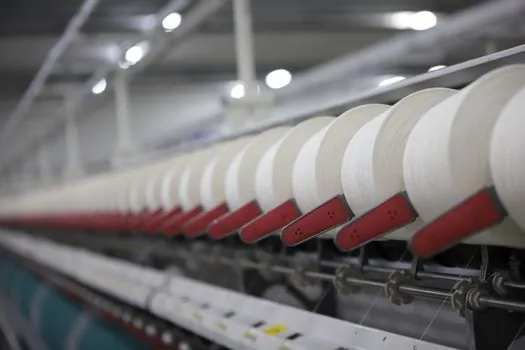
A standard catalog clutch-brake fits when the application's torque, thermal, and inertia values fall inside one catalog frame, when ambient is clean and dry, and when duty cycle is repetitive enough to be characterized by a single number [S3]. Most winder and packaging lines in a textile mill fall into this group, and a 25 Nm magnetic-powder brake kit (TB 200S hollow-shaft class) is a representative off-the-shelf solution [S5].
Custom engineering becomes mandatory when the footprint is constrained, when the driven mass is non-standard (5,000 lb cotton bales, multi-roll calenders), or when MIL-compliant or harsh-environment operation is required, which is the segment CJM Carlyle Johnson Machine Company addresses for rugged standard and custom designs [S2]. The 2013 Warner Electric cotton-baler design, a reduced-footprint 250 ft.lb static-torque unit, is the canonical example of a custom clutch-brake that a catalog entry would never have covered [S4].
Selection Workflow and Sourcing Standards
A defensible selection workflow in a textile mill looks like this: build the kinematic chain, reflect each component's inertia back to the clutch-brake output shaft, add the signed load torque, divide by acceleration or deceleration time to get dynamic torque, then check thermal horsepower against the catalog curve, and finally verify the chosen frame is not significantly oversized [S3]. Engineers can shortcut parts of this with quick-selection charts, but the four inputs, application, cycle rate, duty cycle, and torque requirement, must still be collected first [S3][S6].
Mill procurement should document the calculated dynamic torque for clutch and brake separately, the thermal-horsepower requirement, and the duty cycle, then match those to a catalog frame, or escalate to a custom OEM build with a defined static-torque and footprint target [S3][S4]. The most useful cross-reference for adjacent plant-floor work, from packaging lines to AGV drivetrains, is covered in the clutch and brake selection for automotive production lines map, which applies the same Force Control four-input method to a different duty profile. For dust-prone textile plants, the warehouse anti-static equipment spec map for 2026 covers the static-control side that interacts with electromagnetic clutch coils.
Track two signals into late 2026: published thermal-horsepower curves for magnetic-powder units above 200 Nm at 1400 RPM, where textile winder OEMs keep asking for higher continuous-dissipation ratings, and any update to the cotton-baler OEM custom-engineering pattern now that 5,000 lb bales are a baseline, not an upper bound.