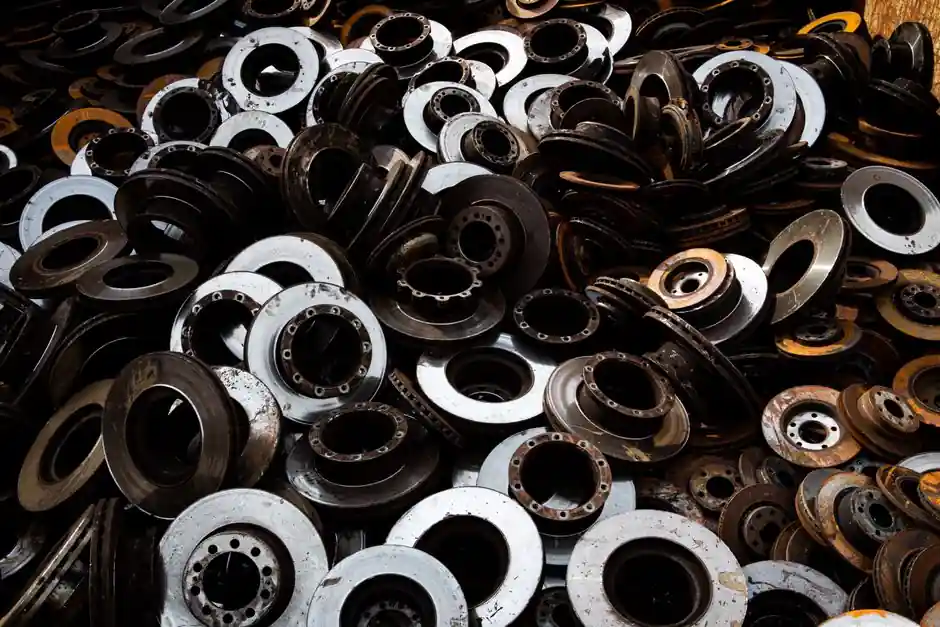
Pulp and paper lines use clutches and brakes across four distinct station types: wood-chipper drivelines, refiner/pulper drives, paper-machine sections and unwind/rewind stands, each with its own duty profile and thermal envelope [S1][S2][S3].
Modern selection follows a station-first logic: identify the function (engine start, tension control, dynamic braking, emergency stop), the slip duty (full lockup vs continuous slip), and the heat dissipation path (dry, wet, water-cooled, air-cooled) before sizing torque [S7][S8].
Station Map: Where Each Device Goes
Chipper drivelines are dominated by PTO-style clutches, with PT Tech's HPTO family split into DRY (oil-free disc packs) and WET (oil-bath disc packs) variants; both engage a diesel engine to a high-inertia chipper rotor, and the WET configuration is the standard for sustained-slip and high-cycle log-yard service [S5]. Eddy-current adjustable-speed drives and brakes are likewise cited as standard stock-preparation equipment, with electronic controllers governing acceleration and slip to protect refiner motors from shock loading [S2].
On the paper machine, Eaton Airflex constricting and expanding drum-type clutches and brakes are used to engage section drives and hold the lineshaft; the drum geometry is the reason these units tolerate the large inertia of startup and the sustained slip of tension control without losing torque, which is the failure mode of a friction disc run beyond its thermal rating [S4]. Unwind stands at the reel and winder ends take a different device: water-cooled tension brakes running in continuous slip, sized for thermal kilowatts rather than for peak torque, because the heat has to leave with the cooling water [S3][S4].
Selection Criteria: Torque vs Thermal vs Slip
Three criteria actually drive a pulp-and-paper spec: peak torque, thermal capacity in kW of continuous dissipation, and the slip duty cycle expressed as a percentage of engaged time [S1][S7]. For wrap-spring clutch/brake packages the standard three-step method is still function, size, then environment; the same logic applies to friction clutches once thermal capacity is added as a parallel axis [S8].
For chipper applications the controlling figure is engine-to-rotor torque ratio with an impact load factor, not sustained heat, because the rotor stops between bites and the disc pack cools in air [S5]. For unwind brakes the inverse is true: peak torque is set by web tension times roll radius, and the water-cooled friction stack must dissipate the product of tension, surface speed, and slip fraction continuously, typically 30-100% of engaged time depending on grade change and ramp profile [S3][S4]. Section drives fall between, with mostly locked-up service and modest thermal headroom on the lineshaft clutch [S4].
Tech-Family Comparison: Disc, Drum, Wrap-Spring, Eddy-Current
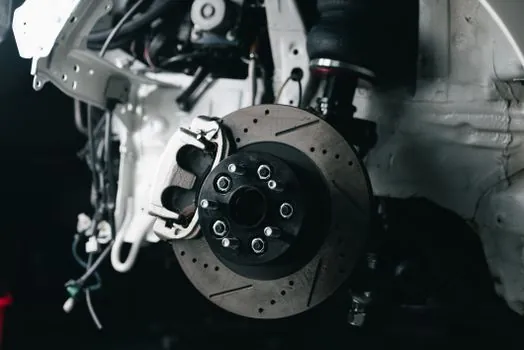
Disc-pack clutches and brakes (PT Tech HPTO DRY/WET, Eaton Airflex element-style) give the highest torque-to-footprint ratio and tolerate the largest misalignment, but the heat is concentrated in the disc pack and must be removed by oil (WET) or by sizing for the duty cycle (DRY) [S4][S5]. Drum-type units (Eaton constricting/expanding) spread the friction interface over a large shoe arc, so they handle sustained slip and high inertia at the cost of a larger envelope and the need for shoe-replacement access [S4].
Wrap-spring clutch/brakes are the compact, fast-response option for indexing and stop-start service, but the spring heat-limits continuous-slip duty, which rules them out for unwind tension control [S8]. Eddy-current drives and brakes use a magnetic field rather than mechanical contact, so no wear surface and clean torque control, but slip energy is dumped as heat in the rotor, and they are tied to a controller for ramp and tension trim [S2]. Water-cooled friction brakes (WPT type) sit in their own niche: a heavy constant-slip tension device on unwinds, corrugators, and film lines where the cooling water is the heat sink [S4]. Across these families, a useful inline comparison is:
Disc (HPTO/Airflex): high torque density, good misalignment, dry or wet, best for chipper and locked-up section service. Drum (Eaton): large shoe arc, good sustained slip, larger envelope, typical for winder cores. Wrap-spring: compact, fast response, indexing only, not for continuous slip. Eddy-current: contactless, controller-tuned, rotor heat, typical for refiner and reel speed trim. Water-cooled friction: heavy constant-slip, water-cooled, typical for unwind/film tension [S2][S4][S5][S8].
Typical Sizes and Ratings
Vendor catalogues list Eaton Airflex clutch/brake elements in bore sizes from roughly 4-30 inches and torque ratings in the 1,000-1,000,000 lb-in range, with the constricting-element and expanding-element families sized by drum diameter and shoe count; specific element codes vary by series, so a mill engineer should request a torque-vs-thermal curve rather than a single lb-in figure [S4]. PT Tech HPTO clutches are split by cooling medium, with DRY units aimed at intermittent chipper duty and WET units rated for higher cycle rates and longer slip intervals; both families share the same PTO interface, which simplifies retrofit on existing engine packages [S5].
WPT water-cooled tension brakes are offered in sizes matched to unwind reel widths, and the published selection method is heat-balance driven: solve for kW = web tension x surface speed, then pick a brake whose continuous kW rating at the chosen water flow exceeds that number by a service factor of 1.25-1.5 [S4]. Eddy-current units are sized by rotor O.D. and RPM because the torque scales with magnetic flux density and slip speed; the matching controller is part of the spec, not an accessory [S2].
Integration, Couplings, and Driveline

Most paper-machine drivelines also include a driveline shaft and a flexible coupling between the clutch or brake and the lineshaft, and retrofit packages routinely bundle the shaft, coupling, and clutch from a single supplier to keep alignment and balance responsibility on one shop [S3]. A clutch-brake unit combined with a coupling is increasingly used where a single housing handles engagement and torsional isolation; the trade-off is heat from the brake section entering the coupling, which is acceptable for a section drive but problematic for an unwind that runs hot continuously.
For torque-overload protection, mechanical torque limiters are specified on paper rolling lines and auxiliary equipment so a web break or jam does not translate back into the lineshaft or motor; PT Tech positions itself as a torque-limiter specialist with research and test work dating to 1978, and the units appear in pulp/paper rolling-line service as a backup to the main clutch [S5]. [torque limiter specialist PT Tech has supplied since 1978] is a useful signal when auditing older lines for retrofit.
Who This Spec Is For, and Where It Breaks
This spec family fits greenfield and retrofit paper machines, recycled-fiber mills, and pulp lines with both engine-driven chippers and motor-driven refiners; it also fits corrugator unwind stands and film/winder lines that share the same constant-slip tension duty [S3][S4]. It does not fit high-cyclic dry-section indexing, where a wrap-spring or servo-electric clutch-brake is the better answer, and it is the wrong tool for cleanroom or food-grade webs where eddy-current rotor dust or wet oil contamination is a problem [S8].
Common failure modes line up with the spec gaps: a disc clutch run in continuous slip without oil burns the pack; a drum brake run as an emergency stop rather than a tension device overheats the shoes; a wrap-spring held in slip fatigues the spring; an eddy-current brake run above rated RPM loses field linearity and the controller cannot trim tension [S2][S4][S8]. Each of these is avoidable by treating thermal capacity as a first-class selection axis, on the same level as torque, before the model number is picked. A relevant parallel is the clutch and brake selection logic for wind turbines, where slip duty and thermal envelope also dominate over peak torque.
Standards, Documentation, and Sourcing
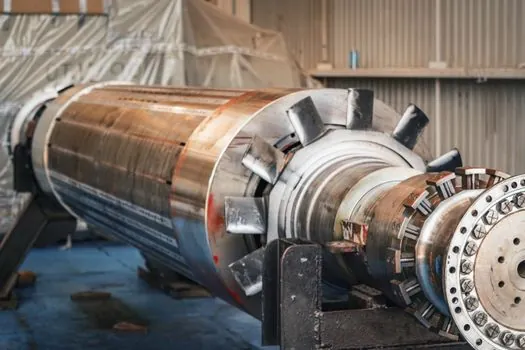
Industrial clutch and brake selection is governed more by vendor test data and mill specifications than by a single ISO or API standard, but the design formulas for torque, energy, and heat are consolidated in long-standing references such as Orthwein's "Clutches and Brakes: Design and Selection" [S1]. The practical, station-level selection steps, identify function, size, then verify environment, are the same framework used in vendor and trade-press guides [S7][S8].
For sourcing, the named brands visible on current pulp/paper supplier lines are Eaton Airflex (drum and element clutches/brakes), WPT (water-cooled tension brakes), Wichita Clutch, Kobelt, Gewes, GKN-Lobro (driveline shafts and couplings), PT Tech (HPTO engine clutches, torque limiters), Dynamatic (eddy-current drives and brakes), and Vulkan (integrated drive and brake systems); rebuild and authorized-repair channels exist for the major lines and should be specified alongside the new-equipment purchase [S3][S4][S5][S6]. For an internal reference on the underlying device family, the electromagnetic brake and clutch-brake encyclopedia pages cover the basic engagement and torque-cutoff definitions used in the selection flow above. The next watch point is vendor release of updated thermal-rating curves for the WET HPTO family and any 2026 retunes of the Airflex element series, both of which would shift the size-by-heat calculation on retrofits.
For the relevant spec sheets and selection criteria, see coupling clutch.